Teen Martial Arts Character Development
You’ll develop unshakable character through consistent martial arts training, transforming discipline into your foundation. Every belt you earn proves your dedication. You’ll master respect through ritual and practice, building genuine confidence as you master techniques. Partner drills teach you empathy and emotional control. Setbacks become growth opportunities, not failures. You’re learning resilience, focus, and ethical decision-making that’ll shape who you’re becoming. Discover how these principles reshape your entire life.
Building Self-Discipline and Mental Focus
When you step into a martial arts studio, you’re entering an environment that doesn’t tolerate excuses or shortcuts. The structured routine demands you show up consistently, phttps://blog.jamesmartialartsacademy.com/wp-content/uploads/2024/06/woman-traveling-in-france-2023-11-27-05-16-47-utc_Easy-Resize.com_.jpgritizing training over distractions. You’ll repeat techniques and forms thousands of times, building unshakeable habits of persistence and follow-through.
Belt-ranking systems hold you accountable to real standards. You can’t fake progress—your instructor sees everything. This mirrors how school and workplaces function, preparing you for adult responsibilities.
The repetition rewires your brain. You develop sharper mental focus as you memorize sequences, strategies, and rules. Your attention improves. Your planning skills strengthen. Within months, you’ll notice better concentration in the classroom and enhanced ability to tackle complex problems. Research confirms that martial arts training produces measurable improvements in cognitive and affective self-regulation, with practitioners demonstrating enhanced classroom conduct alongside their physical development.
That’s the power of structured discipline.
Cultivating Confidence and Self-Esteem
As you progress through the ranks, you’ll discover that martial arts builds confidence in ways most activities can’t match. Each belt promotion represents tangible proof of your dedication and growth, reinforcing your belief in yourself.
When you master new techniques, you’re not just learning movements—you’re rewiring how you see yourself. Your instructor’s constructive feedback guides your improvement while your peers celebrate your victories, creating belonging and acceptance. Through mindfulness and relaxation techniques, you’ll also develop the mental tools to manage stress and maintain emotional balance during challenging moments.
Physical conditioning transforms how you carry yourself. You become stronger, more capable, and better equipped to handle bullying or peer pressure through genuine self-defense skills.
Most importantly, you’ll learn that setbacks aren’t failures—they’re stepping stones to resilience. This mindset extends far beyond the mat, empowering you to tackle academic and social challenges with confidence and self-assurance.
Developing Respect, Empathy, and Social Skills
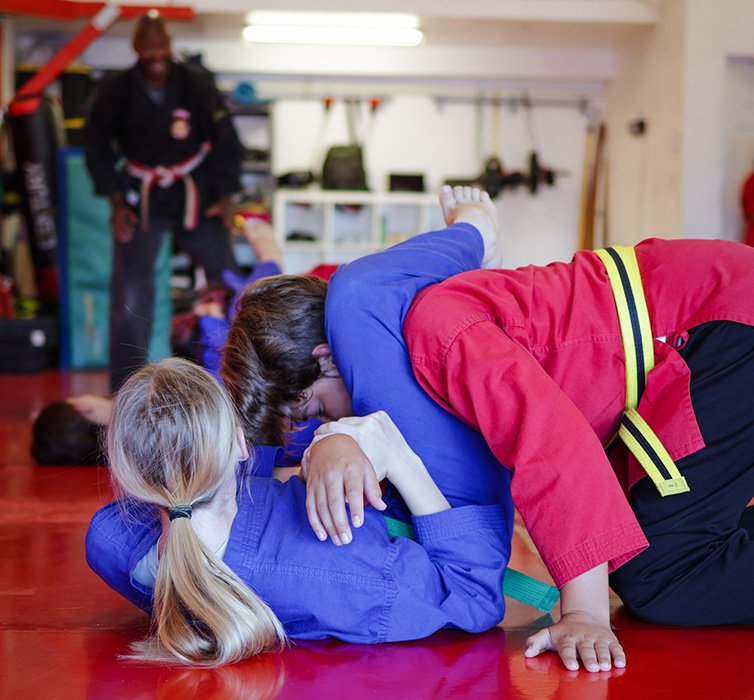
Building confidence in yourself sets the stage for something equally powerful: learning how you show up for others. On the mat, you’ll bow to your instructor and training partners, rituals that embed respect into your habits. You’ll work alongside peers, discovering their strengths and limitations, which builds genuine empathy. As you practice conflict resolution and emotional control, you’ll recognize how managing your own feelings helps you respond with compassion to others’ struggles. These skills extend beyond class—they transform how you navigate school hallways and friendships. You’re not just developing as a martial artist; you’re becoming someone your community can count on, someone who leads with both strength and kindness. Through partner exercises and group activities, you learn that your growth is intertwined with supporting others’ advancement, creating bonds that strengthen both your skills and your character.
Strengthening Mental and Emotional Resilience
Every time you step on the mat to face a new technique or spar with a stronger opponent, you’re building mental toughness that extends far beyond martial arts. You’re learning that setbacks aren’t failures—they’re growth opportunities. Through structured training, you develop discipline and emotional control that calm your nervous system under pressure. Mindfulness and breathing techniques become your tools for managing fear and frustration in real life.
As you progress through belt levels, you experience repeated cycles of challenge and achievement. This reinforces your resilience and strengthens your ability to handle adversity. Your improved focus sharpens concentration skills, while reduced anxiety opens doors to social connection and personal growth. You’re cultivating a mindset where you embrace challenges rather than avoid them. These stress reduction practices equip you with coping mechanisms that serve you during demanding academic pehttps://blog.jamesmartialartsacademy.com/wp-content/uploads/2024/06/woman-traveling-in-france-2023-11-27-05-16-47-utc_Easy-Resize.com_.jpgds and social pressures typical of adolescence.
Achieving Physical Fitness and Health Benefits
When you step onto the mat, you’re building functional strength and cardiovascular endurance that’ll serve you far beyond the dojo. Your consistent training conditions your heart and lungs while developing the body awareness that keeps you injury-free during intense sparring and drills. Through disciplined practice, you’re not just getting fit—you’re creating a resilient physical foundation that supports everything you do. Research shows that martial arts training significantly enhances reaction time, a key component of physical responsiveness that benefits athletic performance and everyday coordination.
Building Strength and Endurance
As you progress through martial arts training, you’ll discover that every punch, kick, and stance you practice works multiple muscle groups simultaneously, creating a comprehensive strength-building system that transforms your body. Your legs and glutes strengthen through kicking drills while your arms, shoulders, and chest develop through punching and blocking exercises.
Beyond raw power, you’re building functional strength—the kind that improves everyday movements and reduces injury risk. Your core strengthens, enhancing posture and overall muscle tone. High-intensity intervals during training develop both aerobic and anaerobic endurance, increasing your stamina and energy levels throughout the day. These cardiovascular improvements also enhance your overall health by strengthening your heart and improving oxygen circulation throughout your body.
This consistent practice elevates your metabolism, helping you maintain a healthy weight. You’re not just getting stronger; you’re developing the physical foundation and discipline that supports lifelong fitness.
Cardiovascular Health Through Training
Building that physical foundation you’ve established now pays dividends for your heart and circulatory system. When you train in martial arts, you’re strengthening your heart muscle and improving how efficiently it pumps blood throughout your body. Your resting heart rate drops, and your VO2 max increases—meaning you can deliver oxygen to your muscles more effectively during intense activity.
The high-intensity, intermittent movements you perform during practice stimulate your cardiovascular system continuously. This consistent training lowers your blood pressure, reduces LDL cholesterol while boosting HDL cholesterol, and decreases your risk of heart disease. Martial arts incorporates aerobic exercise, resistance training, and balance work—the three essential exercise types your cardiovascular system needs to thrive. Combined with the stress reduction martial arts provides, you’re building cardiovascular resilience that’ll serve you well throughout your life. Your discipline today creates a healthier heart tomorrow.
Body Awareness and Injury Prevention
Your martial arts training’s most underrated benefit is the body awareness you’re developing—the keen sense of where you are in space, how your limbs move, and what your body can handle. This heightened awareness directly prevents injuries.
As you practice precise techniques repeatedly, you’re strengthening muscles that stabilize your joints and improving your balance and coordination. Your core strengthens with every movement, protecting your spine during dynamic exercises. You’re also learning proper form, which reduces harmful stress on your body. Through consistent drills, you’re building cardiovascular endurance that enhances your overall fitness capacity.
Beyond physical conditioning, you’re cultivating mental discipline that keeps you alert to fatigue and pain signals. This focused attention lets you recognize when to push harder and when to protect yourself. You’re building safer movement habits that’ll serve you for life.
Mastering Life Skills and Personal Growth
When you step onto the mat, you’re learning far more than kicks and punches—you’re developing the responsibility and time management skills that’ll shape your future both in and out of the dojo. As you progress through belt ranks and mentor newer students, you’ll discover that leadership isn’t about commanding others; it’s about setting an ethical example through your own discipline and choices. These principles you’re practicing daily become your compass for making sound decisions when faced with real-world challenges. Through repetitive training, you develop the laser-sharp concentration that transforms your ability to tackle complex problems and navigate obstacles with resilience.
Responsibility and Time Management
As you progress through martial arts training, you’ll discover that mastery demands more than physical technique—it requires you to take ownership of your growth and balance competing demands on your time. You’ll learn accountability through consistent attendance and adherence to dojo etiquette, understanding that your belt rank reflects your actual effort. Each promotion reinforces the direct link between dedication and achievement, teaching you cause-and-effect responsibility. Simultaneously, you’ll develop time management by juggling training schedules with school and personal commitments. This practice sharpens your phttps://blog.jamesmartialartsacademy.com/wp-content/uploads/2024/06/woman-traveling-in-france-2023-11-27-05-16-47-utc_Easy-Resize.com_.jpgritization skills and reduces procrastination. You’ll recognize that progress depends on planning—allocating time for practice, rest, and other obligations. Research on black belt journeys demonstrates that reflective practices and debriefing sessions help students transfer these time management lessons from the dojo to their everyday lives. These skills transform you into a disciplined, reliable person both inside and outside the dojo.
Leadership Through Example Setting
Leadership doesn’t announce itself through words—it speaks through what you do every single day. In martial arts, you learn this truth firsthand by watching your instructor embody discipline, respect, and ethical behavior. You internalize these qualities through observation, gradually making them your own.
As you progress, you become the role model. Your younger classmates notice your focus during drills, your respectfulness toward instructors, and your willingness to help struggling peers. This is servant leadership in action—leading through humility and service rather than authority.
The belt around your waist represents more than technique mastery. It symbolizes your commitment to living with integrity. When you demonstrate self-control under pressure, maintain composure during setbacks, and treat everyone with dignity, you’re not just developing character—you’re modeling the leader you’re becoming.
Ethical Decision-Making Skills
Every decision you make in the dojo trains your moral compass for life outside it. When you spar, you’re not just practicing techniques—you’re developing calm, conscious decision-making under pressure. You learn to recognize when to strike and when to show restraint, understanding that power without ethics is dangerous.
This framework extends beyond combat. You’ll face real-world moral dilemmas where stress tempts you toward poor choices. Martial arts teaches you to pause, assess the situation, and respond thoughtfully rather than react impulsively. Your training develops critical thinking about right and wrong, strengthening your ability to handle complex scenahttps://blog.jamesmartialartsacademy.com/wp-content/uploads/2024/06/woman-traveling-in-france-2023-11-27-05-16-47-utc_Easy-Resize.com_.jpgs with integrity.
Every choice reinforces your character. You’re building the discipline to consistently uphold ethical standards, transforming lessons learned on the mat into principled action in your daily life.
Conclusion
You’ll find that martial arts isn’t just about physical techniques—it’s about building the person you’re meant to become. You’re developing discipline that’ll carry you through life’s challenges, confidence that’ll help you stand tall, and respect that’ll earn you genuine friendships. Every class you attend, every belt you earn, and every obstacle you overcome shapes your character. Stay committed to your training, and you’ll discover that you’re capable of far more than you ever imagined.