Karate Training Benefits for Teen Anxiety
Karate training lowers your teen’s baseline cortisol levels, systematically reducing anxiety’s physical grip. Through progressive rank advancement, they’ll build authentic self-efficacy grounded in measurable skill mastery and tangible achievement. Each technique conquered and belt earned provides concrete evidence of overcoming obstacles, transforming doubt into resilience. Partner drills enhance emotional regulation under pressure, while structured progression replaces negative self-perceptions with competence-based confidence. This multifaceted approach addresses anxiety’s neurological and psychological dimensions simultaneously, establishing lasting protective mechanisms.
Stress Reduction and Cortisol Management
When you engage in long-term karate training, your body’s stress response system undergoes measurable changes that differentiate you from non-practitioners. Your baseline cortisol levels decrease significantly, indicating endocrine modulation that benefits stress management. During training, karate stimulates your hypothalamic-pituitary-adrenal axis, causing cortisol to rise initially during exercise. However, consistent practice establishes lower resting cortisol levels over time. This hormonal regulation directly counteracts prolonged stress hormone elevation, which damages both mental and physical health. Reduced cortisol mitigates chronic stress symptoms including muscle tension and fatigue. The pituitary hormones ACTH and TSH remain unaffected by karate practice, suggesting selective downregulation of specific hormonal pathways rather than broad endocrine suppression. Additionally, broader endocrine effects accompany cortisol reduction, suggesting karate functions as a psychosomatic intervention. These physiological changes provide clinical applications for preventing stress-related diseases in adolescents.
Building Self-Confidence Through Martial Arts
As you progress through karate’s belt system, you’ll experience measurable skill advancement that directly strengthens your self-perception and belief in your capabilities. Daily practice cultivates the inner resilience needed to face challenges, transforming doubt into confidence through consistent effort and visible improvement. Each technique you master and rank you achieve provides concrete evidence that you can overcome obstacles, rewiring your neural response to self-doubt and anxiety. This mindset of failure as part of growth encourages you to view setbacks as learning opportunities rather than defeats, further reinforcing your emotional resilience and long-term confidence development.
Mastery Through Progressive Ranks
Karate’s structured belt system creates a framework where you’ll encounter four distinct mechanisms that build self-confidence in anxious teens. First, progressive rank requirements establish measurable feedback loops that reinforce effort-outcome relationships. Second, mastery of techniques at each level produces authentic confidence grounded in demonstrated competence rather than external validation. Third, successfully navigating pressure conditions during rank assessments trains emotional regulation, transferring stress management skills to everyday situations. Finally, tangible belt promotions serve as concrete milestones celebrating achievement, reinforcing persistent engagement despite initial difficulties. This stepwise progression systematizes skill development while simultaneously addressing anxiety through accumulated evidence of personal capability and resilience-building experiences. Each small victory earned through consistent training becomes a building block, as courage grows with every small victory students complete in their martial arts journey.
Developing Inner Strength Daily
While traditional confidence-building approaches often rely on external praise, martial arts training creates self-efficacy through direct engagement with measurable skill acquisition and tangible achievement. You develop inner strength by confronting physical and psychological challenges on the mat, transforming abstract anxiety into concrete, manageable obstacles.
Daily practice cultivates mental resilience through controlled exposure to discomfort. You internalize competence through repetitive mastery of techniques, building neurological pathways that reinforce self-belief. This process transfers to academic and social domains, where you approach challenges with demonstrated capability. Partner drills and practicing with others enhance your ability to maintain focus and composure during challenging situations.
The structured progression from novice to advanced practitioner provides empirical evidence of your growth. You don’t rely on subjective reassurance; instead, you accumulate objective proof of competence through belt advancement and technical proficiency, anchoring confidence in genuine accomplishment.
Overcoming Self-Doubt With Practice
Building genuine confidence requires more than internalized resilience—you’ve got to actively dismantle self-doubt through sustained practice and measurable progress. When you engage in karate training consistently, you experience repeated mastery of physical techniques, which directly reinforces your sense of competence. Research demonstrates that this skill acquisition translates into broader mental confidence, reducing self-doubt about personal capability.
Each technique you master creates documented evidence of your progress. You’ll observe tangible improvements in situational awareness and self-defense knowledge, decreasing perceived vulnerability. This psychological shift—from helplessness to empowerment—fundamentally alters your self-perception. Regular practice reinforces vigilance and preparedness, enabling you to assert yourself confidently in vahttps://blog.jamesmartialartsacademy.com/wp-content/uploads/2024/06/woman-traveling-in-france-2023-11-27-05-16-47-utc_Easy-Resize.com_.jpgus contexts. Studies show that martial arts training enhances executive functions including inhibition and processing speed, which support better emotional regulation and decision-making.
The cumulative effect of achievement milestones within karate systematically replaces negative self-perceptions with constructive self-images, grounded in actual skill development.
How Karate Reduces Anxiety Symptoms
Several distinct physiological and psychological mechanisms work together to reduce anxiety symptoms in teenagers who practice karate regularly. When you engage in karate training, you experience acute stress reduction within eight weeks, with statistically significant improvements (p < 0.01) regardless of gender.
The practice shifts your attention away from anxiety-provoking thoughts toward present-moment focus, disrupting rumination patterns. Simultaneously, intense physical workouts trigger mood-enhancing neurochemical changes that alleviate anxious feelings. Regular karate training also provides endorphin release that induces feelings of calm and happiness after each session.
Karate’s controlled combat scenahttps://blog.jamesmartialartsacademy.com/wp-content/uploads/2024/06/woman-traveling-in-france-2023-11-27-05-16-47-utc_Easy-Resize.com_.jpgs provide desensitization to fear-related stimuli in a safe environment, modifying limbic system responses. Additionally, the discipline required strengthens frustration tolerance and emotional regulation, enabling you to manage anxiety-driven impulses effectively. These integrated mechanisms—physiological, cognitive, and emotional—collectively produce measurable symptom improvement.
Depression Relief and Emotional Balance
Beyond anxiety reduction, karate training produces measurable improvements in depressive symptoms through interconnected neurobiological and psychosocial pathways. You’ll experience increased serotonin production, a neurotransmitter crucial for mood regulation. This neurochemical shift correlates directly with reduced depression and anger levels.
Karate’s mindful, deliberate movements integrate mind-body practices that enhance emotional self-regulation. You’ll develop frustration tolerance and resilience through consistent training and skill mastery. Group practice creates social connectedness, mitigating isolation—a significant depressive risk factor. Research demonstrates that martial arts reduce depression symptoms through both physical activity and psychological engagement.
Physical improvements compound these benefits: enhanced vigor counters lethargy, while mastery experiences boost self-esteem, which inversely relates to depressive symptoms. You’ll cultivate behavioral traits like assertiveness and relaxation that sustain emotional equilibrium long-term. These cumulative neurobiological and psychosocial adaptations establish karate as an evidence-supported intervention for depression management in adolescents.
Improved Focus and Cognitive Function
While karate’s emotional benefits establish a foundation for psychological well-being, the practice simultaneously strengthens the cognitive machinery underlying attention, mental flexibility, and decision-making. Research demonstrates that consistent martial arts training enhances executive functions including inhibition control, cognitive flexibility, and processing speed—capacities directly supporting academic performance and classroom conduct.
Karate practitioners exhibit supehttps://blog.jamesmartialartsacademy.com/wp-content/uploads/2024/06/woman-traveling-in-france-2023-11-27-05-16-47-utc_Easy-Resize.com_.jpgr self-regulation compared to peers, enabling better emotion management and sustained focus during challenging tasks. The complex motor demands and structured repetition foster neuroplasticity, increasing gray matter volume in brain regions responsible for memory and planning. Additionally, stress reduction from training lowers cortisol levels, improving working memory and mental clarity. These neurobiological improvements align with occupational therapy principles that support cognitive development and mental health integration. Through these interconnected neurobiological changes, you’ll experience measurable improvements in concentration, adaptive thinking, and cognitive endurance.
Social Connection and Community Support
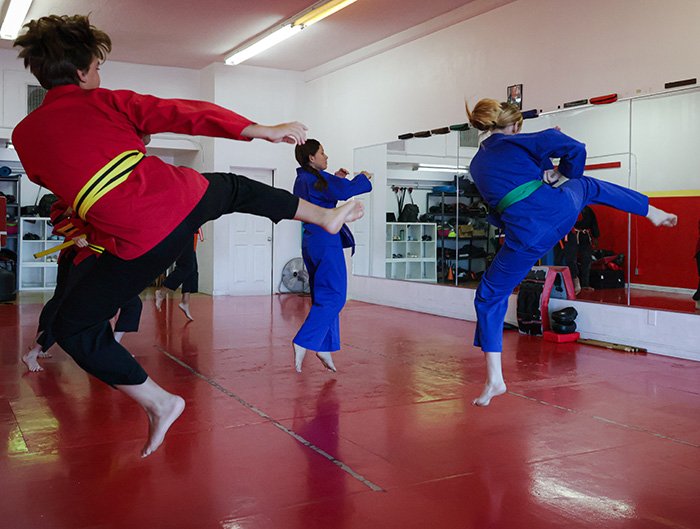
One of anxiety’s most insidious features is its tendency to isolate, yet karate training directly counters this through structured social engagement that builds genuine community bonds. You’ll experience consistent peer interaction through partner drills and group activities, which research shows reduces social anxiety symptoms. The dojo functions as a community offering acceptance and emotional support, helping you feel less alone. Belt advancement ceremonies provide recognition that validates your progress and strengthens identity. You’ll develop trust with instructors who serve as mentors and role models, creating a stable support system outside your family. Leadership opportunities, such as assisting lower-ranked students, build social status and responsibility, directly addressing feelings of social awkwardness. This structured environment also helps release endorphins through physical activity, which naturally enhances mood and creates a more positive social experience. This community framework creates a protective buffer against external pressures like bullying.
Physical Fitness and Mental Health
Karate training delivers dual benefits that directly address teen anxiety through both physiological and psychological mechanisms. When you engage in karate, cardiovascular exertion triggers endorphin release, creating biochemical mood enhancement that reduces anxiety and depression symptoms. This physical activity simultaneously builds muscular strength and flexibility, improving body awareness and motor coordination—factors that strengthen overall resilience.
The sustained training cultivates emotional regulation by requiring focused attention on techniques, promoting mindfulness that counteracts anxious thoughts. You’ll experience reduced cortisol levels and enhanced dopamine and serotonin production, stabilizing your mood long-term. Additionally, karate’s structured environment provides consistent routine and safe space for emotional expression, reinforcing stress tolerance and coping mechanisms that extend beyond the dojo into daily life challenges. Regular practice also improves coordination, balance, and agility, which enhances your sense of control over your physical body and reduces the physical tension associated with anxiety.
Breathing Techniques and Mindfulness Practices
You’ll find that karate’s structured breathing techniques anchor your attention to the present moment, directly counteracting the rumination that fuels anxiety. When you synchronize your breath with movement—particularly through abdominal breathing during strikes and forms—you activate your parasympathetic nervous system, which physiologically reduces stress markers like cortisol and amygdala activity. This integration of breath awareness and mindful movement trains your brain to sustain present-moment focus rather than anticipate threats, establishing a practical tool you can deploy both on and off the mat.
Anchoring Presence Through Breath
While anxiety activates the sympathetic nervous system—triggering elevated heart rate, muscle tension, and racing thoughts—controlled breathing offers a direct physiological counterbalance. When you focus on your breath, you activate parasympathetic tone, which lowers heart rate and reduces muscle tension in your thorax and shoulders.
By anchoring your attention to breath sensations, you interrupt rumination patterns that fuel anxiety and enhance interoceptive awareness—your ability to sense internal bodily states. This mindful attention desynchronizes distressing involuntary respiratory patterns common in anxiety disorders. Research shows that combining breath awareness with embodied presence increases body-mind integration, creating more consistent anxiety reductions than breath control alone.
You’ll find that even five minutes daily of slow, rhythmic breathing with prolonged exhalations produces measurable shifts in emotional regulation and anxiety symptoms.
Mindful Movement Calms Anxiety
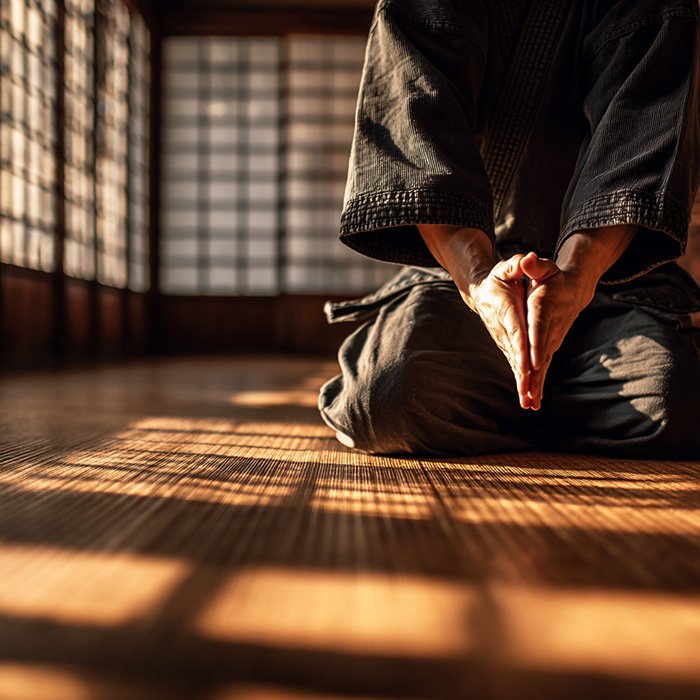
Because anxiety disrupts your ability to stay present, integrating breath awareness with deliberate movement offers a neurobiological intervention that redirects attention away from anxious rumination toward immediate sensory experience. Practicing kata synchronizes your breathing with choreographed movements, functioning as moving meditation that decreases amygdala activation while strengthening prefrontal cortex engagement. This mind-body coordination interrupts the rumination cycle by anchoring your focus to physical sensations and rhythm rather than worry-based thoughts.
Research demonstrates that mindful martial arts practice enhances the mind-body connection, directly reducing anxiety symptoms. The concentrated effort required during forms cultivates mental clarity and emotional stability. By training your nervous system through structured, breath-coordinated movement, you develop portable coping mechanisms that extend anxiety relief beyond the dojo into daily life.
Present Moment Awareness Practice
The mindful movement practices in kata establish a foundation for developing sustained present-moment awareness—a skill that extends far beyond choreographed forms. When you focus on breath during karate training, you activate brain regions associated with attention and emotion regulation, facilitating decreased anxiety responses. This breath-focused awareness interrupts rumination by redirecting your cognitive resources from anxious thoughts to sensory experience. Research demonstrates that controlled breathing reduces physiological stress markers, including heart rate and blood pressure. You’ll find that moment-to-moment mindful attention disrupts anxiety-related thought loops by anchoring your awareness in current sensations. Regular practice builds neuroplastic changes in your prefrontal cortex and amygdala, downregulating stress pathways and lowering cortisol levels—producing sustained anxiety management capabilities comparable to evidence-based interventions like cognitive behavioral therapy.
Long-Term Resilience and Coping Skills
Karate training cultivates psychological resilience through systematic exposure to controlled adversity, fostering adaptive responses that extend beyond the dojo. You’ll develop ego-resilience—a construct linked to sustained positive emotional states and enhanced life satisfaction—by consistently navigating sparring challenges and technique progressions. This repeated experience of managing difficulty strengthens your capacity to adapt and recover from setbacks, building long-term coping mechanisms for anxiety and stress. The belt progression system reinforces a growth mindset, anchoring your confidence in effort rather than innate ability. You’ll integrate emotional regulation skills and perseverance into your foundational psychological framework. These competencies translate directly into academic performance, athletic pursuits, and social interactions, creating durable psychological resources you’ll access throughout your life.
Conclusion
You’ll find that karate training demonstrates measurable anxiolytic effects through multiple physiological and psychological mechanisms. Research indicates sustained practice reduces cortisol levels, enhances emotional regulation, and strengthens neural pathways associated with resilience. You’ll develop evidence-based coping strategies while gaining demonstrable improvements in self-efficacy and social functioning. These clinical outcomes support karate as a viable complementary intervention for adolescent anxiety disorders.