Improved Focus and Discipline in Teen Karate
You’ll develop laser-focused concentration through kata practice, where mental clarity becomes as essential as physical technique. Consistent training rewires your brain, transforming discipline from a concept into your default behavior. You’ll regulate your nervous system through controlled breathing, reduce anxiety, and strengthen decision-making across academics and personal goals. Belt progression provides tangible proof of your growth. The mental sharpness you’re building extends far beyond the dojo, and there’s much more to discover about maximizing these transformations.
The Power of Mindful Movement and Concentration
When you step onto the karate mat, you’re entering a space where mental clarity becomes as essential as physical technique. Your training demands intense focus on forms, techniques, and breath—elements that sharpen your concentration and attention span dramatically. As you practice kata sequences, you’re strengthening both memorization and sustained focus simultaneously.
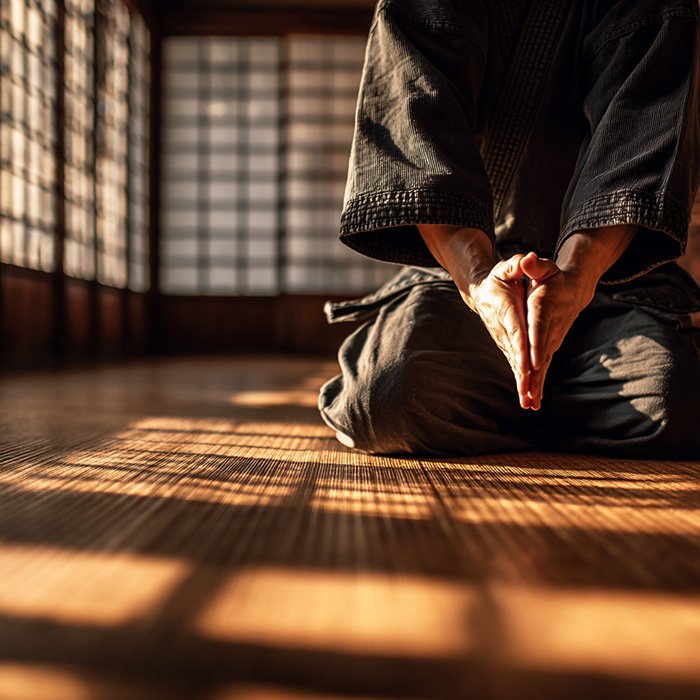
Mindfulness anchors your attention to present movements, reducing rumination and anxious thoughts. By concentrating on posture, gaze, and spirit engagement, you cultivate heightened awareness that extends beyond the dojo. Incorporating meditation and breathing techniques during training teaches you to maintain calm and mental presence under pressure. This mindful movement transforms your relationship with focus, creating mental clarity that penetrates every aspect of your life. Regular class attendance and structured practice develop organization and productivity skills that enhance your academic performance and time management in school and daily responsibilities.
Building Unshakeable Self-Discipline Through Consistent Training
When you train consistently in karate, you’re not just repeating moves—you’re building neural pathways that transform discipline from a concept into your default behavior. Your belt progression serves as tangible proof of growth, fueling your motivation to push harder and stay committed even when progress feels slow. The self-discipline you cultivate on the mat doesn’t stay there; it seeps into your academics, relationships, and how you tackle life’s obstacles. This improved self-control directly strengthens your ability to suppress unwanted impulses and make better decisions across all areas of your life, contributing to greater overall well-being.
Consistency Creates Strong Habits
Because discipline isn’t built in dramatic moments but through the relentless repetition of small actions, karate training offers teens a proven pathway to unshakeable self-control. When you tie your belt correctly each class and drill techniques consistently, you’re not just perfecting movements—you’re rewiring your brain. Each repetition builds neural pathways that transform conscious effort into automatic execution. You’ll notice that showing up regularly, regardless of mood or fatigue, strengthens your mental toughness in measurable ways. This consistency doesn’t just stay on the mat. The habits you cultivate—punctuality, focus, follow-through—transfer directly to academics, relationships, and personal goals. Through teen martial arts classes, you learn that the same principles that build focus on the mat directly support your success in every area of your life. You’re training your brain to phttps://blog.jamesmartialartsacademy.com/wp-content/uploads/2024/06/woman-traveling-in-france-2023-11-27-05-16-47-utc_Easy-Resize.com_.jpgritize commitment over convenience, creating lasting behavioral change that defines genuine self-discipline.
Belt Progression Motivates Growth
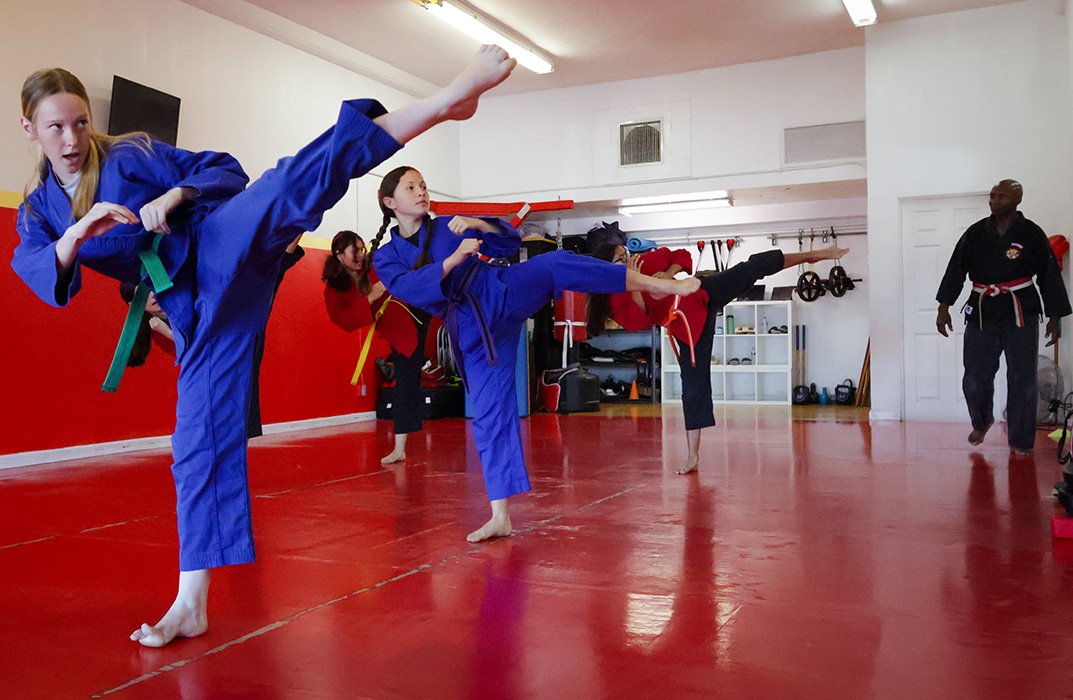
The belt system transforms abstract discipline into concrete milestones you can see, touch, and wear—each color representing a specific threshold of mastery that keeps you moving forward. Rather than pursuing an indefinite goal, you’re working toward clearly defined achievements that align with how your brain naturally processes motivation.
This progression strategy works because it breaks complex martial arts training into manageable segments. Early belts provide frequent rewards that maintain your engagement, while higher ranks space out achievements to increase their value. You’re building emotional resilience and self-control incrementally, with each belt earned reinforcing your identity as a disciplined practitioner. Each promotion triggers a dopamine release that creates a success spiral, making the achievement feel earned rather than arbitrary.
The structured journey doesn’t just develop technical skill—it cultivates genuine commitment that carries beyond the dojo into your daily life.
Discipline Transfers to Life
While you’re perfecting your stance in the dojo, you’re simultaneously rewiring how you respond to challenges everywhere else—at school, home, and in your relationships. The discipline you cultivate transforms your behavior control in real-world situations. You’ll notice impulses becoming manageable, emotional reactions becoming measured, and decisions becoming thoughtful rather than reactive.
Karate teaches you to pause before responding. This skill transfers directly to managing stress at school, navigating conflicts with peers, and handling frustration productively. Your enhanced self-regulation reduces conduct disorder symptoms and strengthens resilience when facing adversity. Research demonstrates that martial arts training significantly enhances self-esteem through rigorous practice that builds confidence and accomplishment.
The habits you build on the mat—focus, respect, perseverance—become lifelong tools. You’re not just learning kicks and punches; you’re developing the psychological framework for sustained success and well-being across every dimension of your life.
Mastering Emotional Control and Stress Relief
Karate offers you a proven pathway to emotional mastery by merging physical discipline with mental training. Through controlled breathing and deliberate movements, you regulate your nervous system while building genuine self-control that extends far beyond the mat.
Regular training exposes you to manageable stress in a structured environment, teaching you to maintain composure under pressure. You’ll develop cognitive reappraisal skills—reframing challenges as opportunities rather than threats—which strengthens your emotional resilience. Over time, this consistent practice builds emotional resilience through repeated exposure to challenges you can successfully overcome.
The physical exertion releases endorphins and serotonin while lowering cortisol, directly reducing anxiety and improving your mood. Repetitive forms anchor you in the present moment, cultivating mindfulness that quiets racing thoughts.
Karate becomes your sanctuary for healthy catharsis, channeling frustration productively. This combination of stress relief and emotional regulation transforms how you navigate life’s challenges with clarity and confidence.
Setting Goals and Achieving Long-Term Success
Once you’ve mastered emotional control on the mat, you’re ready to channel that discipline into purposeful goal-setting that drives sustained progress. Start by crafting SMART goals—specific, measurable, achievable, relevant, and time-bound—that align with your karate aspirations, whether mastering a particular technique or earning your next belt.
Break larger objectives into manageable milestones. Track progress weekly or monthly, celebrating small victories that reinforce confidence. Share your goals with your instructor or training partners; accountability strengthens commitment and keeps you consistent. Create a training schedule to maintain the regularity that transforms aspirations into achievements.
Embrace adaptability when obstacles arise. View setbacks as learning opportunities rather than failures, adjusting your approach while maintaining your vision. This resilience builds the long-term discipline necessary for genuine martial arts mastery and personal growth beyond the dojo.
Developing Respect and Empathy on the Mat
As you progress through your karate training, you’ll discover that true mastery extends far beyond perfecting kicks and punches—it demands that you cultivate respect and empathy toward those around you. When you bow to your instructor and peers, you’re acknowledging their value and commitment to the art.
Partner drills teach you to read your teammates’ strengths and limitations, adjusting your approach accordingly. This sensitivity builds genuine connections and trust on the mat. You’ll learn that respecting boundaries and offering encouragement strengthens your entire dojo community. Through these collaborative exercises, you develop the ability to appreciate diverse perspectives and work toward harmonious goals with your training partners.
The Physical Foundation for Mental Sharpness
When you build physical strength through karate, you’re simultaneously constructing the neural pathways that sharpen your mental clarity and decision-making speed. Your body’s coordination improvements directly translate to enhanced focus capacity, allowing you to concentrate longer and process information faster in academic and personal situations. By developing keen body awareness on the mat, you gain the control mechanism that supports disciplined thinking and composed responses when facing life’s challenges. The memorization of karate sequences and kata strengthens both your short-term and long-term recall, creating cognitive benefits that extend far beyond the dojo into your everyday life.
Strength Builds Mental Clarity
Why do you think elite athletes and martial artists often display razor-sharp focus during high-pressure situations? Their strength training does more than build muscle—it sharpens your mind.
When you develop physical strength through karate, you’re enhancing cerebral oxygenation and neuroplasticity. Your brain processes information more clearly. This isn’t coincidental; muscle development directly supports mental clarity by optimizing how your nervous system functions.
As you condition your body, you’re simultaneously reinforcing discipline and focus. Strength training establishes neural pathways that translate into sharper decision-making during complex tasks. Your improved physical foundation creates measurable cognitive advantages. Research demonstrates that combined aerobic and resistance activities produce the most significant improvements in mental health outcomes.
You’ll notice enhanced concentration, better pressure management, and quicker mental recovery. This synergy between physical conditioning and mental acuity makes you unstoppable in the dojo and beyond.
Coordination Enhances Focus Capacity
Your coordinative practice reinforces sensory-motor pathways, enhancing your ability to filter distractions and maintain divided attention. Each kata demands integration of motor control and cognitive processing, rewiring your brain for better decision-making and faster mental response times.
This isn’t passive training. You’re literally building neural infrastructure for concentration. The complex movements you master today become the mental discipline you access tomorrow, creating lasting improvements in your capacity to sustain focus under pressure.
Body Awareness Supports Control
As you deepen your body awareness through karate training, you’re building the physical foundation that mental sharpness depends on. You’ll learn to recognize muscle tension, posture shifts, and balance changes—physical signals that reveal your emotional and mental states. This somatic awareness anchors your attention in bodily sensations, interrupting rumination and managing stress effectively.
Your mind-body communication strengthens through deliberate practice. You’ll discover that calming your body calms your mind, and vice versa. Controlled breathing, centering exercises, and precise stance work deepen your mindfulness while sharpening focus.
As you integrate body awareness into mental training, you’re forging the cognitive-motor synchronization that discipline demands. This isn’t passive observation—it’s active development of the self-regulation skills that transform raw potential into genuine control.
From Belt Advancement to Personal Growth
The karate belt system doesn’t just mark technical proficiency—it’s a transformative tool that reshapes how teens approach challenges, setbacks, and their own potential.
Each advancement reinforces your identity as a martial artist while building genuine confidence. You’re not simply earning a colored fabric; you’re developing self-efficacy through demonstrated mastery. This recognition catalyzes broader personal growth, extending beyond the dojo into academics and relationships.
The progressive structure teaches you patience and perseverance. Early promotions build momentum, while advanced belts demand sustained focus and discipline. You learn that meaningful achievement requires consistent effort over time. This mindset fundamentally changes how you tackle obstacles—you become someone who works through difficulty rather than around it.
Belt progression ultimately cultivates emotional resilience, helping you navigate adolescence’s complexities with greater self-assurance and capability.
Real-World Applications Beyond the Dojo
While the dojo provides the foundation for your karate training, the real power emerges when you carry those skills and mindsets into everyday life. The discipline you’ve cultivated transfers directly to managing academic responsibilities and navigating complex social situations with greater composure.
Your improved emotional regulation becomes invaluable when facing peer pressure or conflict. Instead of reacting impulsively, you’ll draw upon the calmness and strategic thinking you’ve developed through mental training. The resilience built through belt progression strengthens your ability to set ambitious goals across all life areas—academics, relationships, personal projects.
You’ll notice heightened attentiveness in class and more thoughtful decision-making in social dynamics. The respect and self-control your instructors model become integrated into your personal interactions. Ultimately, karate transforms you into a more focused, disciplined, and resilient version of yourself.
Conclusion
You’ve discovered that karate isn’t just about mastering kicks and punches—it’s about sharpening your mind and strengthening your character. By committing to consistent training, you’re building unshakeable discipline that transforms every aspect of your life. You’re learning to control your emotions, set meaningful goals, and respect yourself and others. Keep training hard, stay focused, and watch how these powerful skills ripple into your academics, relationships, and future success.