Martial Arts Classes Near Me
You’ll find martial arts schools within a few miles that offer striking disciplines such as Karate and Muay Thai, grappling arts such as Brazilian Jiu-Jitsu and Judo, or hybrid systems such as MMA. Programs cater to all ages—from motor skill development for young children to mobility-focused training for seniors. Expect monthly memberships ranging from $75-$200, plus costs for uniforms and testing fees. Training delivers measurable physical improvements in balance, power, and cardiovascular health alongside mental benefits like stress reduction and enhanced focus. The fundamentals below will help you select the optimal program for your specific goals.
Types of Martial Arts Styles You Can Learn Locally
Your local martial arts landscape offers four distinct categories of training styles, each serving different combat philosophies and personal goals.
Striking arts like Karate, Taekwondo, Muay Thai, Boxing, and Kickboxing emphasize stand-up fighting through punches, kicks, elbows, and knees. You’ll develop power, speed, and distance management. Boxing’s training regimen requires mastery of footwork, head movement, defensive maneuvers, and precise striking alongside crucial mental elements like strategy and timing.
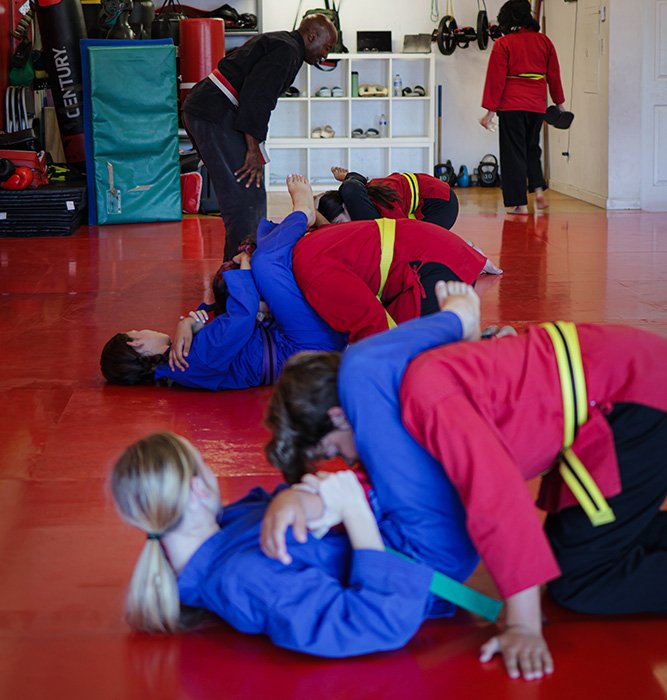
Grappling disciplines, including Brazilian Jiu-Jitsu, Judo, Wrestling, and Sambo, focus on throws, takedowns, and ground submissions. These arts teach leverage-based control rather than striking.
Hybrid systems such as MMA, Krav Maga, Kakujenbo, and Hapkido blend striking and grappling for comprehensive combat preparation. You’ll train across multiple ranges.
Traditional arts like Kung Fu, Capoeira, and Ninjutsu preserve cultural heritage while teaching combat techniques. These emphasize forms, philosophy, and historical context alongside practical application.
Finding the Right Program for Your Age and Skill Level
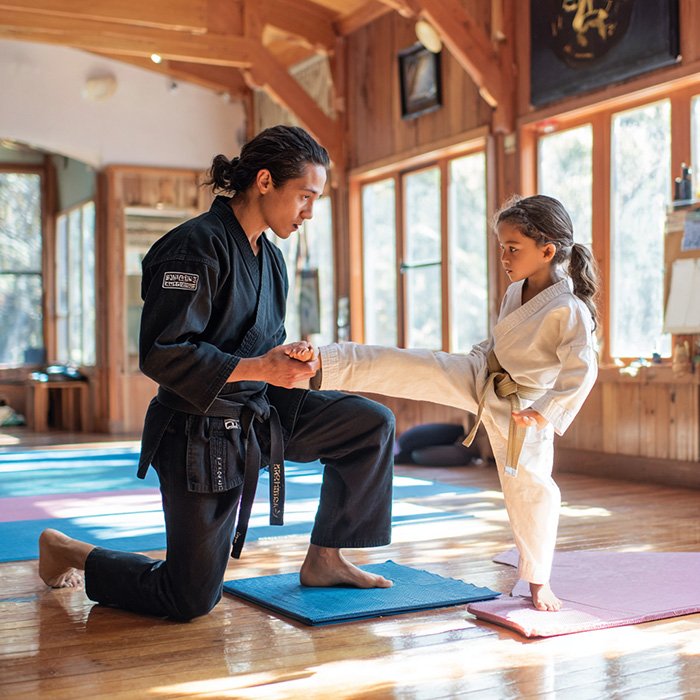
Selecting a martial arts program demands careful matching between your developmental stage and the curriculum’s structural design. Schools typically segment classes into distinct age brackets—3-4, 5-6, 7-9, and 10+ years—with eight core skills targeted per level to ensure progressive acquisition.
If you’re enrolling young children (3-6 years), phttps://blog.jamesmartialartsacademy.com/wp-content/uploads/2024/06/woman-traveling-in-france-2023-11-27-05-16-47-utc_Easy-Resize.com_.jpgritize programs emphasizing motor skills, balance, and coordination through playful drills. Ages 7-12 require structured discipline, fundamental techniques, and goal-setting frameworks. Teen curricula should incorporate advanced techniques, controlled sparring, and mental toughness development.
Adult programs focus on fitness, stress management, and practical self-defense, while senior-oriented classes concentrate on mobility maintenance and injury prevention. Verify instructors understand age-related development and apply appropriate teaching methods—short, engaging activities for children; cognitive challenges for middle-age groups; precision-focused training for advanced students. Many schools loosely use the term “age-specific” to describe classes divided by age, yet continue teaching identical curriculum and methods across all groups, which creates unnecessary frustration for both students and instructors.
What to Expect From Local Training Facilities
After identifying the appropriate program for your skill level, you’ll need to evaluate the physical environment where training occurs. Quality facilities maintain central training areas with martial arts-specific flooring—tatami mats for grappling or padded surfaces for striking. You’ll typically find weight training zones positioned toward the rear, along with designated storage areas to minimize clutter and accident risk.
Essential equipment includes heavy bags, striking pads, and training weapons appropriate to the discipline. Adequate ventilation and climate control systems ensure comfortable intensive training sessions. Properly maintained facilities feature accessible first aid stations, hydration points, and clear emergency protocols. Mirrors enable technique refinement, while sound systems deliver instructions across larger spaces. Gender-separated locker rooms and social areas support both practical needs and community development, contributing to student retention and engagement. The placement of mats and common areas should demonstrate efficient use of space while maintaining proper flow for classes and training activities.
Understanding Costs and Membership Structures
One of the most critical decisions you’ll face involves evaluating whether a school’s pricing structure aligns with your financial capacity and training objectives. Monthly memberships typically range from $25 to $500+, with most schools charging $75-$200. Discipline matters: traditional Karate and Taekwondo average $75-$150, while BJJ and Judo command $100-$200+ due to specialized equipment requirements.
Factor in additional costs beyond base tuition. Belt testing fees span $20-$1000, depending on rank. Uniforms and protective gear add $30-$150 initially. Private lessons cost $50-$200 per session.
Membership structures vary significantly: monthly subscriptions, yearly unlimited access, multi-class packages, or pay-per-class options. Maximize value through family discounts, longer commitments, or upfront annual payments. Metropolitan locations typically charge premium rates reflecting higher operational costs. Higher-priced programs often maintain a low student-to-instructor ratio, ensuring more personalized attention and consistent instruction quality.
Physical and Mental Benefits of Regular Training
Beyond the practical self-defense applications, martial arts training delivers measurable improvements across physical, mental, and cognitive domains that extend well into daily life. You’ll develop balance, power, endurance, and agility through forms practice and sparring while building cardiovascular health through sustained aerobic activity. Training enhances muscular coordination and increases range of movement, reducing injury risk and back pain.
Mentally, you’ll experience small to medium positive effects on well-being, including reduced anxiety and depression. The practice strengthens emotional regulation, increasing stability and self-confidence while decreasing aggressive tendencies. Mindfulness techniques embedded in breathing control and deliberate movements lower stress levels. You’ll sharpen concentration and tactical thinking through complex movement sequences, improving problem-solving skills and strategic planning capabilities that transfer directly to professional and personal challenges. Whether you emphasize the athletic skills or take a more meditative approach, the training fundamentally improves your quality of life.
Conclusion
You’ve explored the landscape of local martial arts programs—now it’s time to act. Don’t let analysis paralysis prevent your progress. Select a facility that aligns with your objectives, verify the instructor’s credentials, and commit to consistent attendance. Your first class will reveal whether the training environment suits your needs. Remember: technique develops through repetition, not contemplation. Schedule your trial session today and begin building the discipline that separates practitioners from spectators.