What Is the Meaning of Sifu
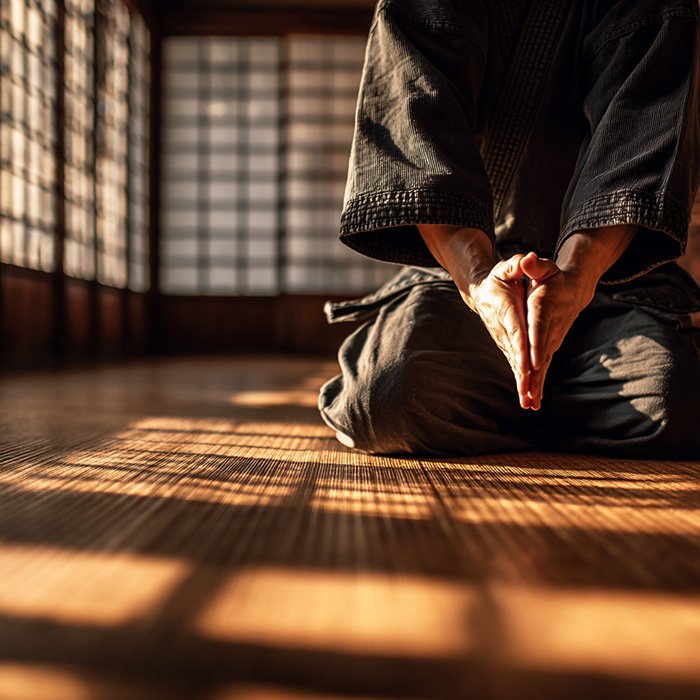
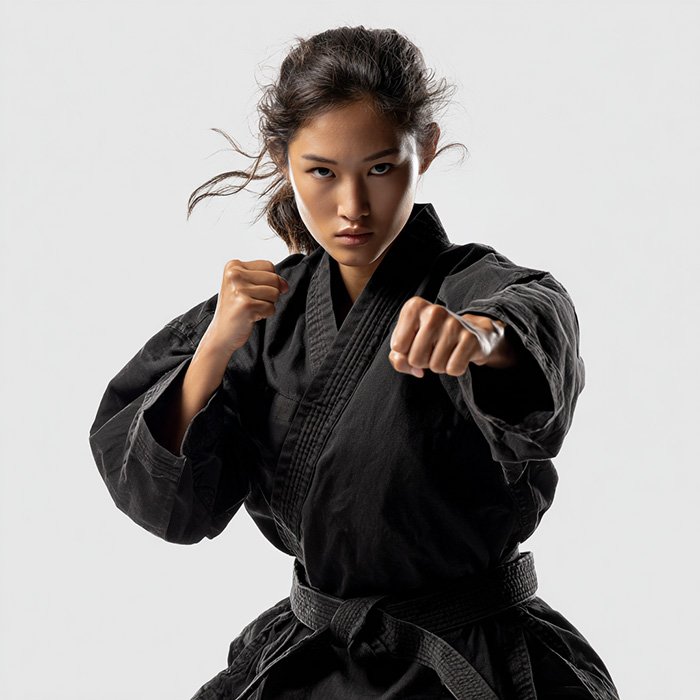
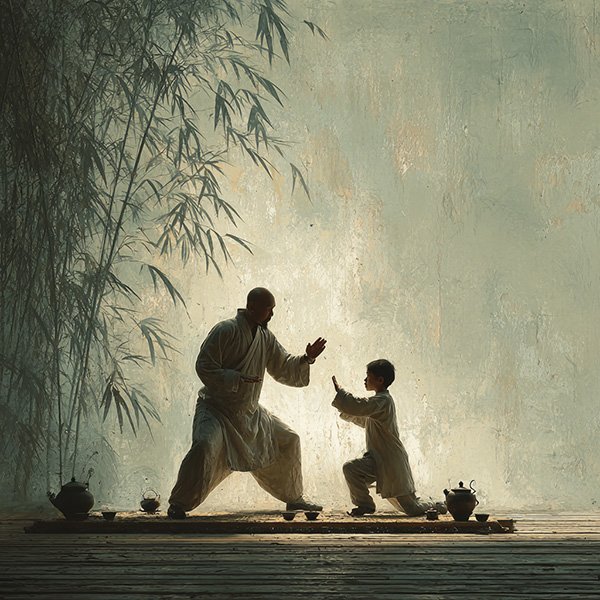
Sifu (pronounced “see-foo”) is a Chinese honorific title combining the words for “teacher” and “father.” You’ll hear this term in martial arts schools, where it represents more than just an instructor—it’s someone who takes on a paternal role in guiding your development. The title demands respect, earned through years of mastery and teaching experience. This profound mentor-student relationship forms the foundation of traditional Chinese martial arts lineages.
The Etymology of Sifu: Linguistic Origins
The term “Sifu” carries rich linguistic ancestry rooted in Chinese characters that blend concepts of teaching, mentorship, and family bonds. When you encounter this word, you’re actually witnessing the combination of two key characters: “師” (shī/si) meaning teacher or master, and either “傅” (fù) signifying tutor/instructor or “父” (fù) meaning father.
These two distinct variations—师傅 (shīfù) and 师父 (shīfu)—sound identical when spoken but carry subtle differences in respect and intimacy. The father-character version conveys deeper reverence, often used for religious figures and traditional martial arts masters, while the tutor version historically addressed skilled craftsmen and artisans. In English-speaking countries, people are typically more familiar with the Shīfu 師父 variation.
Both spellings reflect the profound teacher-disciple relationship that transcends mere instruction to include life guidance and moral development.
Cantonese vs. Mandarin: Pronunciation Differences
These pronunciation differences extend to spelling conventions. “Sifu” typically represents the Cantonese romanization, while “Shifu” denotes the Mandarin version. Both spellings point to the same Chinese characters (師傅 or 師父), though their pronunciation varies with dialect.
Tonal distinctions further separate these terms, with Mandarin’s shīfù having specific tones that don’t precisely match Cantonese patterns. Your geographic location often determines which pronunciation you’ll encounter—Cantonese dominates in Hong Kong and Guangdong, while Mandarin prevails throughout mainland China. Different martial arts traditions may favor one pronunciation based on their regional origins. Regardless of pronunciation, a true sifu embodies mastery that goes beyond merely instructing techniques.
The Father-Teacher Relationship in Chinese Culture
Central to Chinese cultural tradition, the Sifu relationship transcends mere instruction to embody a profound father-teacher bond. When you enter this relationship, you’re not simply learning skills—you’re becoming part of a familial lineage with lifelong commitments.
This bond carries mutual obligations. As a disciple, you’ll treat your Sifu with the same reverence as your biological parents, promising care throughout their lifetime. Your Sifu, in turn, takes responsibility for your complete development—moral character, cultural understanding, and personal growth. The literal translation of “Sifu” as teaching father reinforces this nurturing relationship.
Unlike Western teaching models, this relationship isn’t casual or temporary. The term itself reflects this depth: 師 (teacher) combined with 父 (father). You’ll only earn the privilege of addressing someone as “Sifu” after establishing genuine trust and demonstrating commitment to their teachings.
Earning the Title: Requirements and Qualifications
You’ll need to dedicate approximately 15 years of consistent training and teaching to earn the Sifu title in traditional Wing Chun systems.
This journey includes demonstrating your proficiency to Masters and Grandmasters while simultaneously mentoring your own students through their advancement.
Your qualification requires bringing at least two students to First Technician Grade, proving you’ve successfully transmitted the art to the next generation. According to the U.S. Wing Chun progression system, Level 4 Sifus can certify their own students and establish their own schools.
Training Duration Benchmarks
Consistently, the journey to becoming a Sifu requires substantial time investment, with most practitioners needing between 5-10 years of dedicated training to reach this prestigious level. Reputable schools enforce minimum training pehttps://blog.jamesmartialartsacademy.com/wp-content/uploads/2024/06/woman-traveling-in-france-2023-11-27-05-16-47-utc_Easy-Resize.com_.jpgds—typically 3 years, with some requiring 7 years—to ensure true proficiency beyond technical knowledge.
You’ll make faster progress through intensive training. Daily practice and private lessons accelerate your advancement more effectively than sporadic group classes. Skills detehttps://blog.jamesmartialartsacademy.com/wp-content/uploads/2024/06/woman-traveling-in-france-2023-11-27-05-16-47-utc_Easy-Resize.com_.jpgrate substantially after 6 days without training. Training 5+ hours weekly over 5 years establishes a solid benchmark for teaching qualification, with frequency proving more important than session length.
Mentoring Proven Students
While time invested in training establishes your technical foundation, becoming a Sifu extends far beyond accumulating practice hours. True mentorship emerges when you’ve demonstrated both technical mastery and exemplary character within your martial arts family.
You’ll typically begin this journey as a Sihing (assistant instructor), gradually taking on greater teaching responsibilities over 5-7 years. Throughout this progression, you’re not just refining techniques but embodying the values of your lineage. Legitimate certification requires 10-14 years of dedicated education and training in the Ving Tsun system.
Your willingness to phttps://blog.jamesmartialartsacademy.com/wp-content/uploads/2024/06/woman-traveling-in-france-2023-11-27-05-16-47-utc_Easy-Resize.com_.jpgritize student compatibility, represent your school with integrity, and approach teaching as a calling rather than a business will be closely observed.
Hierarchical Structure in Traditional Kung Fu
Traditional kung fu breaks away from military-style ranking systems in favor of a rich, family-based hierarchy that mirrors traditional Chinese social structures. In this system, your relationships define your position rather than colored belts or numerical ranks.
Your Sifu stands at the center of this structure as your teacher and mentor, while their instructor becomes your Si Gung. Fellow students are categorized as siblings—older brothers (Si Hing), older sisters (Si Je), younger brothers (Si Dei), or younger sisters (Si Mui). This familial approach fosters mutual respect and humility. In Wing Chun specifically, the relationship with your Sifu is expected to extend beyond formal training as they often take on a father-like role.
As you progress through Wing Chun’s forms—from Siu Nim Tao to Biu Jee—your position evolves naturally. Unlike Western adaptations with colored sashes, traditional schools measure advancement through mastery of techniques and forms, maintaining the authentic spirit of kung fu’s heritage.
Beyond Martial Arts: Modern Usage in Society
The term “Sifu” extends far beyond the training halls of kung fu into everyday Chinese society, where it serves as a mark of respect for skilled individuals across numerous professions. You’ll hear it used for master craftsmen like car mechanics, distinguished chefs, experienced taxi drivers, and even dedicated gardeners or monks, demonstrating the Chinese culture’s profound reverence for expertise and mastery in any discipline.
Sifu vs. Sensei: Eastern Martial Arts Terminology
Both “Sifu” and “Sensei” stand as prestigious titles in Eastern martial arts, yet they originate from distinctly different cultural traditions. While they share similar literal meanings as “one who’s gone before,” their applications differ significantly.
“Sifu,” stemming from Cantonese Chinese, specifically honors Chinese martial arts instructors and carries familial connotations of a “teacher-father.” It’s exclusively appropriate within Chinese martial traditions and related practices like feng shui or traditional painting.
“Sensei,” the Japanese equivalent, extends beyond martial arts into religious, educational, and artistic contexts. You’ll find this title used for vahttps://blog.jamesmartialartsacademy.com/wp-content/uploads/2024/06/woman-traveling-in-france-2023-11-27-05-16-47-utc_Easy-Resize.com_.jpgus teachers throughout Japanese society. In martial arts, a person with the title of Sensei has demonstrated competency in all techniques and can effectively guide students through their training journey.
Using these terms correctly matters—calling a Chinese martial arts instructor “Sensei” would be considered culturally inappropriate, just as using “Sifu” outside Chinese traditions wouldn’t reflect proper respect.
The Responsibility of Being a Sifu
While understanding the terminology differences between Eastern martial arts traditions provides context, assuming the title of Sifu carries profound responsibilities that extend far beyond mere recognition. As a Sifu, you’re committing to teaching as your profession and livelihood, establishing meaningful student-teacher relationships that honor Confucian principles of mutual respect.
Your effectiveness isn’t measured by tournament wins or school size, but by your students’ quality, health, and development of martial virtue. You’re responsible for preserving and transmitting a complete curriculum through phase-based instruction, ensuring the tradition continues intact. This teaching journey requires approximately three years per curriculum phase, with advanced levels qualifying you to impart the complete system. The journey culminates in achieving Sifu Level 5 after 15 years of learning, representing full qualification as a Wing Chun instructor. Through this commitment, you’re not merely an instructor—you’re becoming the “master-father” who nurtures the next generation.
From Student to Sifu: The Path of Progression
Becoming a Sifu requires following a structured progression path that transforms novices into masters through deliberate phases of growth. You’ll start with the Foundation Cycle, mastering posture, footwork, and core techniques while building essential strength and stamina.
As you advance to the Skill-Building Cycle, you’ll refine techniques through repetition, increase stamina, and adapt to vahttps://blog.jamesmartialartsacademy.com/wp-content/uploads/2024/06/woman-traveling-in-france-2023-11-27-05-16-47-utc_Easy-Resize.com_.jpgus sparring scenahttps://blog.jamesmartialartsacademy.com/wp-content/uploads/2024/06/woman-traveling-in-france-2023-11-27-05-16-47-utc_Easy-Resize.com_.jpgs. The Mastery Cycle then challenges you to perfect advanced techniques while developing mental toughness and assuming teaching responsibilities.
Throughout this journey, you’ll cultivate trust, loyalty, discipline, and respect—cornerstones of martial arts character development. This relationship with your teacher represents a deep commitment to both the instructor and their teachings. You’ll help fellow students improve while maintaining a lifelong learning mindset. Remember that rank advancement evaluates both your attitude and technical proficiency, with consistent practice habits determining your readiness to transition from student to Sifu.
Family Bonds in the Sifu-Student Relationship
The traditional kung fu world extends far beyond mere training—it creates a true family structure with the Sifu at its center. When you join a kung fu school, you’re entering a complex familial hierarchy where your Sifu becomes your martial father for life, and Simo your kung fu mother.
Your relationships extend vertically to Si-Gung (your teacher’s teacher) and horizontally to Si-Hing and Si-Dai (senior and junior brothers). This system provides stability and support that many find missing in modern society. Through ceremonies like the tea ritual, you’ll cement a lifelong bond based on mutual commitment. The tea ceremony symbolizes a two-sided commitment between student and master that is expected to last a lifetime.
This family structure isn’t symbolic—it’s functional. You’ll find seniors guiding juniors, collective celebrations, and a community that upholds traditional values of respect, loyalty and discipline.
The To-Dai: Understanding the Role of Students
Every To-Dai enters the kung fu family with significant responsibilities that extend far beyond physical training. As a new student under a Sifu, you’re considered a martial “child” in the lineage structure, distinctly positioned from those who began before your teacher achieved Sifu status.
Your role demands five essential qualities: trust in your Sifu’s guidance, unwavering loyalty to your teacher and lineage, discipline in training, obedience to instructions, and respect in all interactions. You’ll navigate a clear hierarchy, addressing senior brothers (Sihing) and sisters (Sije) before speaking with juniors. This hierarchical approach reflects the Confucian emphasis on respecting elders that is deeply embedded in Chinese martial arts traditions.
When you’re formally accepted through the bai shi ceremony, you’ll gain deeper access to your art’s knowledge and techniques, cementing your place in this martial family that values honor, integrity, and mutual respect.
Alternative Titles in the Martial Lineage
In traditional martial arts lineages, you’ll find numerous titles beyond Sifu that indicate specific relationships within the teaching hierarchy. You might encounter ancestral designations like Sijo (founder) and Jerng Moon (keeper), or familial terms such as Sihing (elder brother) and Sidai (younger brother) that reflect your position relative to other students. In the Lao Siu Leung Pak Mei system, practitioners like Benjamin Colussi often refer to their teacher’s teacher as Sigong showing respect for lineage continuity. These titles form a complex network that honors both blood relationships and teaching seniority, creating a structured family system that preserves martial knowledge across generations.
Titles Within Lineage Systems
Traditional martial lineages employ a complex hierarchy of titles beyond the familiar “Sifu” designation, each carrying specific meanings and requirements. Within Japanese systems, you’ll encounter titles like Renshi (senior expert teacher) typically awarded at 4th-6th dan, Kyoshi (master teacher) at 6th-7th dan, and Hanshi (senior master) reserved for 8th-10th dan practitioners. Titles in martial arts are earned through hard work and dedication over many years of consistent practice.
The hereditary title of Soke identifies the head of a style or family and can be inherited at any rank—as demonstrated by Shogo Kuniba who became Soke at just 21 years old while holding 5th dan. Supporting roles include Soke-dai (assistant head) and Shihan-dai (low-ranked master) from 4th dan upward. Some organizations incorporate unique variations, such as the American Budo Society’s renshi-sho and kyoshi-sho designations that confer promotion privileges.
Honorific Position Distinctions
Martial arts lineages maintain a rich tapestry of honorific titles beyond the familiar “Sifu” designation, each carrying distinct meanings within the hierarchical structure. The term “Sijo” specifically denotes the founder who established the entire system, while multiple Sifu can exist as individual instructors.
As lineages expand, generational titles emerge—”Tai Sifu” (great teacher) outranks regular Sifu, while “Si Gung” refers to your teacher’s teacher. These titles are based on relationships similar to those in Chinese family structures. The system also acknowledges peer relationships through “Si Bak” (teacher’s elder classmate) and “Si Sook” (teacher’s junior classmate).
Gender-neutral in application, these titles maintain consistency regardless of the instructor’s gender. Spousal honorifics like “Simo” (Sifu’s wife) and “Si Jeong” (Sifu’s husband) reflect the family-clan organizational model that traditional martial arts systems emulate.
Family-Structure Title Relationships
The complete architecture of martial arts titles reflects the clan-based family structure that has shaped traditional Chinese kung fu systems for centuries. When you enter a traditional kung fu school, you’ll find yourself positioned within a clearly defined hierarchy.
Beyond Sifu (teacher/father), you’ll encounter Si Mo (kung fu mother) and Si Jeong (teaching uncle). Your training peers are designated as Si Hing (older kung fu brothers) or Si Dei (younger kung fu brothers) based strictly on seniority. Looking upward in the lineage, you’ll address your teacher’s teacher as Si Gung (grandfather equivalent) and recognize the system founder as Sijo.
This family-based nomenclature emphasizes relationships over military-style ranks, creating a support network where each member understands their responsibilities to those above and below them. Similarly, in BKF, a simplified approach is adopted where the Chief Instructor is referred to as Shi Gong and Instructors as Shifu.
Cultural Significance in Chinese Heritage
Deeply embedded within Chinese cultural consciousness, the concept of “Shifu” represents far more than a simple title or honorific. It’s a living bridge connecting millennia of cultural heritage, ensuring the transmission of knowledge, skills, and wisdom across generations.
When you address someone as “Shifu,” you’re acknowledging their role as a guardian of tradition—whether in martial arts, medicine, crafts, or spiritual practices. This system of knowledge transfer creates an unbroken lineage dating back thousands of years, preserving diverse cultural expressions that might otherwise be lost.
Unlike modern educational approaches, the Shifu-disciple relationship encompasses moral education alongside technical training. You’re not just learning skills; you’re inheriting an ethical framework and philosophical tradition that shapes your character and connects you to a greater cultural identity. The lifelong relationship between a Sifu and disciple represents a sacred bond that extends beyond mere instruction to include mentorship, guidance, and mutual respect.
Sifu as a Life Mentor and Community Leader
Beyond technical instruction, a sifu serves as an indispensable life guide who shapes disciples holistically through moral example and spiritual wisdom. Your sifu doesn’t just teach you techniques; they demonstrate what it means to live with integrity, courage, and kindness.
As your mentor, a sifu challenges you to break through perceived limitations while providing both structure and autonomy for your growth. They’ll adapt their teaching to your learning style, guiding you through personal conflicts and difficult circumstances with unwavering support. This profound relationship is exemplified in the game where the protagonist trains for 8 years after their father’s death to master martial arts.
This relationship often evolves into a profound bond resembling that of family, extending throughout your lifetime. Through their influence, you’ll learn to become not just a skilled practitioner but a community leader who contributes meaningfully to society and mentors the next generation.
Frequently Asked Questions
Can a Woman Become a Sifu?
Yes, women can absolutely become sifus. History demonstrates this through figures like Ng Mui, who founded Wing Chun, and her student Yim Wing-chun.
Today, many women hold sifu positions, including Kim Squiers, Jessica DeFalco, and Allyson Riley. Organizations like Seven Star Women’s Kung Fu have operated under female leadership for decades. While traditional barriers existed, women have consistently proven their capabilities as martial arts masters and teachers.
Is There an Age Requirement to Become a Sifu?
There’s no specific age requirement to become a Sifu, but you’ll typically need many years of dedicated training first.
Most practitioners don’t achieve this status until their 30s or 40s, after they’ve developed substantial skill, established their own student base, and brought students to achievement levels.
The title reflects your teaching experience and community standing rather than your age itself.
How Do Sifus Earn a Living?
As a Sifu, you’ll earn your living primarily through teaching martial arts. You’ll collect tuition from students, run your own school, and offer specialized training sessions.
You might supplement your income by hosting workshops, selling instructional materials, or participating in performances. The more students you attract through your expertise and mentorship, the greater your earning potential becomes.
Many Sifus also create additional revenue streams through merchandise or online instruction.
Can Someone Be a Sifu in Multiple Martial Arts?
Yes, you can become a sifu in multiple martial arts, though it’s challenging. Like mastering several languages, it requires exceptional dedication and time.
You’ll need to develop deep expertise in each system while avoiding technique confusion. Many accomplished sifus specialize in complementary styles, such as combining striking with grappling arts.
Start with one foundation art before expanding, and ensure your training methods keep the systems distinct yet harmonious.
Do Sifus Ever Retire From Their Position?
Traditionally, Sifus don’t formally retire from their position. Once you become a Sifu, it’s a lifelong honorific that reflects your teaching role within the martial arts family structure.
While you may reduce your teaching hours with age, your status as a father-teacher figure continues. When your students become Sifus themselves, your role evolves to Sigung (grandfather teacher), maintaining your respected position within the lineage hierarchy.
Conclusion
You’ve now discovered that “sifu” extends far beyond a simple title—it’s a profound cultural bond representing respect, lineage, and wisdom in Chinese martial traditions. When you address someone as sifu, you’re acknowledging their mastery and embracing your role in an ancient teacher-student relationship. Understanding this term gives you insight into the deep connections that have preserved martial arts knowledge across generations.