How Needs Preschool Martial Arts
Your preschooler needs martial arts because it builds their physical strength, coordination, and flexibility while simultaneously developing crucial emotional regulation skills and self-confidence. Through age-appropriate techniques in a safe, structured environment, they’ll improve focus and attention span—skills that directly translate to better classroom performance. The discipline-based training teaches them to manage impulses, overcome challenges, and develop resilience during these critical early years. Discover how these foundational benefits create lasting advantages for your child’s development.
Building Stronger Bodies Through Movement and Fitness
Everyone wants their preschooler to grow strong and capable, and martial arts delivers precisely that through structured physical training. Your child’ll develop muscular strength through age-appropriate kicking, punching, and blocking techniques that engage multiple muscle groups safely. These repetitive movements reinforce motor patterns while building cardiovascular endurance during drills and forms.
You’ll notice improved coordination as your preschooler masters basic stances and movements, strengthening neuromuscular connections essential for overall motor development. The training enhances flexibility through dynamic stretching, reducing the risk of injury while improving range of motion. Balance exercises during technique execution build core stability and body awareness. Enhanced proprioception benefits your child’s coordination and stability in everyday activities.
Regular participation establishes cardiovascular fitness early, promoting healthy body composition and metabolic function. With qualified instruction and proper safety protocols, your child develops physical capabilities that support lifelong health and activity.
Emotional Growth and Self-Confidence Development
Your preschooler’s emotional foundation strengthens significantly through martial arts training as they learn to manage frustration, control impulses, and respond thoughtfully rather than reactively. The structured environment helps them build genuine self-confidence through milestone achievements and the mastery of challenges, equipping them with tools to stand firm against bullying behavior. These developmental gains in emotional regulation and self-assurance create resilient children who maintain composure under pressure and believe in their own capabilities. Through consistent practice, children develop self-awareness and ability to regulate their actions, which helps them make better decisions in both social and learning situations.
Building Resilience Through Training
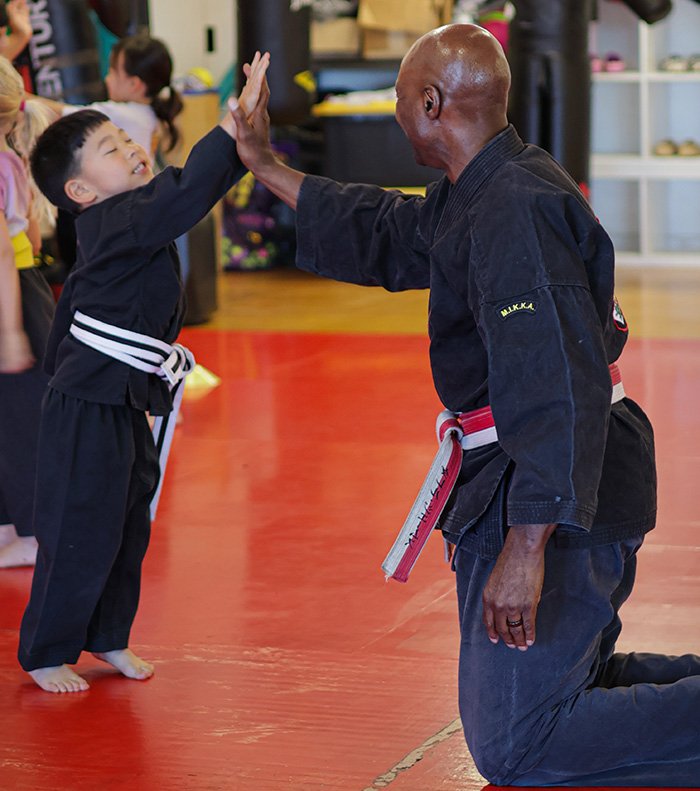
When children step onto the mat for preschool martial arts training, they’re entering an environment designed to build resilience from the ground up. Through structured physical challenges, your child learns that persistence pays off—each technique mastered and belt earned reinforces their ability to overcome obstacles. The controlled stress of training teaches them to stay calm under pressure, replacing impulsive reactions with thoughtful responses.
Regular physical exertion releases dopamine and endorphins, improving mood while channeling frustration productively. This movement-based stress relief frees cognitive resources, enabling your child to develop proactive coping strategies. As they face challenges in a safe, supportive setting, they’re building mental toughness that extends beyond the dojo. Working alongside peers during drills helps forge lasting friendships that provide emotional support both inside and outside the training environment. The combination of physical activity, skill progression, and mindfulness techniques fosters emotional stability that supports them through life’s challenges.
Emotional Regulation Skills Development
A preschooler’s emotional world operates at full intensity—joy erupts into laughter, frustration transforms into tears, and excitement can quickly shift to overwhelm. Martial arts training provides a structured framework in which your child learns to recognize and manage these powerful feelings. Through controlled breathing exercises and mindfulness techniques integrated into each session, they’ll develop the ability to pause before reacting impulsively.
The physical discipline required in martial arts naturally triggers endorphin release, creating a calm mental state that supports emotional balance. As your preschooler practices specific movements and follows instructor guidance, they’re simultaneously strengthening their inhibitory control—the mental skill that allows them to manage disruptive emotions. This training environment simulates manageable stress, teaching your child to remain composed under pressure while building critical self-regulation abilities they’ll apply throughout daily life. The practice of thoughtful response over immediate reaction becomes second nature as children learn to assess situations before acting, replacing impulsive behaviors with rational decision-making skills.
Confidence Against Bullying Behavior
Bullies instinctively target children who appear vulnerable, isolated, or uncertain of themselves—but martial arts training fundamentally reshapes how your preschooler presents to the world. Through structured practice, your child develops physical competence and self-assurance, signaling they’re not an easy target. This confidence emerges from mastering age-appropriate techniques and experiencing success in controlled environments.
Partner drills build protective social bonds that extend beyond the classroom, giving your child visible friendships that deter potential bullies. The emphasis on mutual respect teaches your preschooler to value themselves and others, reducing both victimization and aggressive behaviors. Learning verbal and physical self-defense strategies equips them with assertive—not passive or aggressive—responses. Martial arts training helps children develop emotional regulation and focus, providing them with tools to manage feelings that might otherwise manifest as aggression or fearfulness. This combination of self-confidence, social support, and practical skills transforms your child from potentially vulnerable to resilient.
Improving Focus and School Performance
Your preschooler’s ability to focus directly impacts their readiness for kindergarten and future academic success. Martial arts training builds concentration skills through structured practice that requires children to follow multi-step instructions, memorize movement sequences, and maintain attention during exercises. This disciplined environment strengthens working memory and attention span—foundational skills for classroom learning.
The physical activity component enhances cognitive function through improved cardiovascular health and cerebral blood flow. Your child develops self-control and emotional regulation, essential for managing classroom behavior and completing tasks. Research shows that martial arts practitioners demonstrate superior executive functioning compared with sedentary peers, including better problem-solving and cognitive flexibility. Studies demonstrate that martial arts participants outperform peers in the inhibition of cognitive interference, a crucial skill for filtering distractions and maintaining focus on relevant information. These improvements translate directly to enhanced academic readiness, giving your preschooler the mental tools needed for educational success.
Essential Life Skills That Last a Lifetime
Beyond physical techniques and improved focus, martial arts training equips your preschooler with foundational character traits that shape their development well into adulthood. Your child develops self-discipline through consistent practice routines, building habits that translate into responsible decision-making at home and at school. They’ll develop emotional regulation skills to manage frustration and control impulses when challenges arise.
Respect becomes second nature as your preschooler bows to instructors, waits their turn, and practices courtesy with peers. These structured interactions foster empathy and cooperation, strengthening future relationships. Goal-setting starts early—each new technique mastered and belt earned teaches perseverance and the value of sustained effort. The training also enhances body awareness and control, helping your preschooler understand how their movements affect themselves and others in their space.
Most importantly, martial arts instill resilience. Your child discovers that setbacks are learning opportunities, not failures. This growth mindset, combined with self-confidence and situational awareness, creates a strong foundation for lifelong success.
Keeping Your Child Safe During Training
While martial arts builds character and confidence in your preschooler, understanding how to protect them from injury makes training both rewarding and secure.
Choose programs that emphasize non-contact techniques, taught by qualified instructors who emphasize proper form and self-control. Preschoolers face lower injury rates than older children, but safety remains paramount. Ensure your child wears appropriate protective gear—headgear, mouthguards, and padding suited to their discipline. Well-maintained foam mats prevent falls and reduce impact injuries.
Limit training to three hours weekly, as excessive practice increases injury risk. Verify instructors emphasize gradual skill progression before introducing any contact elements. Programs should match children by age and ability to prevent physical mismatches. Resistance training and conditioning programs can reduce the likelihood of injury in young martial artists.
Consistent supervision and enforced safety rules significantly reduce common injuries such as bruises, sprains, and strains. Proper instruction in age-appropriate environments helps your preschooler develop lifelong martial arts skills.
Making Daily Physical Activity Fun and Accessible
You’ll find that martial arts training operates indoors year-round, eliminating weather-related barriers that often disrupt your child’s physical activity routine. Unlike sports requiring expensive equipment or specific field conditions, martial arts needs only a safe practice space and an appropriate uniform, making consistent participation financially accessible. Research shows that martial arts programs significantly improve cardiorespiratory fitness, speed, and agility in children, delivering measurable physical benefits through accessible training environments. This structure ensures your preschooler maintains regular physical engagement while developing discipline through predictable training schedules that adapt to seasonal changes and family commitments.
Year-Round Training Without Limits
Unlike seasonal sports that shut down for months at a time, martial arts programs provide your preschooler with structured physical activity every week of the year. Indoor facilities eliminate weather barriers—no cancellations for rain, snow, or extreme heat. Your child maintains consistent cardiovascular endurance, muscular strength, and motor skill development without fitness-depleting gaps.
Rolling enrollment means you can start anytime, and classes run 10–12 months annually with only brief holiday breaks. This continuity supports habit formation: weekly sessions establish predictable routines that meet the recommended 60 minutes of daily activity. Regular training prevents plateaus in coordination and balance while building long-term discipline.
Year-round availability also sustains social connections with peers and instructors, reinforcing confidence and emotional regulation. Your preschooler develops self-defense skills gradually, without seasonal interruptions that disrupt mastery and momentum. Programs adapt to match physical development, ensuring activities remain age-appropriate as your child grows throughout the year.
Minimal Equipment, Maximum Engagement
One uniform, bare feet, and open floor space—that’s the complete equipment list for most preschool martial arts programs. This stripped-down approach removes financial barriers while keeping your child’s focus where it belongs: on movement, listening, and skill development. Without helmets, pads, or weapons, instructors rely on controlled techniques—light taps, shadow kicks, and partner drills—to safely build coordination.
Classes move quickly between animal walks, themed games, and belt-rank challenges, disguising repetition as play. Your preschooler learns foundational stances through “crab walks” and “bear crawls” without realizing they’re training. Soft flooring provides passive protection, while instructor supervision and spacing prevent contact injuries.
This minimal-gear model means programs can operate in any gym, classroom, or community space, making consistent participation accessible regardless of budget or location.
Conclusion
You’ll find that preschool martial arts offers your child far more than basic kicks and punches. Through structured training, they’ll develop physical strength, emotional resilience, and mental discipline that’ll serve them throughout their entire lives. The skills they’re learning now—self-control, respect, and perseverance—become the foundation for future success. By enrolling your preschooler in a safe, age-appropriate martial arts program, you’re investing in their complete development while instilling values that’ll guide them for years to come.