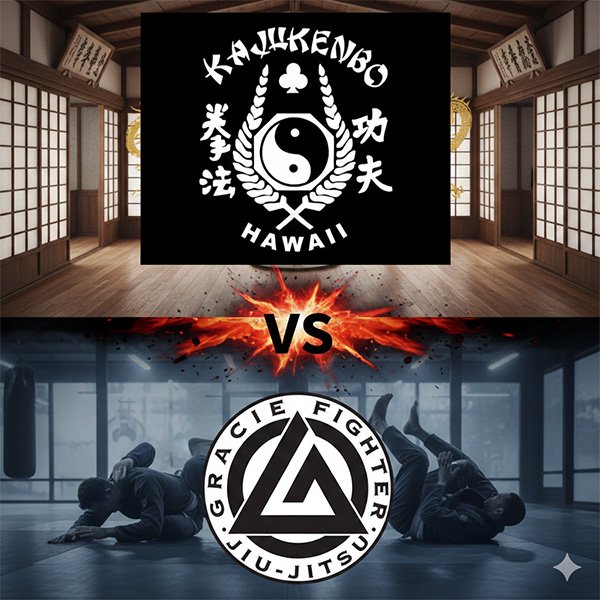
Kajukenbo vs Gracie Jiu-Jitsu
Kajukenbo offers immediate self-defense effectiveness with integrated striking and grappling, ideal for handling multiple attackers and weapons. You’ll see quicker results, with proficiency developing within months. Gracie Jiu-Jitsu focuses on specialized ground control that neutralizes size disadvantages but requires years of dedication for mastery. Your body type and goals matter—taller practitioners excel in different techniques than shorter, stockier ones. The right choice depends on the threats you’re most concerned about.
Body Type Matters: Finding Your Best Match Based on Size, Strength and Flexibility
When diving into martial arts training, your physical attributes can significantly shape your approach to combat. Both Kajukenbo and Gracie Jiu-Jitsu accommodate different body types, but leveraging body dimensions intelligently maximizes your effectiveness.
If you’re tall with long limbs, you’ll excel at triangles, armbars, and distance control techniques. Short, stocky practitioners benefit from lower centers of gravity, making them formidable in pressure passing and close-range submissions. Developing passing strategies that align with your physical attributes will significantly enhance your effectiveness on the mat.
Those with ideal athletic builds can capitalize on explosiveness across various positions, while heavier practitioners should focus on half-guard transitions and top pressure. Flexible, lean fighters often develop exceptional guard retention and triangles.
The key isn’t finding a perfect martial art for your body, but adapting techniques that complement your natural attributes.
Core Fighting Approaches: Stand-Up Striking vs Ground Control Techniques
Two fundamental philosophies distinguish the approaches to combat of Kajukenbo and Gracie Jiu-Jitsu. Kajukenbo’s offensive signatures include snapping karate-boxing hybrid strikes, sword-hand techniques to the neck, and heel-palm strikes targeting the shoulder pocket. Your defensive responsibilities focus on quick hit-throw-finish sequences, with blocks that transition directly to takedowns.
In contrast, Gracie Jiu-Jitsu emphasizes mastery of ground control. You’ll prioritize positional dominance through mount and guard retention while utilizing bridge and shrimp escapes when disadvantaged. The system’s offensive signatures center on chokes used as finishing techniques, with technical stand-ups creating the necessary space after breakfalls.
While Kajukenbo practitioners disable opponents with low kicks, knees, and rapid combinations, Gracie stylists methodically work toward dominant positions using judo-based takedowns that culminate in controlled submissions. Kajukenbo’s strategy centers on overwhelming violence as its primary approach to street confrontations.
Self-Defense Scenarios: Which System Better Handles Common Attacks and Threats
How effectively a martial art handles real-world threats often determines its practical value beyond the dojo. Kajukenbo excels at handling multiple attackers through dynamic footwork and continuous-flow techniques, emphasizing the “hit first, hit fast, hit hard” philosophy that builds situational awareness.
While Kajukenbo offers comprehensive weapon defenses against knives, sticks, and guns using parries and disarming techniques, Gracie Jiu-Jitsu provides exceptional solutions for ground-based attacks with its bridge and shrimp escapes. Originally developed in the 1940s in Hawaii, Kajukenbo was designed to counter real-world street crime tactics through practical self-defense techniques.
The Kajukenbo practitioner’s advantage lies in dealing with multiple assailants and armed threats through quick, decisive strikes. However, Gracie’s system dominates once a confrontation reaches the ground.
Your self-defense needs should ultimately determine which system serves you better—whether it’s standing against multiple attackers or surviving ground encounters.
Training Investment: Comparing Time to Proficiency, Costs and Gym Availability
Training in martial arts involves a significant investment of time, money, and energy—factors that vary dramatically between Kajukenbo and Gracie Jiu-Jitsu systems.
Kajukenbo offers quicker returns on your investment, with effective techniques taught in your first class and proficiency developing within months. Its consistent curriculum emphasizes practical application—you’ll be fully sparring by the fourth week, or you’ll drop out due to the intensity. The system’s comprehensive approach combines techniques from five martial arts, creating an efficient path to self-defense capability.
Gracie Jiu-Jitsu demands significantly more patience, requiring 3-4 years to develop effective white-belt skills and at least 10 years for black-belt mastery. Their structured teaching methods include private groups limited to three students or online training through Gracie University.
While Kajukenbo gyms are less common than Gracie schools, both systems offer viable training paths—your choice depends on whether you prioritize rapid skill development or long-term technical mastery.
Making Your Decision: How to Choose Based on Your Goals and Personal Preferences
Choosing between Kajukenbo and Gracie Jiu-Jitsu ultimately comes down to your specific goals and personal preferences in martial arts training. Consider what matters most to you—immediate striking capabilities or ground control expertise.
If your learning style favors comprehensive training from day one, Kajukenbo delivers integrated striking, kicking, and grappling from the start. You’ll develop versatile skills applicable across multiple combat sports while focusing on quick, effective self-defense.
Prefer methodical personal development through leverage and technique? Gracie Jiu-Jitsu offers a systematic approach emphasizing ground control that neutralizes size disadvantages. You’ll learn to defend yourself without necessarily escalating violence. Developed by Helio Gracie, this martial art emphasizes leverage and body movement rather than strength and power.
Your choice should reflect whether you want broad martial arts exposure (Kajukenbo) or specialized ground-fighting expertise (GJJ). Both arts deliver effective self-defense, but through different philosophical and technical approaches.
Conclusion
You’ll need to weigh your body type, fighting preferences, and personal goals when choosing between Kajukenbo and Gracie Jiu-Jitsu. Kajukenbo offers versatile striking with quicker self-defense results, while Gracie’s ground-focused system excels for smaller practitioners willing to invest longer training time. Consider your local school’s quality, teaching style, and which philosophy resonates with you before making this important decision about martial arts.