Youth Martial Arts Classes Near El Cajon
You’ll find youth martial arts classes that build your child’s confidence through structured belt progression while teaching practical self-defense skills. Popular styles include Karate and Taekwondo for foundational striking techniques, Brazilian Jiu-Jitsu for strategic grappling, and MMA for comprehensive fitness development. These programs typically cost around $200 monthly and emphasize discipline, respect, and mental toughness alongside physical training. When selecting a school, you should verify instructor qualifications, assess the community atmosphere, and ensure age-appropriate curriculum design. Below, you’ll discover exactly how to choose the right program for your family’s specific needs.
Why Martial Arts Training Builds Confidence and Character in Young People
When you sign up your child for martial arts classes, you’re investing in far more than physical fitness—you’re providing a structured pathway to building unshakeable confidence and strong character.
Through systematic belt progression and goal achievement, your child develops genuine self-belief rooted in earned accomplishments. Each training session reinforces discipline through structured practice, teaching impulse control and self-regulation that transfers directly to classroom performance and daily responsibilities.
The rigorous nature of martial arts cultivates perseverance and grit as your child navigates increasingly challenging techniques and skill levels. This process builds mental toughness and resilience, equipping them to handle setbacks effectively. Research on South Korean youth has demonstrated that rigorous training builds both confidence and a sense of accomplishment in young practitioners.
Additionally, the dojo environment promotes respect, cooperation, and positive social interaction. Your child learns humility, teamwork, and conflict resolution while developing stronger peer relationships within a supportive community focused on growth.
Most Popular Martial Arts Styles for Children and Teens
When you’re selecting a martial art for your child, you’ll find that Karate and Taekwondo remain time-tested foundations, offering structured training in strikes, kicks, and discipline that’s proven effective for youth development. Brazilian Jiu-Jitsu has surged in popularity with over 104% growth in two decades, teaching children practical grappling techniques and problem-solving skills on the mat. For teens seeking intense physical conditioning and comprehensive fighting skills, MMA programs combine striking and grappling to build athleticism and self-defense capabilities. Beyond physical skills, martial arts follow a teacher-disciple apprenticeship tradition that emphasizes mental and spiritual development alongside technical training.
Karate and Taekwondo Foundations
Karate and taekwondo stand out as the foundation styles that most young martial artists build their training upon. You’ll find karate practiced by 35% of martial artists in the U.S., while taekwondo boasts 80 million practitioners worldwide across 200 countries. Both styles deliver structured curricula perfectly suited for youth development.
Your child will train 2-3 sessions weekly, each lasting 40-50 minutes, building core fundamentals like balance, flexibility, strength, and endurance. These disciplines emphasize precise technique execution alongside mental development. The belt-ranking systems in both arts teach goal-setting and perseverance, with clear milestones marking progress.
You’ll notice these programs consistently integrate respect, discipline, and self-control into every class. With approximately $150 – $250 monthly tuition, these accessible foundations prepare young martial artists for lifelong practice while developing essential physical and mental capabilities. The median age of 23 reflects the strong youth participation that continues throughout early adulthood, demonstrating how these foundational styles create lasting engagement.
Brazilian Jiu-Jitsu Rising Popularity
Brazilian Jiu-Jitsu has exploded onto the youth martial arts scene, with search interest surging 104% over the past two decades while traditional striking arts like karate and taekwondo declined by 61% and 66% respectively. This grappling-based art phttps://blog.jamesmartialartsacademy.com/wp-content/uploads/2024/06/woman-traveling-in-france-2023-11-27-05-16-47-utc_Easy-Resize.com_.jpgritizes technique and leverage over brute strength, making it ideal for teens of all sizes. You’ll find BJJ emphasizes strategy and personal empowerment, building mental discipline alongside physical skill.
The sport’s competitive structure drives engagement—nearly half of practitioners compete regularly, with submission-focused training motivating technical mastery from day one. Popular techniques like triangles, armbars, and Americanas scale perfectly to youth skill levels. With approximately 750,000 U.S. practitioners and 40% of martial artists under 18, BJJ offers your teen a clear progression path through belts while developing confidence and self-defense capabilities in both Gi and No-Gi formats. The training’s emphasis on safety and controlled grappling techniques significantly reduces concussion risks compared to striking martial arts, making it an appealing choice for parents concerned about head injuries.
MMA for Teen Fitness
Mixed Martial Arts takes the grappling foundation of BJJ and layers in striking skills from multiple disciplines, creating a comprehensive fitness system that transforms teen athletes. You’ll develop cardiovascular endurance, strength, and agility through integrated training that combines Muay Thai’s clinch work, Taekwondo’s dynamic kicks, Kickboxing’s combinations, and Karate’s precise strikes.
Your coordination and balance improve dramatically as you master techniques from each style. Controlled sparring builds mental toughness and confidence while teaching you to manage calculated risks safely. The discipline required sharpens your focus beyond the mat.
You’ll notice enhanced body awareness and timing as you drill punch-kick sequences and practice defensive footwork. MMA’s demanding conditioning pushes your muscular and aerobic capacity while teaching respect, strategic thinking, and self-defense skills that serve you throughout life. This challenging training keeps both body and mind active, making it especially popular among young people seeking comprehensive fitness and competitive opportunities.
Physical and Mental Health Benefits Your Child Will Experience
Your child’s martial arts training will transform both body and mind through structured, repetitive practice that builds measurable results. You’ll notice enhanced physical fitness as they develop cardiovascular endurance, muscular strength, and improved flexibility through punching, kicking, and dynamic movement patterns. Research across karate, judo, aikido, and taekwondo programs shows that children in martial arts interventions demonstrate twice the growth rate in physical fitness compared to those in control groups. Equally important, their mental game strengthens—training sharpens focus through disciplined technique work while building genuine confidence as they master progressively challenging skills.
Enhanced Physical Fitness Development
Every punch, kick, and movement pattern your child practices builds a foundation of comprehensive physical fitness that extends far beyond the dojo walls. Martial arts training delivers measurable improvements in cardiorespiratory fitness, increasing aerobic capacity while building muscular strength, explosive power, and endurance. Your child’s body composition transforms through increased muscle mass and reduced body fat—one hour-long session burns approximately 720 calories, surpassing conventional activities like swimming or basketball.
The technical demands of martial arts enhance flexibility, balance, coordination, and agility simultaneously. Regular training produces osteogenic effects, significantly increasing bone mineral density and skeletal strength during crucial growth years. These physical adaptations reduce injury risk while improving performance across all physical activities. The structured progression of martial arts techniques ensures your child develops functional fitness that supports lifelong health and athletic capability. Beyond cardiovascular gains, prophttps://blog.jamesmartialartsacademy.com/wp-content/uploads/2024/06/woman-traveling-in-france-2023-11-27-05-16-47-utc_Easy-Resize.com_.jpgceptive training inherent in martial arts substantially improves your child’s balance ability through heightened body awareness and spatial orientation.
Improved Focus and Confidence
While physical strength forms the foundation, the mental transformations your child experiences through martial arts training prove equally powerful and measurable. Structured training sharpens cognitive functions, including inhibition control, processing speed, and mental agility—skills that translate directly to classroom performance and social interactions.
Your child develops sustained attention through disciplined practice, enabling better multitasking during high-pressure situations. Each belt advancement and technique mastered reinforces goal-setting abilities and builds genuine self-esteem rooted in accomplishment rather than empty praise.
The structured environment cultivates self-regulatory abilities that improve conduct and emotional control. Through controlled aggression training and breathing techniques, your child learns to channel energy constructively, reducing anxiety while building confidence. Training capitalizes on complex movements and respect that enhance both physical coordination and character development. These evidence-based improvements accumulate progressively, creating lasting cognitive and emotional benefits beyond the dojo.
How to Choose the Right Martial Arts School for Your Family
Choosing the right martial arts school sets the foundation for your child’s entire training journey. Start by verifying the instructor’s qualifications—check certifications, youth experience, and background clearances. Observe how instructors manage class energy and adapt to different learning styles.
Ensure the school’s philosophy aligns with your family values. Does it emphasize character development, discipline, and respect alongside physical techniques? Review their student creed and conflict resolution approaches.
Visit potential schools to assess the community atmosphere. Look for inclusive environments that welcome all skill levels. Consider family-friendly programming like parent-child classes or simultaneous multi-age sessions.
Examine the curriculum structure for age-appropriate progressions and clear skill development paths. For young children aged 4-7, phttps://blog.jamesmartialartsacademy.com/wp-content/uploads/2024/06/woman-traveling-in-france-2023-11-27-05-16-47-utc_Easy-Resize.com_.jpgritize programs that emphasize fun and basic movements to build coordination and enthusiasm. Finally, evaluate practical factors: location convenience, schedule flexibility, transparent pricing, and family discounts. Request trial classes before committing.
Understanding Safety Protocols and Injury Prevention in Youth Classes
Your child’s safety in martial arts training depends on a comprehensive approach that goes far beyond simply wearing protective gear. You’ll find that schools with strict rule enforcement and experienced instructors significantly reduce injury risks through proper technique development and progressive training phases.
Look for programs that emphasize non-contact training initially, allowing your child to master blocking skills and defensive movements before advancing to controlled sparring. The best schools adjust training intensity based on individual skill levels and maturity.
While helmets and mouthguards help prevent cuts and bruises, they can’t eliminate concussion risks. That’s why qualified instructors who enforce safety rules and teach proper technique matter more than equipment alone. Be aware that direct blows to the head, repetitive head thrusts, and choking movements carry the highest injury risks in martial arts training. Choose schools that phttps://blog.jamesmartialartsacademy.com/wp-content/uploads/2024/06/woman-traveling-in-france-2023-11-27-05-16-47-utc_Easy-Resize.com_.jpgritize gradual skill progression and continuous safety education for lasting protection.
What to Expect During Your Child’s First Martial Arts Class
As you step through the doors with your child for that first martial arts class, expect a welcoming environment specifically designed to transform nervous energy into focused excitement. Friendly instructors will introduce foundational techniques like front stance (Zenkutsu Dachi) and straight punches (Choku-Zuki), emphasizing proper body alignment and posture. Your child will practice movements slowly, building coordination through repetition.
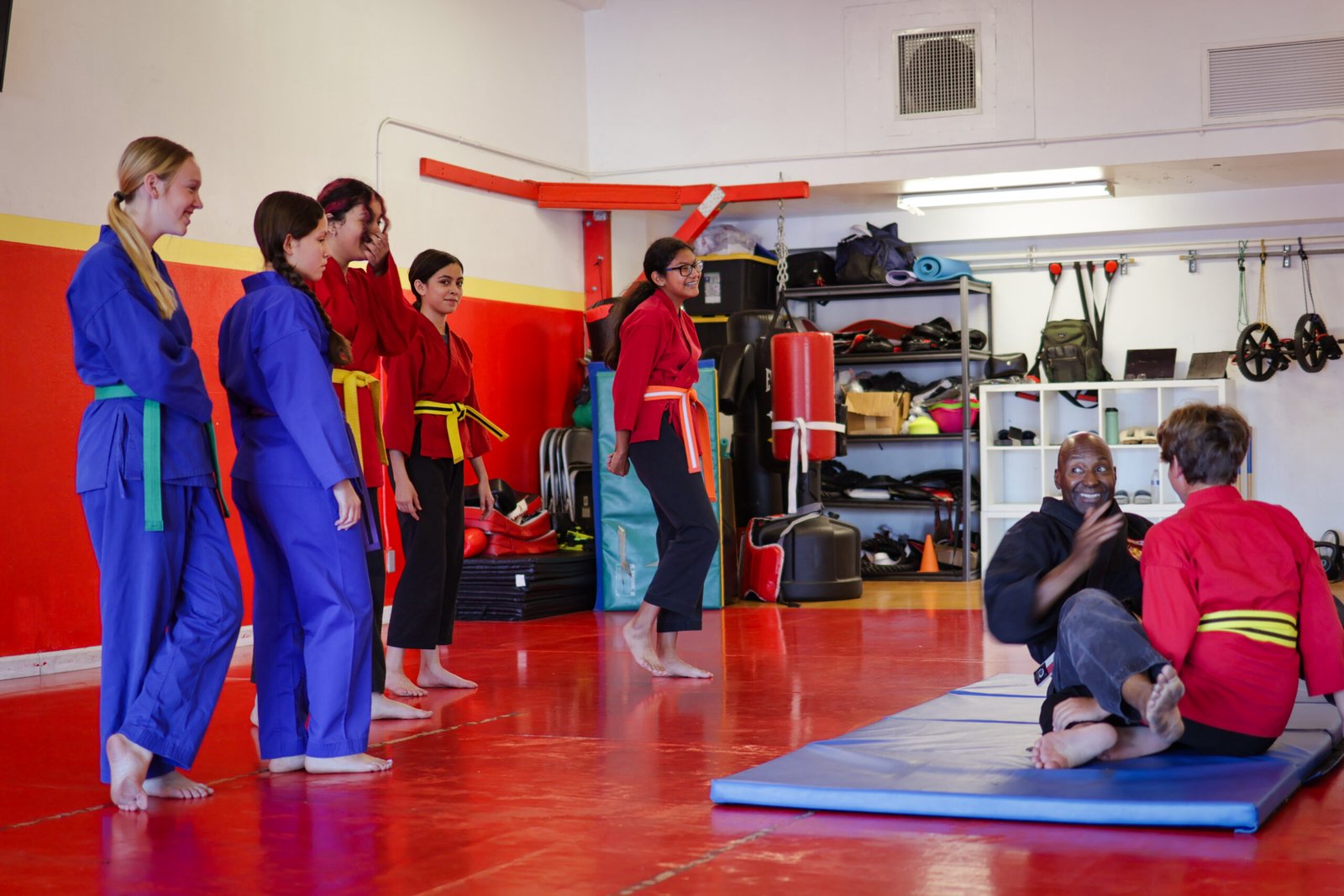
Classes begin with warm-ups and stretching, progressing gradually to prevent strain while developing strength. You’ll notice playful drills and partner activities that teach cooperation alongside individual technique work. Instructors reinforce respect, discipline, and listening skills throughout each session.
Arrive 10-15 minutes early, wearing comfortable clothing, and bring water. Support your child’s learning with praise afterward, understanding that patience and willingness to learn from mistakes form the foundation of martial arts mastery.
The Cost of Youth Martial Arts Programs and What’s Included
Most martial arts programs price their monthly tuition between $125 and $250, though you’ll find the actual cost depends heavily on your school’s structure and what they include in their fees. Mid-tier programs ($120–$180) typically offer the best value with full-time instructors and a structured curriculum. You’ll need to budget for additional expenses: uniforms range from $30–$100, belt testing fees start at $20, and equipment such as gloves or shin guards can add $50–$150 initially.
Your tuition covers regular group classes, professional instruction, and facility access. Premium programs justify higher costs through smaller class sizes and enhanced character development. Consider family discounts if you’re enrolling multiple children—many schools offer packages that significantly reduce per-student costs, making quality martial arts training more accessible for your entire family.
How Martial Arts Training Improves Academic Performance and Focus
The connection between martial arts training and academic success runs deeper than simple physical exercise. When your child learns complex techniques and sequences, they’re building neural pathways that strengthen memory and concentration—skills that transfer directly to classroom learning.
You’ll notice improved executive function as they master time management, balancing practice schedules with homework deadlines. The discipline cultivated through belt progression creates self-control that manifests in better study habits and academic persistence.
Studies confirm these benefits aren’t anecdotal. School-based karate interventions show statistically significant academic gains compared to control groups. The mental exercises involved in memorizing forms enhance retention of school material, while increased blood flow from physical training boosts cognitive function.
Your child’s emotional resilience grows, too, reducing test anxiety and improving focus during challenging assignments.
Conclusion
You’ve explored the powerful ways martial arts shape your child’s future—from building unshakeable confidence to sharpening their focus in school. Now it’s time to take action. Visit local schools, watch classes, and ask instructors about their teaching methods. You’ll find the right fit that emphasizes proper technique, discipline, and personal growth. Don’t wait—your child’s journey toward strength, respect, and self-mastery starts with that first step onto the mat.