Youth Martial Arts Classes
Youth martial arts classes in your area typically cost $75-$250 monthly, depending on the facility and program quality. You’ll find your child needs comfortable athletic wear initially, then a traditional gi and protective gear like mouthguards and shin guards as they progress. Classes structure around 10-minute warm-ups, technique instruction, engaging drills, and cool-downs that build discipline while keeping kids focused. Look for instructors with verified credentials, background checks, and CPR certification who maintain proper student-teacher ratios. The specific style you choose should match your child’s age and interests to maximize their physical and mental development.
How to Choose the Right Martial Arts Style for Your Child’s Age and Interests
When you’re searching for the right martial arts program for your child, understanding the connection between their age, interests, and available styles becomes your foundation for success. Children ages four to seven need play-based classes that capture their imagination through fun activities. From eight to twelve, your child can handle structured training mixing discipline with engagement, understanding rules and proper technique application. Teenagers thrive in rigorous programs featuring full contact and complex strategies.
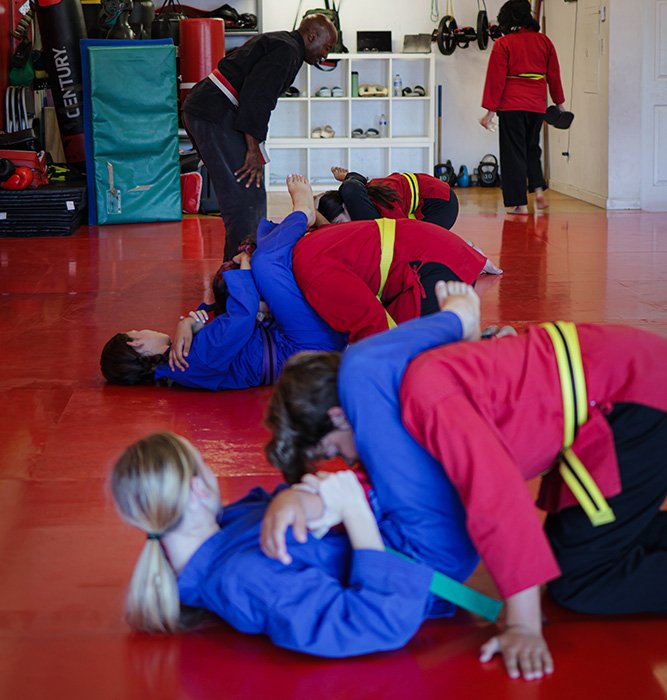
Match their interests strategically. Kids drawn to striking should explore Karate or Taekwondo. Those interested in grappling excel in Judo or Brazilian Jiu-Jitsu. Children seeking creative expression might prefer Kung Fu or Capoeira. Consider physical demands too—striking arts develop coordination and cardiovascular fitness, while grappling emphasizes leverage and strategic thinking over raw strength. Beyond physical skills, martial arts help kids develop discipline, respect, and focus that transfer to all areas of their lives.
Physical and Mental Benefits Your Child Will Gain From Martial Arts Training
Your child’s martial arts journey delivers transformative benefits that extend far beyond the dojo floor. You’ll witness remarkable physical improvements as your child develops cardiovascular endurance, enhanced speed, and increased strength through repetitive movements and conditioning. Flexibility, coordination, and balance sharpen dramatically during complex stances and dynamic techniques.
Mentally, your child builds ego-resilience to overcome challenges while reducing anxiety through focused, mindful practice. Self-regulation improves significantly—attention sharpens, impulse control strengthens, and aggressive behaviors diminish with consistent training. You’ll notice enhanced self-acceptance, optimism, and emotional regulation as stress decreases.
Socially, martial arts cultivate prosocial behaviors and communication skills through partner exercises. Your child gains discipline, respect, and goal-setting abilities that transfer directly to academics and personal growth. Research demonstrates that children in martial arts programs show twice the growth rate in physical fitness compared to those without such training. These combined benefits create confident, well-rounded youth prepared for life’s challenges.
What to Expect in Your First Youth Martial Arts Class
Walking into your first youth martial arts class, you’ll discover a structured environment designed to build both physical skills and inner confidence from day one. You’ll learn what to wear, how the class flows from warm-up to cooldown, and which fundamental techniques will form your foundation. Friendly staff and instructors will greet you upon arrival, ensuring newcomers feel comfortable and supported throughout their first experience. This welcoming experience sets you on a clear path toward mastering martial arts while developing discipline and self-assurance.
Class Structure and Format
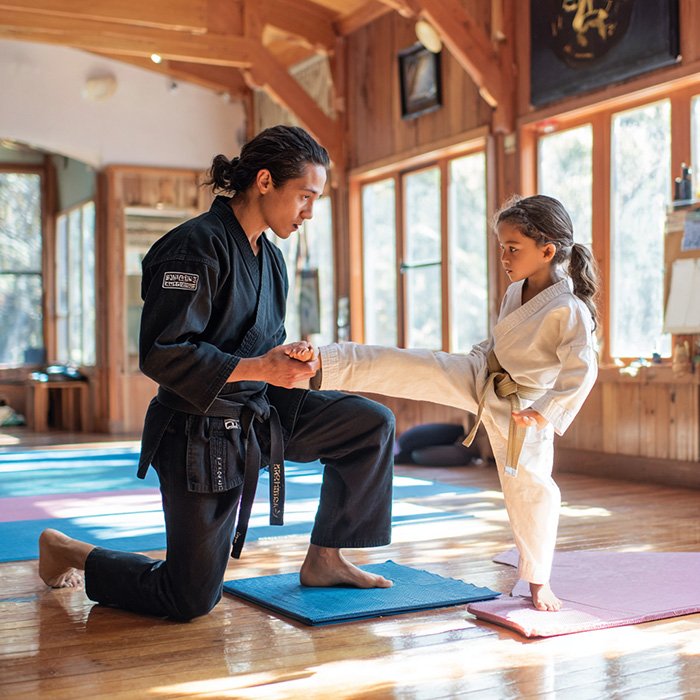
Every youth martial arts class follows a carefully designed structure that transforms nervous beginners into confident practitioners. You’ll start with a 10-minute warm-up featuring dynamic movements like jogging, jumping jacks, and footwork drills that mimic martial arts fundamentals while preventing injury. Next, you’ll learn one or two new techniques broken into manageable steps, focusing on stances, strikes, blocks, and basic grappling. Your instructor uses age-appropriate language and demonstrations to ensure you understand proper body alignment and structure. Activities change every 5 to 10 minutes to maintain your focus throughout the 45-minute session. Engaging games alternate with drills, teaching balance, timing, and strategy while building camaraderie. These games serve a dual purpose, keeping the class enjoyable and lively while reinforcing fundamental martial arts principles. The class concludes with cool-down stretches and reflection, cementing lessons learned while developing your martial arts foundation.
Essential Gear and Attire
Stepping into your first youth martial arts class requires nothing more than comfortable athletic wear and an eager mindset. Most schools provide introductory equipment, allowing you to assess commitment before investing in a traditional uniform or gi. You’ll eventually need a properly fitted uniform with a belt indicating your rank, designed for unrestricted movement during kicks, strikes, and grappling.
As training progresses, protective gear becomes essential. Mouthguards prevent dental injuries, while shin guards and headgear reduce impact during sparring sessions. Hand wraps and gloves protect wrists and knuckles when practicing striking techniques. Groin protectors offer additional safety for male students. Many students also bring a change of clothes along with a plastic bag to separate sweaty gear from clean items, maintaining hygiene standards expected in martial arts training environments.
Your instructor will specify the required items based on your discipline. Focus on proper fit—gear shouldn’t restrict movement or create distractions. Quality equipment supports safer training and accelerates skill development.
Building Skills and Confidence
With your gear secured and your first class approaching, you’re ready to discover what actually happens when you step onto the mat.
You’ll begin with a warm welcome from your instructor, followed by dynamic warm-up exercises that prepare your body and prevent injuries. Expect to learn fundamental techniques—basic stances, punches, and kicks—practiced through repetition with personalized guidance. Your instructor will emphasize respect and discipline immediately, teaching you to listen carefully and follow instructions precisely.
These early drills build coordination, balance, and body awareness while developing mental focus. You’ll work through challenges that improve your attention span and patience. Each technique you master becomes a tangible milestone, boosting your confidence. The supportive environment encourages effort over perfection, creating positive reinforcement that motivates continued progress. Training also fosters social skills and respect as you practice alongside peers and learn to work cooperatively. This foundation strengthens both physical skills and self-esteem simultaneously.
Safety Measures and Injury Prevention in Youth Martial Arts Programs
Your child’s safety in martial arts depends on two critical foundations: proper protective equipment and expert supervision. Before the first kick or punch, ensure your program mandates essential gear like mouthguards, helmets, and appropriate padding for contact activities. Equally vital is training under qualified instructors who maintain vigilant oversight, enforce safety rules consistently, and teach proper technique from day one. Programs should implement phased skill development that allows young athletes to progress safely through increasingly complex techniques and contact levels.
Essential Protective Gear Requirements
Gearing up with proper protective equipment stands as the foundation of safe training in youth martial arts programs. You’ll need headgear designed for children’s frames to protect against head trauma and facial injuries. Mouthguards safeguard teeth and jaws during sparring, while gloves support wrists and knuckles to prevent fractures. Shin guards shield lower legs from kicks and bruises.
Proper fit matters significantly—snug-fitting gear enhances muscle support and maintains concentration without restricting movement. At intermediate belt levels, you’ll require headgear, mouthguards, shin guards, and forearm protection. Advanced sparring demands chest protectors and groin cups. Different disciplines specify distinct requirements: Taekwondo uses cloth sleeve-type guards, while Jiu-Jitsu adds knee pads for groundwork. Experienced instructors ensure that all protective equipment is properly fitted and worn correctly during every training session. Replace worn equipment regularly to preserve protective quality and minimize injury risk.
Proper Supervision and Training
Beyond the physical armor that shields young martial artists, the quality of instruction and oversight determines whether a program truly protects its students.
You’ll need instructors with verified credentials from recognized martial arts organizations who’ve passed criminal background checks. They must demonstrate technical mastery and complete ongoing abuse-prevention training.
Optimal class sizes enable personalized attention—your child’s instructor should maintain strict student-to-teacher ratios for immediate correction of unsafe techniques. Age-appropriate grouping ensures training aligns with your child’s physical and cognitive development.
Demand “Two-Adult-Deep” supervision policies where no child remains alone with a single adult. Instructors should possess CPR and first aid certification, with emergency protocols clearly posted. The dojo should maintain clear emergency procedures visible throughout the facility to ensure rapid response during critical situations.
Phased skill progression matters—full-contact sparring comes only after demonstrating competence in controlled drills. This disciplined approach transforms potential hazards into teachable moments.
The Cost of Youth Martial Arts Classes and What’s Included
Most parents discover quickly that martial arts training represents a significant investment, but understanding the costs upfront helps you budget effectively and choose the right program for your child.
You’ll find group classes ranging from $75 to $250 monthly, with community centers offering budget-friendly options around $50 to $100. Mid-tier schools charge $120 to $180, while premium programs with specialized instruction can exceed $200 monthly.
Beyond tuition, budget for uniforms ($30-$100), belt testing fees ($20 and up), and essential equipment like gloves or shin guards ($50-$150). Private lessons add flexibility but cost $40 to $200 per hour.
What you’re paying for matters: structured curriculum, qualified instructors, character development, and personalized attention. Compare what’s included—some schools offer unlimited classes, family discounts, or free trial pehttps://blog.jamesmartialartsacademy.com/wp-content/uploads/2024/06/woman-traveling-in-france-2023-11-27-05-16-47-utc_Easy-Resize.com_.jpgds to maximize value.
Many studios require introductory courses to help young students learn the basics before advancing to regular classes.
Finding Quality Martial Arts Instructors in Your Local Area
When you’re searching for a martial arts instructor for your child, you’re not just looking for someone who knows how to kick and punch—you’re seeking a mentor who’ll shape your child’s character, confidence, and discipline. Quality instructors hold legitimate certifications requiring 300+ supervised teaching hours and multiple examination stages. They’ve completed youth protection and CPR training, demonstrating their commitment to safety. Look for instructors trained in child development who understand age-appropriate teaching methods for students as young as three. The best instructors possess both martial arts mastery—typically black belt level—and proven teaching competence verified through practical evaluations. They’ll adapt their approach to your child’s developmental stage while maintaining professionalism through ongoing education. Don’t settle for less than certified expertise combined with genuine passion for youth development.
Balancing Martial Arts Training With School and Other Activities
Your child’s success in martial arts doesn’t require sacrificing academic excellence or abandoning other interests—it demands strategic time management that’ll benefit every area of their life. Structured training schedules teach phttps://blog.jamesmartialartsacademy.com/wp-content/uploads/2024/06/woman-traveling-in-france-2023-11-27-05-16-47-utc_Easy-Resize.com_.jpgritization skills, helping youth allocate specific pehttps://blog.jamesmartialartsacademy.com/wp-content/uploads/2024/06/woman-traveling-in-france-2023-11-27-05-16-47-utc_Easy-Resize.com_.jpgds for classes, homework, and leisure activities. Regular practice sessions and belt progression requirements instill deadline adherence that transfers directly to academic responsibilities.
The physical benefits amplify this balance—improved fitness reduces fatigue, while enhanced cognitive function supports multitasking between schoolwork and extracurricular commitments. Your child develops mental reaction times and self-regulation that strengthen concentration during study hours.
Martial arts also build psychosocial skills crucial for managing stress. Achievement milestones boost confidence, emotional regulation reduces anxiety, and mindfulness techniques help navigate academic pressures. Implement proper safety protocols to minimize injury risks that could disrupt school attendance.
Conclusion
You’ve got all the information you need to find the perfect martial arts program for your child. Now it’s time to take action. Start researching local schools, schedule trial classes, and watch your child discover their potential. Don’t let hesitation hold you back—martial arts will transform your child’s confidence, discipline, and physical fitness. Make the call today. Your child’s journey toward becoming stronger, more focused, and resilient starts with your decision right now.