Places to Learn Martial Arts
You’ll find martial arts training across eight distinct facility types, each serving different goals and budgets. Traditional dojos offer single-discipline instruction with belt progression, while MMA gyms blend striking and grappling for competitive fighters. Brazilian jiu-jitsu academies, boxing gyms, and specialized self-defense studios provide focused training environments. You can also access instruction through university clubs, franchise chains with standardized curricula, online platforms offering virtual classes, or private coaching for accelerated skill development. Each option presents unique advantages in cost structure, training methodology, and time commitment worth examining.
Traditional Martial Arts Schools and Dojos
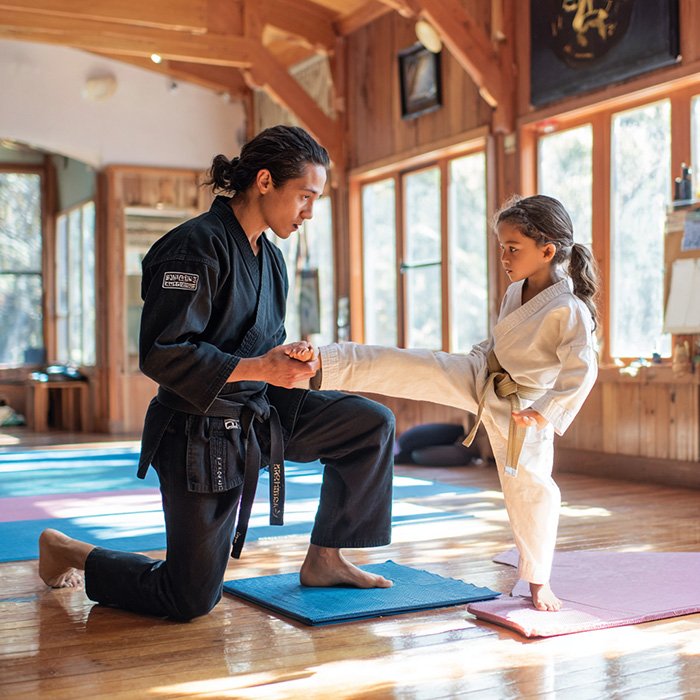
Traditional martial arts schools and dojos represent the foundational institutions where practitioners immerse themselves in single-discipline systems like Karate, Kosho-Ryu,Taekwondo, Judo, or Kung Fu. You’ll find these venues—dojos for Japanese arts, kwans for Korean styles—emphasize forms, discipline, and self-improvement alongside combat techniques. Approximately 85% of instructors hold black belt rank or equivalent, ensuring expert-level instruction.
With 6.6 million active U.S. participants, traditional schools maintain strong demand. You’ll notice 40% of students are under 18, while nearly half begin training after age 18, demonstrating lifelong appeal. The industry generated $8 billion in 2020, projected to exceed $9 billion by 2022. Schools like Tiger-Rock and Tiger Schulmann’s exemplify successful franchise models, while independently owned dojos preserve deep cultural lineage and historical authenticity in their teaching methodologies. Training follows a strictly hierarchical system where students learn from masters who trace their lineage back to the art’s origins.
Mixed Martial Arts (MMA) Training Centers
You’ll find major MMA gym chains like UFC Gym and Tiger Muay Thai leading global expansion with standardized curricula that blend striking, grappling, and conditioning protocols. These facilities structure programs across skill tiers—from foundational fitness classes to professional fight preparation—allowing you to select training intensity based on your competitive goals. Each chain develops specializations: some emphasize Brazilian Jiu-Jitsu integration, others phttps://blog.jamesmartialartsacademy.com/wp-content/uploads/2024/06/woman-traveling-in-france-2023-11-27-05-16-47-utc_Easy-Resize.com_.jpgritize Muay Thai striking systems, and many incorporate strength and conditioning programs designed specifically for combat sports performance. The MMA fitness sector maintains approximately 3.3 million participants annually in the United States, demonstrating consistent demand for recreational and fitness-oriented martial arts training.
Top MMA Gym Chains
You’ll find specialized environments at facilities like Kill Cliff FC in Florida, emphasizing wrestling and striking disciplines, while Evolve MMA operates five facilities throughout Singapore under ONE Championship CEO leadership. Elite coaching distinguishes chains such as Jackson Wink MMA in Albuquerque and MMA Factory in France, which expanded from 2 to 600 students in five years, producing champions like Francis Ngannou. American Top Team in Coconut Creek, Florida stands as arguably the biggest MMA gym in the world, having won Gym of the Year at World MMA Awards six times in the last seven years.
Training Programs and Specializations
Modern MMA training centers structure their programs around three core pillars: striking systems, grappling disciplines, and sport-specific conditioning. You’ll find curricula integrating boxing, Muay Thai, and kickboxing with Brazilian jiu-jitsu, wrestling, and judo fundamentals. Progressive skill development typically advances from controlled technique drilling to live sparring scenahttps://blog.jamesmartialartsacademy.com/wp-content/uploads/2024/06/woman-traveling-in-france-2023-11-27-05-16-47-utc_Easy-Resize.com_.jpgs.
Specialized conditioning programs address biomechanics, cardiovascular endurance, and injury prevention specific to combat athletes. Training protocols adjust according to your weight class and competition timeline, incorporating nutrition guidance, recovery practices, and mental preparedness components. Professional trainers and martial arts coaches can enhance their expertise through specialized MMA certifications that cover strength and conditioning principles, power development, and sport-specific training methodologies.
Elite facilities offer structured coaching paths from beginner fundamentals to competitive fight preparation. You’ll access specialized equipment including heavy bags, crash mats, throwing dummies, and strength training apparatus. Many centers provide certification tracks like NASM’s MMA Conditioning Specialization for aspiring coaches seeking comprehensive instruction in athletic development.
Brazilian Jiu-Jitsu Academies
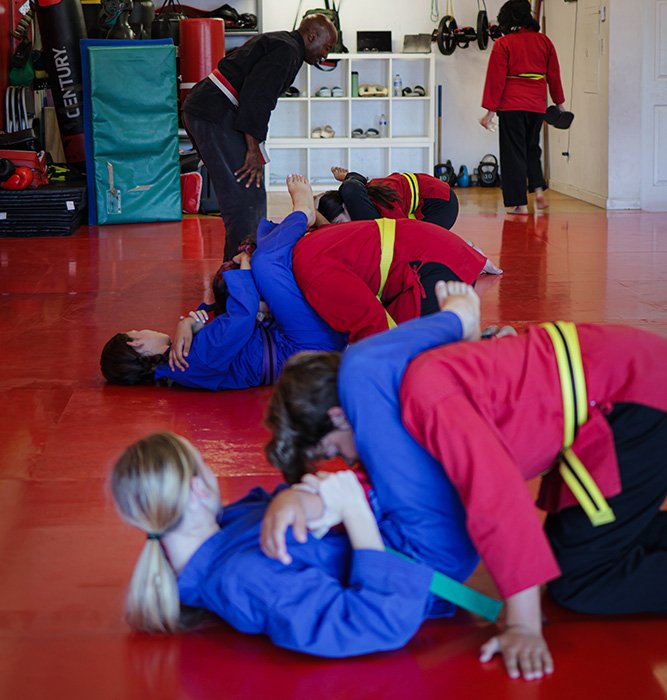
When you’re selecting a Brazilian Jiu-Jitsu academy, you’ll need to evaluate the school’s lineage, instructor credentials, and competition track record to ensure quality instruction. Most academies structure their programs around belt-rank progression with class schedules typically offering beginner fundamentals, advanced technique sessions, and open mat time throughout the week. You should expect monthly membership costs ranging from $100 to $150 depending on your region, with options including unlimited training, drop-in rates, and family packages. Many fitness centers are now integrating BJJ into their programs to cater to both wellness enthusiasts and martial arts practitioners seeking comprehensive training options.
Finding Quality BJJ Schools
Brazilian Jiu-Jitsu schools vary dramatically in quality, and selecting the right academy requires systematic evaluation of multiple critical factors. You’ll need to assess curriculum structure first—quality schools provide clear progression with logical technique sequencing and specialized beginner classes. Examine the facilities for clean mats, safety protocols, and proper insurance coverage. IBJJF-registered schools have completed background checks, enhancing credibility.
Observe the training environment carefully. Respectful treatment of all students regardless of skill level indicates positive culture, while toxic behavior signals problems. Check instructor credentials, including CPR certification and teaching experience. Research reviews across multiple platforms and speak directly with current students.
Visit personally to assess instructor interaction, training methodology, and overall atmosphere. Your gut instincts about the academy during the first visit often reveal important aspects about culture and fit that aren’t immediately obvious through research alone. The presence of higher belt students demonstrates successful long-term development programs.
Training Programs and Schedules
Effective BJJ training programs balance structured curriculum delivery with strategic scheduling that accommodates different skill levels and competitive goals. Quality academies reverse-engineer progression by organizing content into belt-specific blocks, segmenting classes by skill tier to ensure safety and appropriate complexity. You’ll encounter technique-focused sessions emphasizing fundamentals and escapes as a beginner, progressing toward attack chains and gameplan refinement at advanced levels.
Training frequency directly impacts your development. You should attend two sessions minimum weekly, with three to four optimal for consistent improvement. Competitors typically train four to six sessions, integrating strength work and conditioning. Well-designed programs incorporate pehttps://blog.jamesmartialartsacademy.com/wp-content/uploads/2024/06/woman-traveling-in-france-2023-11-27-05-16-47-utc_Easy-Resize.com_.jpgdization—often 9-week mesocycles—that systematically develop hypertrophy, strength, tactical skills, and power aligned with competition calendars. This structured approach includes progressive loading, live sparring integration, and scheduled recovery to prevent overtraining while maximizing adaptation. Leading academies dedicate specific class time for positional sparring and Q&A, allowing students to drill targeted scenahttps://blog.jamesmartialartsacademy.com/wp-content/uploads/2024/06/woman-traveling-in-france-2023-11-27-05-16-47-utc_Easy-Resize.com_.jpgs and address technical questions that arise from live training challenges.
Membership Costs and Options
Investment in BJJ training requires understanding the financial structure before committing to membership. You’ll encounter monthly fees ranging from $120-$200 in the United States, £80-£140 in the UK, and AUD 130-220 in Australia. Urban academies in high-cost areas like California or New York may charge $300 or more.
Contract options typically include month-to-month, 6-month, or 12-month terms. Longer commitments provide 10-15% discounts compared to flexible monthly plans. You’ll find tiered memberships offering limited or unlimited class attendance, with higher tiers granting multi-location access.
Expect additional costs: initiation fees ($50-$250), Gis ($60-$150), private lessons ($60-$150 hourly), and belt testing ($50-$150). Drop-in rates average $20-$35 per session. Family, military, and first responder discounts reduce expenses at select schools. Many practitioners consider BJJ training a worthwhile investment in physical health, mental well-being, and personal development despite the higher costs compared to traditional gym memberships.
Boxing Gyms and Combat Sports Facilities
While traditional dojos and martial arts studios remain cornerstone training venues, boxing gyms and combat sports facilities have emerged as the dominant force in American martial arts education, capturing 26% of all gym locations and generating 37% of industry reviews. You’ll find five distinct facility types: traditional boxing gyms emphasizing competitive skill development, fitness-oriented clubs delivering high-intensity cardiovascular workouts, boutique studios offering specialized training with advanced technology, competitive clubs serving amateur and professional fighters, and hybrid gyms combining combat sports with comprehensive fitness equipment. Expect startup costs ranging from $20,000 for small studios to over $150,000 for fully-equipped facilities. Essential equipment includes heavy bags, speed bags, professional rings, protective gear, and strength training apparatus. The U.S. boxing gym industry generates $1.6 billion annually, reflecting sustained 6.9% growth. The industry comprises 3,373 businesses nationwide, with no single company holding more than 5% market share, creating a highly fragmented competitive landscape that favors local operators over national chains.
Specialized Self-Defense Training Studios
Specialized self-defense training studios occupy a distinct niche within America’s 50,000+ martial arts facilities, representing approximately 2% of all locations yet experiencing accelerated growth driven by heightened personal safety awareness. You’ll find curricula integrating multiple combat systems—Brazilian Jiu-Jitsu, Muay Thai, Filipino Martial Arts—focused on practical application rather than traditional forms. Krav Maga studios teach Israeli military-derived tactics emphasizing quick, real-world effectiveness. Women now comprise 30% of participants, prompting specialized empowerment-oriented programming. Studios offer scenahttps://blog.jamesmartialartsacademy.com/wp-content/uploads/2024/06/woman-traveling-in-france-2023-11-27-05-16-47-utc_Easy-Resize.com_.jpg-based training including anti-abduction protocols, weapon defense, and situational awareness drills. Approximately 15% of clients seek personalized instruction through small group sessions. The sector benefits from martial arts industry expansion—14.2% annual U.S. growth from 2017-2022—while maintaining specialized positioning. Despite this growth, no single franchise controls more than 1.8% of the overall U.S. martial arts studio market, reflecting the industry’s fragmented and locally-oriented nature. Automated management systems increase retention rates 30%, supporting operational sustainability in this technically demanding market segment.
Community Centers and Recreation Programs
Community centers offer martial arts instruction at significantly lower costs than private studios, typically under $150 monthly, making them accessible entry points for beginners with limited budgets. You’ll find flexible scheduling options including after-school, evening, and weekend classes designed to accommodate working families and diverse age groups. These programs phttps://blog.jamesmartialartsacademy.com/wp-content/uploads/2024/06/woman-traveling-in-france-2023-11-27-05-16-47-utc_Easy-Resize.com_.jpgritize foundational skills and family participation, with many facilities providing classes where parents and children train together in the same sessions.
Affordable Classes for Beginners
For beginners seeking martial arts instruction without the financial burden of private studios, community centers and recreation programs present the most accessible entry point. You’ll find classes priced between $30 and $75 monthly—substantially below the $100-$200 standard at commercial schools. These programs deliver structured curricula in karate, taekwondo, and self-defense through qualified instructors, often subsidized by municipal budgets or nonprofit partnerships.
Group instruction formats reduce per-student costs while maintaining safety and progression standards. Many centers now implement video-guided curriculums, enabling non-expert facilitators to teach effectively without expensive black belt instructors. This decentralized model expands availability in underserved areas lacking traditional dojos.
You’ll benefit from sliding scale fees, seasonal discounts, and flexible scheduling that accommodates varied budgets. The multipurpose facility approach eliminates specialized equipment requirements, keeping overhead minimal and accessibility maximized.
Family-Friendly Training Options
Nearly half of martial arts participants at recreation facilities are youth under 18, reflecting the sector’s strategic focus on family-centered programming. You’ll find community centers offer age-specific curricula—preschool through teen—ensuring developmental appropriateness while maintaining competitive fee structures with family discounts. These venues phttps://blog.jamesmartialartsacademy.com/wp-content/uploads/2024/06/woman-traveling-in-france-2023-11-27-05-16-47-utc_Easy-Resize.com_.jpgritize supervised environments where instructors emphasize character development: respect, discipline, and goal-setting over competition.
Parent-child classes function as active bonding experiences, with multi-aged sessions enabling families to train simultaneously. This approach strengthens retention and builds community networks through extracurricular events beyond the dojo. Programs deliberately minimize contact risk through controlled sparring drills and gradual skill progression. Research indicates sustained participation correlates with improved academic focus and behavioral outcomes, while 60% of students report increased discipline and confidence—measurable benefits that justify martial arts as comprehensive youth development tools.
University and College Martial Arts Clubs
Many universities and colleges now host martial arts clubs as structured extracurricular programs that operate outside traditional course credit systems. You’ll find diverse disciplines including MMA, boxing, karate, taekwondo, and Brazilian Jiu-Jitsu, accommodating all skill levels from beginner to advanced. These clubs typically provide specialized facilities with mats, bags, and essential training equipment within university recreation departments.
Participation offers significant benefits beyond physical conditioning. You’ll develop mental discipline, stress management capabilities, and emotional regulation while building supportive social networks. Research demonstrates that martial arts engagement positively impacts student quality of life by counteracting academic pressures.
Equipment quality and coaching expertise vary considerably between institutions, directly affecting your skill development. Universities with robust recreation departments generally maintain supehttps://blog.jamesmartialartsacademy.com/wp-content/uploads/2024/06/woman-traveling-in-france-2023-11-27-05-16-47-utc_Easy-Resize.com_.jpgr facilities and provide access to experienced instructors. Funding depends on institutional support and student interest levels.
Online Platforms and Virtual Training Options
As digital technology reshapes martial arts education, online platforms have emerged as legitimate training environments that challenge traditional studio-centric models. You’ll find dedicated online academies offering structured belt ranking systems alongside hybrid platforms combining live virtual classes with on-demand content. Studies demonstrate these programs enable skill progression over 50% faster than traditional training for neurotypical students while maintaining equivalent proficiency standards.
You can access global instructor networks teaching diverse martial arts styles through mobile apps featuring customizable training plans and progress monitoring. Gamification elements enhance your engagement through challenge-based rewards systems, yielding higher retention rates. The flexibility eliminates logistical barriers like commuting and fixed schedules, encouraging consistent practice. For neurodivergent students, these platforms provide tailored accommodations that boost confidence and self-discipline, expanding martial arts accessibility beyond conventional limitations.
Franchise Martial Arts Chains
While digital platforms revolutionize individual training, standardized franchise chains offer structured physical environments with consistent curricula across multiple locations. Premier Martial Arts exemplifies this model’s scalability, expanding from zero franchises in 2018 to over 260 locations across the U.S., Canada, and Great Britain by 2023. You’ll find professionally certified instructors delivering uniform teaching methods that emphasize both technical proficiency and character development.
The financial framework proves accessible, with startup costs ranging from $108,000 to $318,000 and average annual gross sales of $305,000. Franchise chains leverage the $8.16 billion U.S. martial arts industry, which has grown 18.7% annually since 2012. You’ll receive comprehensive operational support, marketing assistance, and standardized systems that maintain quality control while allowing multi-location expansion opportunities for successful operators.
Private Instruction and Personal Coaching
Private instruction represents approximately 15% of martial arts studio revenue while delivering substantially accelerated skill development through individualized programming. You’ll require approximately 38 hours to achieve proficiency in fundamental offensive and defensive techniques through standard training, but personalized coaching optimizes this timeline through immediate corrections and concentrated practice. Complex maneuvers like rear elbow strikes and knife retrieval typically demand 35-38 sessions to master.
You’ll benefit from instructors earning $70,000-$145,000 annually who customize programs addressing your specific weaknesses and learning pace. This focused attention produces higher engagement and retention rates while building genuine self-defense confidence. Studios averaging 121 students generate $177,000 annually, with private lessons commanding premium rates. Whether you’re under 18—representing 50% of U.S. martial arts students—or an adult seeking efficient skill acquisition, private coaching delivers measurable results through tailored progression tracking.
Conclusion
You’ve now surveyed the complete landscape of martial arts training facilities. Your next step demands action—evaluate your specific goals, assess facility credentials, and verify instructor qualifications before committing. Don’t settle for convenience alone; phttps://blog.jamesmartialartsacademy.com/wp-content/uploads/2024/06/woman-traveling-in-france-2023-11-27-05-16-47-utc_Easy-Resize.com_.jpgritize proper technique instruction and safety protocols. Whether you’re pursuing competition, self-defense, or personal development, you’ll find legitimate training only through rigorous vetting. Select your academy wisely, train consistently, and maintain unwavering discipline throughout your martial arts journey.