Martial Arts for Older Guys
You can rebuild lost strength, mobility, and mental sharpness through martial arts training—even if you’re starting after 50. Studies show functional strength gains up to 34%, flexibility increases over 300%, and improved cardiovascular health without excessive joint stress. You’ll sharpen cognitive function through complex sequences, reduce fall risk by 24% with better balance, and maintain independence longer than sedentary peers. Whether you choose Tai Chi for gentle progression or Brazilian Jiu-Jitsu for dynamic challenge, the specific techniques and structured approach ahead will show you exactly how to begin.
Build Real Strength and Mobility After 50
After 50, your body doesn’t stop responding to training—it just demands smarter programming. Martial arts deliver exactly that through resistance-based movements, stances, and strikes that build functional strength without excessive joint stress.
You’ll see strength gains between 9.3% and 34% while preserving muscle mass that typically declines with age. Hard styles like Brazilian Jiu-Jitsu improve mobility by 9.5% to 13.6%, while flexibility increases dramatically—sometimes over 300%—supporting better joint health and movement range.
Adapted Taekwondo and karate programs boost handgrip strength, postural control, and agility after just 10 weeks. Soft styles like Tai Chi enhance lower-limb strength while promoting relaxation.
This training also improves bone density and muscle tone, countering osteoporosis and sarcopenia. Dropout rates remain low—typically under 19%—indicating that older adults consistently adhere to these programs. You’re building the foundation for maintained independence and quality of life.
Sharpen Your Mind While Training Your Body
Your martial arts training fires up neural pathways that routine exercise simply can’t reach. Complex kata sequences and partner drills demand simultaneous motor coordination and cognitive processing, enhancing working memory, reaction time, and executive function far beyond what walking or cycling provides.
You’ll notice sharper concentration as you learn multi-step combinations, training your brain to recall patterns and adapt rapidly. This constant cognitive challenge increases cortical excitability and cerebral blood flow, directly supporting neuroplasticity. Even one weekly session over 15 months produces measurable improvements in attention and processing speed.
Beyond cognition, you’re building psychological resilience. Training reduces anxiety and depression while managing stress through controlled emotional engagement. The social component combats isolation, and each mastered technique reinforces confidence—critical factors for maintaining mental wellness as you age. Research shows that training three times weekly produces the most significant improvements in both depression levels and overall quality of life.
Protect Your Heart and Boost Your Stamina
Each punch, kick, and grappling exchange transforms your cardiovascular system in ways that standard gym routines rarely match. You’re engaging in variable-intensity training that strengthens your heart muscle while improving oxygen delivery throughout your body. Research demonstrates that 12 weeks of Brazilian Jiu-Jitsu improves aerobic fitness by 13.4% in older adults, even without phttps://blog.jamesmartialartsacademy.com/wp-content/uploads/2024/06/woman-traveling-in-france-2023-11-27-05-16-47-utc_Easy-Resize.com_.jpgr experience.
The benefits extend beyond endurance. You’ll develop 140% less arterial stiffness compared to sedentary peers, reducing cardiovascular disease risk significantly. Tai chi practitioners show greater systolic blood pressure reductions than those doing conventional aerobic exercise. Your cholesterol profile improves as vigorous training increases HDL levels while supporting weight loss that lowers LDL. Training also reduces cortisol levels, helping you manage stress while strengthening your heart.
Two sessions weekly for eleven weeks produce measurable cardiovascular gains that support independent living and longevity.
Stay on Your Feet: Balance Training That Prevents Falls
Falls pose a sehttps://blog.jamesmartialartsacademy.com/wp-content/uploads/2024/06/woman-traveling-in-france-2023-11-27-05-16-47-utc_Easy-Resize.com_.jpgus threat to your independence and health as you age, but martial arts training directly addresses this risk through systematic balance development. Traditional practices like Tai Chi strengthen your prophttps://blog.jamesmartialartsacademy.com/wp-content/uploads/2024/06/woman-traveling-in-france-2023-11-27-05-16-47-utc_Easy-Resize.com_.jpgception and postural control while building the lower body strength necessary to maintain stability. The dynamic movements you’ll master—from single-leg stances to controlled weight shifts—train your nervous system to recover quickly from perturbations, reducing your fall risk by up to 24%. Research shows that Tai Chi can significantly improve gait speed, which directly contributes to better mobility and further reduces the likelihood of falling.
Falls: A Real Threat
While most martial artists focus on perfecting strikes and submissions, the statistics reveal a sobering truth: if you’re over 65, your greatest physical threat isn’t an attacker—it’s the ground itself. Falls cause more fatal and nonfatal injuries than any other threat you’ll face. The numbers are stark: about 26% of adults aged 65-74 fall annually, rising to 28.5% for those 75-84. Over 14 million older Americans fall each year, and falling once doubles your risk of falling again.
Here’s what makes this particularly relevant to your training: falls significantly impact quality of life, causing morbidity, mortality, and driving healthcare costs sky-high. The good news? Your martial arts practice directly addresses this threat through balance, strength, and coordination development—exactly what evidence-based fall prevention requires. Research demonstrates that multimodal exercise interventions—combining balance, strength, aerobics, and flexibility activities like those found in martial arts—show significantly lower fall incidence compared to basic stretching programs.
How Martial Arts Help
Because your martial arts training directly targets the neuromuscular systems responsible for postural control, you’re building precisely what prevents falls. The data confirms this: you’ll gain approximately 16 seconds in single-leg stance duration after 17 weeks of consistent practice. That’s not merely statistical improvement—it’s functional protection that reduces fall-related injuries by 30%.
Your training enhances multiple balance mechanisms simultaneously: muscle reaction time, functional postural adjustments, and gait stability ratios. These improvements translate directly to daily activities—sitting, standing, walking—all performed with greater control and confidence. Studies using the Berg Balance Scale and Timed Up and Go tests show statistically significant advantages over sedentary controls.
You’re not just learning techniques; you’re engineering a more stable, resilient body through systematic neuromotor conditioning. Falls are the leading cause of injury-related deaths in the elderly, contributing to approximately 8,000 fatalities annually in the UK.
Dynamic Movements Build Stability
Everything about martial arts training demands that your body move in multiple directions at once. You’ll shift weight forward during strikes, twist through your hips for power, and recover balance between techniques. These multi-directional movements strengthen your postural control system far beyond static exercises.
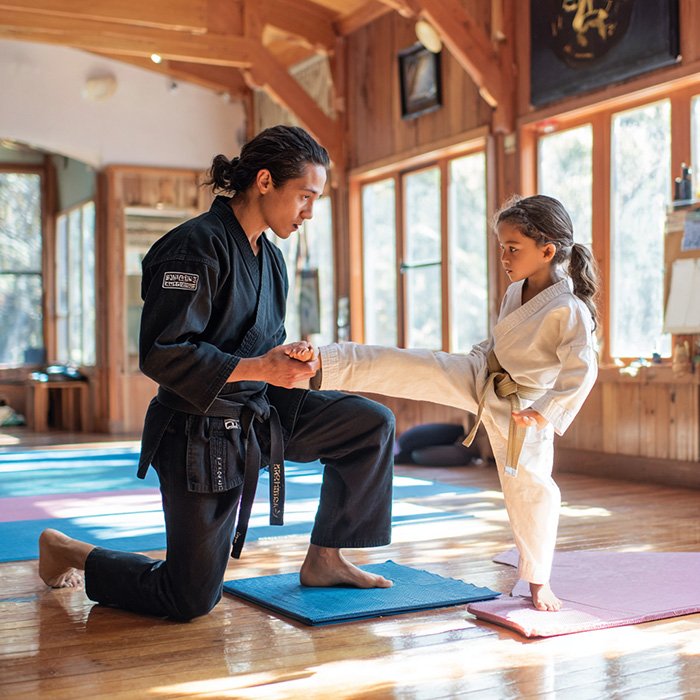
When you practice swinging and twirling movements in Arnis or execute kicks in Taekwondo, you’re engaging your cognitive, sensory, and musculoskeletal systems simultaneously. This integration enhances your neuromotor excitability and reaction times—critical factors for catching yourself during unexpected slips. Research shows participants maintained single leg stance for over 5 additional seconds after training, demonstrating measurable improvements in stability.
The repetitive sequences you’ll master build lower limb strength while training your nervous system to adjust rapidly. Your center of gravity control improves through deliberate joint positioning and muscle coordination. Research confirms these dynamic patterns reduce fall risk more effectively than conventional balance training.
Mental Toughness and Emotional Resilience Through Practice
Training in martial arts rewires your brain in measurable ways, particularly after age 50. Hard martial arts training sharpens reaction time and digit span while reducing depressive symptoms—even with just one weekly session over 15 months. Duration matters more than frequency for lowering anxiety and depression.
Combat training generates positive emotions that build ego-resilience and emotional stability. You’ll develop stronger beliefs about overcoming obstacles, which translates to improved life satisfaction. The combination of physical exertion with cognitive challenges creates lasting psychological benefits.
Traditional practices using weapons like sticks and staffs enhance this effect through whole-body, waist-centered movements paired with controlled breathing. These techniques improve neuroplasticity while building functional strength. Studies show that just 11 weeks of training with tools like the Taiji Stick can enhance lower limb strength and dynamic balance while maintaining upper body capacity. Your improved fitness maintains independence and reinforces a positive self-concept, creating a foundation for sustained mental toughness.
Getting Started: What to Expect as an Older Beginner
When you step into your first martial arts class after 50, expect measurable physical changes within weeks, not months. Studies document 27.5% upper body strength gains for men and 34.6% for women after consistent training. You’ll train approximately 40 minutes per session, three times weekly, working through warm-ups, technique drills, balance exercises, and conditioning.
Initial stiffness and joint discomfort are normal—they diminish with practice. Your learning curve will be slower than younger students, requiring more repetition and patience. Recovery takes longer, demanding proper rest and nutrition between sessions.
Get medical clearance before starting. Choose modified programs designed for older practitioners. Focus on gradual progression rather than intensity. The training environment features properly supervised classes with lower injury rates than jogging, tennis, or golf due to controlled conditions and emphasis on proper form. Within 12-16 weeks, you’ll notice improved balance, flexibility, and reduced fall risk alongside mental benefits like enhanced confidence and stress reduction.
Choosing the Right Martial Art for Your Goals and Abilities
Your success in martial arts depends on matching the right discipline to your specific circumstances. Start by defining your primary objective—whether it’s self-defense, fitness improvement, flexibility enhancement, or mental clarity. Then honestly assess your physical condition: joint health, balance, cardiovascular capacity, and any existing limitations.
If joint issues concern you, phttps://blog.jamesmartialartsacademy.com/wp-content/uploads/2024/06/woman-traveling-in-france-2023-11-27-05-16-47-utc_Easy-Resize.com_.jpgritize low-impact options like Tai Chi, Brazilian Jiu Jitsu, or Wing Chun. These disciplines emphasize leverage and technique over brute strength. For cardiovascular conditioning, consider kickboxing if your fitness level permits.
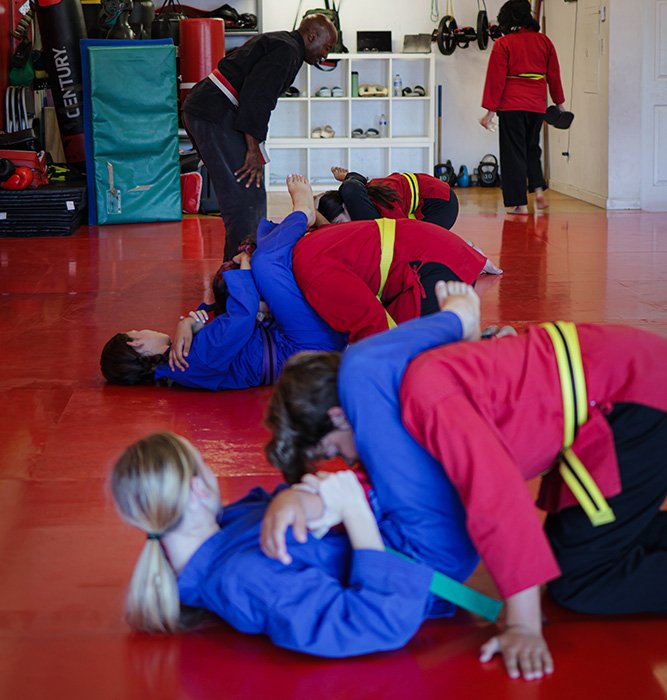
Equally critical is finding an instructor experienced with older practitioners. They’ll modify techniques appropriately and understand age-related considerations. Visit multiple schools, communicate your health status clearly, and observe how instructors adapt to different abilities. The right match combines your goals, physical reality, and quality instruction. Consider Brazilian Jiu Jitsu if self-defense is your phttps://blog.jamesmartialartsacademy.com/wp-content/uploads/2024/06/woman-traveling-in-france-2023-11-27-05-16-47-utc_Easy-Resize.com_.jpgrity, as it’s considered one of the best for practical defensive situations.
Conclusion
You’ve seen what martial arts can do for you—now it’s time to step onto the mat. Don’t wait for the “perfect” moment or optimal fitness level. You’ll build those through consistent training. Start with a single class. Focus on proper form over power, listen to your body’s signals, and respect the process. Your strength, balance, and mental edge aren’t behind you—they’re waiting to be forged. Begin today.