Martial Arts for Children
Martial arts provide your child with comprehensive development across physical, mental, and social domains. You’ll see improvements in cardiovascular fitness, muscular strength, and motor skills like coordination and balance—with studies showing twice the growth rate compared to non-participants. Your child will also develop emotional regulation, self-confidence, and empathy through structured practice that teaches respect and boundary awareness. These programs build genuine self-defense capabilities while reducing aggression and bullying behaviors. The evidence reveals how martial arts uniquely combine benefits that typically require multiple separate activities to achieve.
Physical Fitness and Motor Skills Enhancement Through Martial Arts Training
When children engage in martial arts training, they develop comprehensive physical fitness that extends far beyond basic exercise. Your child’s cardiorespiratory fitness improves significantly with consistent practice, building both aerobic capacity and endurance comparable to that of traditional endurance sports. These cardiac adaptations support lifelong heart health.
Martial arts enhance muscular strength, explosive power, and bone density while improving body composition. Your child will demonstrate supehttps://blog.jamesmartialartsacademy.com/wp-content/uploads/2024/06/woman-traveling-in-france-2023-11-27-05-16-47-utc_Easy-Resize.com_.jpgr performance in grip strength, push-ups, and sit-ups compared to non-participating peers.
Motor skill development accelerates through martial arts, with notable improvements in coordination, balance, speed, and agility. Children show enhanced locomotor and manipulative skills, including better single-leg stability and postural control. Experimental groups exhibited twice the growth rate in physical fitness compared to control groups.
Flexibility increases substantially, promoting a greater range of motion, injury prevention, and improved performance across all physical activities.
Mental Resilience and Emotional Well-Being Development
Beyond physical benefits, martial arts training strengthens your child’s psychological foundation through structured mind-body integration that promotes mental health and personal growth. Regular practice builds emotional regulation skills, reducing reactive responses to stress while improving composure under pressure. Your child learns mindfulness techniques like focused breathing and body awareness, which enhance emotional balance in challenging school and social situations.
The measurable milestones of belt progression boost self-confidence and positive self-image, creating protective factors against anxiety and depression. Through controlled exposure to adversity, your child develops effective coping strategies and grit—the ability to persevere through difficulties. Partner drills and sparring cultivate empathy and respectful conflict resolution, while the emphasis on discipline fosters adaptable thinking that helps children manage unexpected setbacks confidently. Research demonstrates that meaning in life serves as a powerful mediating factor between martial arts practice and improved mental health outcomes in adolescents.
Building Social Skills and Character Through Practice
Your child’s martial arts training extends far beyond physical techniques, actively shaping how they interact with others and view their role in the community. Through structured practice, they’ll develop genuine respect for instructors and peers while learning to recognize and respond to others’ emotions with empathy. As they advance in rank, they’ll naturally transition into leadership positions, mentoring newer students, and building the confidence to guide others positively. The collaborative environment teaches children the importance of working together toward common goals, helping them understand that success often depends on supporting and learning from one another.
Respect and Empathy Development
The structured environment of martial arts training naturally provides children with opportunities to develop respect and empathy through daily interactions with instructors, peers, and the practice itself. Your child learns to honor boundaries and understand others’ emotions through controlled sparring and partner drills, building genuine empathy skills. The culture emphasizes understanding different viewpoints during practice, enhancing perspective-taking abilities essential for positive social relationships.
Research shows that martial arts programs incorporating cooperative activities increase oxytocin responsivity, which strengthens reciprocal social interactions. Your child’s instructor reinforces prosocial behaviors through mentorship and teaches conflict-resolution skills as alternatives to aggression. Group dynamics require cooperation toward shared goals, fostering a sense of community belonging while reducing social isolation. The repetitive, slow, structured nature of martial arts makes it particularly effective for children with diverse learning needs and abilities. This combination of structured respect, emotional awareness, and collaborative practice helps children develop lasting empathetic capacities.
Leadership Through Martial Arts
Martial arts training systematically develops leadership capabilities in children through consistent practice of goal-oriented behaviors, mentorship opportunities, and increasing personal responsibility. Your child learns essential leadership traits, including self-control, focus, and determination, as they progress through structured belt rankings. These milestones build confidence and teach them to set clear objectives while persisting through challenges.
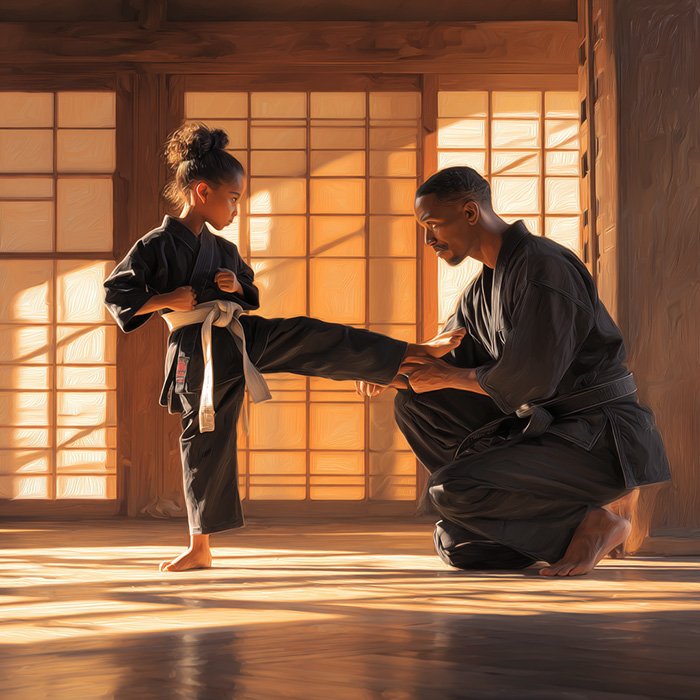
Instructors model effective leadership by providing direct feedback, establishing communication standards, and creating achievement-oriented pathways. As your child advances, they’ll often mentor newer students, developing coaching skills and learning to encourage others’ growth. This hands-on leadership experience strengthens their ability to guide peers positively. Training develops problem-solving and coping mechanisms that enable children to navigate conflicts and make thoughtful decisions in group settings.
The emotional regulation and adaptability gained through training prepare your child to lead effectively under pressure, making sound decisions while maintaining composure in challenging situations both inside and outside the dojo.
Self-Defense Capabilities and Personal Safety Awareness
Beyond the physical techniques learned in class, children enrolled in martial arts programs develop a comprehensive understanding of personal safety that extends into every aspect of their daily lives. Your child will learn to recognize potential dangers through heightened situational awareness, interpreting body language and non-verbal cues that signal unsafe situations. They’ll master practical defense techniques—blocking, striking, and escaping holds—that phttps://blog.jamesmartialartsacademy.com/wp-content/uploads/2024/06/woman-traveling-in-france-2023-11-27-05-16-47-utc_Easy-Resize.com_.jpgritize skill over size, enabling protection against larger aggressors. This training builds genuine confidence and assertiveness, empowering your child to establish boundaries and say “no” when threatened. Research demonstrates that formal self-defense training correlates with a 60-80% decreased likelihood of experiencing physical assault. Equally important, martial arts develop self-control and emotional regulation, teaching peaceful conflict resolution while viewing physical confrontation as a last resort. Studies show that martial arts instruction leads to lower levels of aggression and higher self-control in adolescents, creating more thoughtful and measured responses to challenging situations.
Accessibility and Year-Round Program Advantages
When should your child start martial arts, and how can you fit this valuable activity into an already packed family schedule? Most programs accept children aged 4 to 6, when they can follow directions and participate in group activities. You’ll find age-specific beginner classes designed for developmental stages, ensuring safe and appropriate learning environments.
Unlike seasonal sports, martial arts training continues year-round, enabling consistent skill development and physical conditioning. Regular practice—three sessions weekly—meets US physical activity guidelines while building lifelong fitness habits. Many schools offer flexible scheduling with after-school and weekend options, and classes typically last just one hour.
Indoor training eliminates weather disruptions, and minimal equipment requirements keep costs manageable. Community centers and local schools often provide scholarship options, making martial arts accessible across diverse socio-economic backgrounds. The structured environment fosters respect and discipline, teaching children to follow codes of conduct while developing self-control and responsibility.
Discipline, Focus, and Academic Performance Improvements
As your child progresses through martial arts training, you’ll likely notice improvements extending far beyond the dojo—particularly in academic settings. The structured practice develops executive functions essential for learning, helping children absorb and retain information more effectively. Research demonstrates that cardiorespiratory fitness from martial arts correlates with higher grades in mathematics and reading, while increased hippocampus size enhances memory formation.
The discipline required for consistent training translates directly into improved study habits and time management skills. Your child learns that mastery requires effort and persistence, strengthening their motivation to tackle challenging assignments. Physical activity increases blood flow to the brain, enhancing cognitive abilities crucial for academic success. Studies show that a 1-year karate intervention produced significant achievement gains compared to traditional physical education classes. When students enjoy the activity, they are more likely to stick with their martial arts practice and experience consistent benefits.
Reducing Aggression and Bullying Through Martial Arts Philosophy
Many parents worry that teaching their child combat techniques might escalate aggressive tendencies, but research reveals the opposite effect. A meta-analysis of 12 studies found martial arts training significantly reduced aggression in children and teens, with 11 studies showing a medium effect size of 0.65 on physical aggression and bullying behaviors.
The key lies in the traditional martial arts philosophy, which emphasizes respect, empathy, and responsibility. Your child learns to channel aggression into disciplined self-expression rather than violence. This ethical framework, combined with breathing exercises and meditation, reduces both reactive and proactive aggression. Studies show martial arts participants generally exhibit less verbal aggression and hostility compared to non-participants, demonstrating the comprehensive nature of behavioral improvements.
Longer training duration amplifies these benefits. Your child develops enhanced self-control, emotional stability, and impulse management—traits that mediate aggression reduction across all ages, genders, and training environments. These behavioral improvements extend beyond the dojo into family and social interactions.
Lifelong Health Habits and Weight Management Benefits
Your child’s martial arts training delivers measurable physical fitness gains that extend far beyond the dojo floor. Research shows participation significantly improves cardiorespiratory fitness, muscular strength, flexibility, and coordination while reducing body fat percentage. These programs enhance metabolic function and help children meet recommended activity standards essential for obesity prevention.
The structured environment teaches discipline and self-regulation that translate into consistent physical activity patterns throughout life. Goal-setting skills and persistence developed during training support long-term health maintenance. Enhanced mindfulness improves adherence to exercise routines and healthy dietary choices.
Additionally, martial arts build emotional resilience and self-efficacy, helping prevent stress-related overeating while increasing motivation for an active lifestyle. Training delivers improved balance ability through prophttps://blog.jamesmartialartsacademy.com/wp-content/uploads/2024/06/woman-traveling-in-france-2023-11-27-05-16-47-utc_Easy-Resize.com_.jpgceptive development that enhances overall physical competence. Early motor skill development through training establishes physical literacy, which encourages sustained wellness behaviors into adulthood.
Why Martial Arts Outperform Traditional Sports for Holistic Development
While team sports excel at building camaraderie, martial arts offer your child something fundamentally different: a comprehensive development system that simultaneously strengthens mental resilience, emotional regulation, and physical capability. Unlike seasonal sports that focus primarily on game-specific skills, martial arts provide year-round training in discipline, focus, and character development that directly transfers to academic and social settings. You’ll notice your child doesn’t just learn kicks and punches—they develop the psychological hardiness to transform setbacks into growth opportunities, a skill set that remains valuable long after childhood.
Beyond Sport-Specific Skills
Beyond developing kicks, punches, and defensive techniques, martial arts cultivate a comprehensive skill set that extends far into your child’s daily life. Traditional sports often focus narrowly on sport-specific abilities, while martial arts simultaneously build physical fitness, emotional regulation, and social competence. Your child gains muscle strength, cardiovascular health, and motor skills, along with discipline and self-control. The structured environment teaches respect for authority and peers, which directly translates into improved classroom behavior and academic focus. Belt ranking systems provide clear frameworks for goal-setting and achievement, developing resilience through managed challenges. This holistic approach means your child doesn’t just learn athletic techniques—they develop character, emotional intelligence, and interpersonal skills that support success across all life domains, from schoolwork to future career endeavors.
Mental Resilience and Growth
Among the most compelling advantages martial arts offer children is the development of psychological resilience—a mental toughness that helps them navigate stress, setbacks, and challenges throughout life. Through structured training, your child learns to reframe difficulties as growth opportunities rather than insurmountable obstacles. This mind-body integration reduces mental distress while cultivating persistence and emotional stability.
Research demonstrates that martial arts training significantly improves attention, reduces depressive moods, and lessens communicative difficulties common during adolescence. The discipline enhances executive functioning and self-regulation, which directly translates into better classroom behavior and academic performance. Combat sports uniquely teach children to face adversity with optimism, building a psychological foundation that supports confident self-growth. These benefits intensify with longer participation, establishing patterns of resilience that extend well beyond childhood.
Year-Round Structured Development
Traditional sports often lock children into seasonal rhythms—intense pehttps://blog.jamesmartialartsacademy.com/wp-content/uploads/2024/06/woman-traveling-in-france-2023-11-27-05-16-47-utc_Easy-Resize.com_.jpgds of practice followed by months of inactivity that can erode hard-won physical gains and interrupt skill development. Martial arts provide year-round structure that sustains your child’s motor skills, explosive power, and cardiovascular fitness continuously. This consistency prevents the regression common during the off-season in sports.
The belt ranking system delivers clear, incremental goals multiple times annually, creating frequent milestones that reinforce perseverance and dedication. Unlike seasonal competitions that end abruptly, your child experiences steady progression that builds discipline across months and years.
Year-round training also sustains cognitive benefits—improved executive function, concentration, and self-control—through repeated, structured practice. Regular partner drills foster ongoing social skill development and peer support, strengthening emotional regulation and building lifelong values including patience, respect, and responsibility.
Conclusion
You’ve seen how martial arts can transform your child’s physical abilities, mental strength, and character development. The evidence clearly shows these programs offer comprehensive benefits that extend far beyond the dojo—from improved focus and academic performance to better emotional regulation and self-defense skills. By enrolling your child in a reputable, age-appropriate martial arts program, you’re investing in their safety, confidence, and lifelong well-being. It’s a decision that’ll positively impact their entire future.