Kids Self-Defense
Teaching children self-defense should begin when they demonstrate developmental readiness, typically ages 4-7. Choose a martial art that matches your child’s energy level and personality—high-energy kids thrive in Taekwondo while contemplative children may prefer Aikido. Focus on age-appropriate skills like boundary-setting and situational awareness. Self-defense training reduces assault risks by 60-80% and builds confidence. The right approach balances safety skills with nonviolent conflict-resolution techniques.
Key Takeaways
- Focus on age-appropriate training: 3-5 years for boundary language, 5-7 for verbal assertiveness, 8-13 for decision-making, and teens for de-escalation.
- Match your child’s martial art to their personality and energy level to improve engagement and retention of self-defense skills.
- Teach threat recognition abilities so children can identify and avoid dangerous situations, improving survival odds by approximately 60%.
- Phttps://blog.jamesmartialartsacademy.com/wp-content/uploads/2024/06/woman-traveling-in-france-2023-11-27-05-16-47-utc_Easy-Resize.com_.jpgritize safety by selecting qualified instructors, appropriate safety protocols, and monitoring training volume to prevent injuries.
- Balance physical techniques with verbal skills such as setting boundaries, using assertive language, and employing de-escalation strategies.
Why Self-Defense Skills Are Essential For Children Today
The world our children navigate today presents unique safety challenges that previous generations didn’t face. With roughly one in five students reporting bullying experiences, self-defense training provides concrete protection, reducing assault likelihood by 60-80% compared to untrained peers.
Beyond physical safety, these skills offer comprehensive benefits. Children who learn self-defense develop crucial threat recognition abilities, helping them identify and avoid dangerous situations before they escalate. They also gain improved escape techniques, increasing their survival odds by approximately 60% during actual confrontations. Self-defense training teaches children to trust their instincts, which is fundamental to maintaining personal safety in potentially threatening situations.
Self-defense training simultaneously builds physical fitness, enhances motor skills, and fosters psychological resilience. Children develop the confidence to establish boundaries, regulate emotions, and maintain composure during stressful situations—valuable skills that extend far beyond physical protection.
The Right Age To Begin Teaching Self-Defense To Your Child
Your child’s readiness for self-defense training depends more on developmental milestones than chronological age, with most children showing the necessary coordination and attention skills between ages 4 and 7. You’ll want to match training approaches to your child’s developmental stage, focusing on playful movement and listening skills for preschoolers and on introducing specific techniques for school-aged children. Instructors should emphasize a holistic approach that balances physical skills with situational awareness and verbal conflict resolution. Watch for signs like improved balance, ability to follow multi-step directions, and emotional regulation that indicate your child can safely and effectively participate in age-appropriate self-defense classes.
Developmental Readiness Signs
When determining whether your child is ready for self-defense training, parents should look beyond age alone and focus on developmental indicators across physical, emotional, social, and cognitive domains.
Physically, your child should demonstrate basic motor skills like running and jumping, maintain balance during simple drills, and sustain attention for 15-30 minutes. Emotionally, look for appropriate responses to feedback, basic impulse control, and self-regulation when upset.
Socially, your child needs to follow multi-step instructions, engage cooperatively with peers, and clearly communicate boundaries. Cognitively, they should recognize unsafe situations, apply basic problem-solving skills, and understand that techniques are intended solely for safety.
These readiness signs ensure your child can participate safely, learn effectively, and apply self-defense concepts appropriately – regardless of their chronological age. Children who show signs of shyness often experience significant growth in confidence through structured self-defense classes that gradually build their comfort with others.
Age-Appropriate Training Approaches
Unlike traditional age-based milestones, determining the right time to begin self-defense training depends more on your child’s unique developmental readiness than a specific birthday. However, certain age ranges align with appropriate program types.
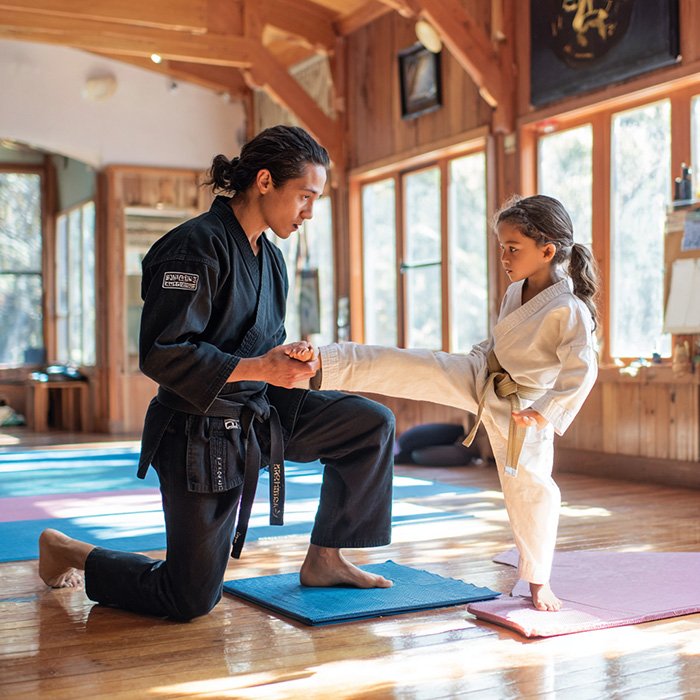
For 3-5-year-olds, start with Parent & Me classes that focus on boundary language and basic awareness through play-based activities. Children ages 5-7 are ready for structured classes that teach simple verbal assertiveness and escape moves. By ages 8-13, introduce scenahttps://blog.jamesmartialartsacademy.com/wp-content/uploads/2024/06/woman-traveling-in-france-2023-11-27-05-16-47-utc_Easy-Resize.com_.jpg-based decision-making and safe route planning, with programs like Gracie Bullyproof that teach them to use defensive techniques rather than strikes or aggression.
As your child reaches 11-13, they can learn situational awareness and more complex techniques. Teens can handle risk assessment, verbal de-escalation, and practical escape options.
Choose programs that match your child’s cognitive abilities and emphasize age-appropriate skills rather than aggressive techniques that they can’t safely execute.
Choosing The Best Martial Art For Your Child’s Personality
Your child’s personality and energy level can point you toward the most suitable martial art for long-term engagement and growth. High-energy extroverts often thrive in fast-paced striking arts like Taekwondo, while contemplative children may connect better with flowing disciplines like Tai Chi or Aikido. Matching your child’s temperament to the right fighting style increases their confidence, enjoyment, and commitment to learning valuable self-defense skills. Evaluating your child’s personality and learning style will help you make the best choice among the available martial arts options.
Personality Drives Martial Style
Finding the right martial art for your child involves more than just picking the most convenient class—it requires matching their unique personality traits with the appropriate training philosophy.
Notice how structured, rule-following children excel in traditional arts like karate and taekwondo, which emphasize forms and etiquette. Thrill-seekers might prefer full-contact sports like boxing or MMA. If your child enjoys cooperative learning over competition, consider grappling arts like jiu-jitsu or aikido.
Creative, exploratory children thrive in arts with improvisational elements like capoeira or certain kung fu styles. Research shows that fighters generally score higher on trait cuhttps://blog.jamesmartialartsacademy.com/wp-content/uploads/2024/06/woman-traveling-in-france-2023-11-27-05-16-47-utc_Easy-Resize.com_.jpgsity than non-martial artists, suggesting naturally cuhttps://blog.jamesmartialartsacademy.com/wp-content/uploads/2024/06/woman-traveling-in-france-2023-11-27-05-16-47-utc_Easy-Resize.com_.jpgus children may particularly enjoy combat sports. Meanwhile, self-improvement-focused children benefit from programs teaching philosophy and meditation alongside technique.
Your child’s social style matters too—introverts often prefer individual mastery in small settings, while extroverts flourish in team-oriented, sparring-heavy programs that provide social stimulation.
Temperament Matches Fighting Focus
How does your child respond when frustrated or challenged? This reaction offers valuable clues to the martial art that will best develop their natural temperament.
Research reveals that different martial arts styles cultivate distinct psychological benefits matching specific personality traits:
- Highly reactive children benefit from meditation-focused arts like Tai Chi or Aikido, which develop emotional stability and reduce neuroticism through controlled breathing and mindfulness.
- Impulsive, high-energy children thrive in structured progression systems like Karate or Taekwondo, which channel energy while building conscientiousness through belt-ranking discipline.
- Socially tentative children often flourish in partner-based arts like Judo, where collaborative training enhances agreeableness and interpersonal skills. Martial arts training that incorporates strong ethical codes may positively impact personality development and reduce aggressive tendencies.
Energy Levels Determine Fit
Energy levels fundamentally shape which martial art best engages your child and develops their natural strengths.
High-energy kids thrive in striking arts such as Muay Thai and boxing, where short, intense rounds channel their energy through pad work and drills. These arts improve both cardiovascular fitness and impulse control. Considering your child’s physical abilities when selecting a martial art helps ensure they have positive experiences and sustained engagement.
Children with moderate energy excel in grappling disciplines like BJJ and judo, which emphasize sustained engagement through rolling and technique practice. These foster patience and problem-solving during continuous movement.
Low- to moderate-energy children often connect with traditional martial arts that focus on forms and precision. Karate and traditional taekwondo provide structured routines that build attention span and technical mastery.
For uncertain fits, consider hybrid programs that blend elements from multiple disciplines, allowing your child to experience different energy demands within a single class.
Building Confidence Through Progressive Skill Development
While physical techniques form the foundation of self-defense training, building confidence through progressive skill development creates lasting psychological benefits for your child. Belt systems and visible ranks provide motivating milestones that reinforce mastery and encourage perseverance both in class and beyond.
The best programs build confidence through:
- Structured syllabi that break complex techniques into manageable drills, allowing your child to consolidate skills before advancing to more difficult challenges
- Graduated exposure to stress that teaches emotional regulation through progressive intensity, from friendly partner drills to more dynamic scenahttps://blog.jamesmartialartsacademy.com/wp-content/uploads/2024/06/woman-traveling-in-france-2023-11-27-05-16-47-utc_Easy-Resize.com_.jpgs
- Age-appropriate physical challenges that improve coordination and motor skills while providing objective metrics to track improvement
This incremental approach transforms tentative beginners into self-assured practitioners who carry their confidence into everyday situations. Students gain significant confidence when they experience pushing their limits through activities like board breaking that demonstrate their growing capabilities.
Verbal Self-Defense: Teaching Kids To Set Boundaries
Long before physical techniques become necessary, teaching your child verbal self-defense establishes their first line of protection against potential threats. Start with voice control drills using firm commands like “Stop!” and “No!” in a loud, confident tone.
Train your child to maintain eye contact while speaking, in a calm but assertive tone. Practice responses to common bullying situations, such as “I’ve heard that before” or using humor to deflect insults. Encourage the use of “I” statements, such as “I feel uncomfortable,” to express boundaries without blame.
Role-play scenahttps://blog.jamesmartialartsacademy.com/wp-content/uploads/2024/06/woman-traveling-in-france-2023-11-27-05-16-47-utc_Easy-Resize.com_.jpgs in safe environments, gradually building their confidence with short, simple exercises. This approach helps children set clear boundaries and develop the assertiveness needed in potentially threatening situations. Teach them it’s okay to refuse unwanted actions and say “no” to peer pressure. Remember that psychological and verbal skills should precede physical training.
Physical Safety Techniques All Children Should Know
Your child can learn age-appropriate self-defense techniques that could help them in dangerous situations. Teaching them how to escape common grabs, such as wrist holds or bear hugs, builds confidence and practical skills they can use when needed. Combine these physical techniques with their verbal boundary-setting skills to create a complete safety strategy that empowers rather than frightens them. Children should be taught to use their smaller size as an advantage, allowing them to move more quickly and fit through spaces adults cannot.
Age-Appropriate Defense Moves
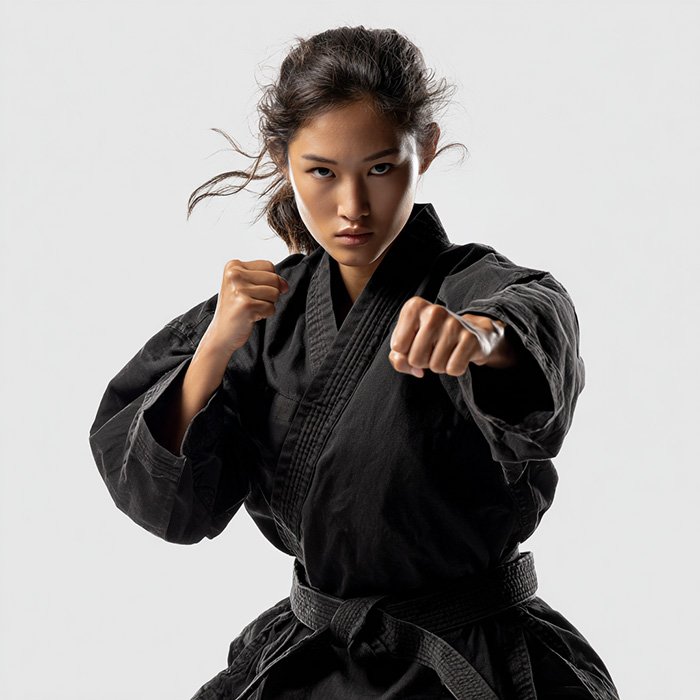
Teaching children age-appropriate defense moves empowers them with physical safety techniques that could make a critical difference in threatening situations. Start by teaching your child the defensive posture—feet spread apart with one foot forward, arms raised to protect their body. This stance signals readiness while deterring potential bullies.
For different age groups, consider:
- Ages 5-7: Focus on the basics of yelling “Stop!” and running away, proper fist formation without striking, and the buddy system for safety.
- Ages 8-10: Introduce simple striking techniques like foot stomps and straight strikes, emphasizing escape over confrontation.
- Ages 11+: Teach more advanced footwork, the “drum solo” continuous strike technique, and how to leverage their size advantage when navigating tight spaces. Children should learn to identify and target vulnerable anatomical areas when absolutely necessary for self-defense.
Escape From Grabs
Small hands can break free from even the strongest grip when children know proper escape techniques. Teach your child to relax their wrist and rotate it toward the attacker’s thumb—the natural weak point of any grip.
For single-wrist grabs, instruct kids to step back for stability before rotating and pulling free. In two-hands-on-one situations, they should weave their free arm through in an over/under motion while rotating the captured wrist. Remind children to scream “FIRE” if they’re being grabbed, as this will attract more attention than yelling for help. For throat grabs, children must immediately tuck their chin to protect their airway, then break the attacker’s grip with a short, forceful motion.
Practice these movements repeatedly until they become automatic reactions. Emphasize that after breaking free, kids should create distance, run away, and find help—never staying to engage further.
Verbal Boundary Setting
Effective verbal boundary setting forms the foundation of all self-defense skills, giving children the confidence to protect themselves before physical confrontation occurs. Teach your child simple, direct phrases like “Stop,” “No,” or “Hands off” that they can deliver with an assertive tone and eye contact.
Practice these skills regularly in low-stress settings so they become automatic under pressure:
- Start with the body-autonomy concept that “my body belongs to me” and model asking permission before touching others
- Rehearse a scripted refusal sequence: polite refusal → firm refusal → call for help (“No! Stop! Help!”)
- Role-play reporting incidents to trusted adults using a clear format (who, what, where, when)
Establish family rules that normalize boundary choices, including refusing hugs from relatives when uncomfortable. Teaching children to respect others’ boundaries helps them develop healthy relationships and prepares them for positive social interactions throughout life.
Situational Awareness Training For Different Environments
Everyone needs to adapt their situational awareness skills to different environments, and children are no exception. Train your kids to identify baseline behaviors in urban settings by playing recall games after store visits, noticing exits, and scanning for anomalies.
In outdoor environments, teach them to evaluate terrain, estimate time using their hand against the sun, and recognize unusual sounds or tracks. They can practice problem solving skills during nature hikes to build environmental awareness and confidence. For schools, implement the “check-in” routine where they scan surroundings before responding, and use the chameleon analogy to help them adapt.
Public places benefit from memory games—recalling car colors or cashier details. Regardless of location, practice the five senses check-in daily and create what-if scenahttps://blog.jamesmartialartsacademy.com/wp-content/uploads/2024/06/woman-traveling-in-france-2023-11-27-05-16-47-utc_Easy-Resize.com_.jpgs. Establish buddy systems and ensure they memorize key contact information.
Balancing Self-Defense With Non-Violent Conflict Resolution
Teaching children to protect themselves requires a delicate balance between physical self-defense skills and non-violent conflict resolution strategies. Emphasize that escape and avoidance are always the safest options, reserving physical techniques as a last resort. Effective programs integrate emotional regulation with clear decision rules about when self-defense is appropriate versus when non-violent approaches should be used. Research indicates that conflict resolution programs can help reduce hostility in some school environments.
To create this balance in your child’s training:
- Choose martial arts programs that explicitly teach de-escalation, respect, and discipline alongside physical skills
- Practice scenahttps://blog.jamesmartialartsacademy.com/wp-content/uploads/2024/06/woman-traveling-in-france-2023-11-27-05-16-47-utc_Easy-Resize.com_.jpg-based training with graduated responses (walk away, verbal assertiveness, seek help, defensive techniques)
- Reinforce cognitive reappraisal and calming techniques like deep breathing when your child feels angry or threatened
Remember that your modeling of emotional control significantly influences how your child will handle future conflicts.
How Parents Can Support Their Child’s Self-Defense Journey
Parents play a crucial role in their child’s self-defense journey, extending far beyond simply driving them to class. Start by enrolling them in age-appropriate programs that emphasize practical skills and awareness. Make classes a non-negotiable weekly routine, providing unwavering encouragement through challenges.
Support progress with 10-15 minutes of supervised home practice in safe spaces. Your presence at classes signals belief in their abilities and helps shy children become more confident. Model respect for instructors and techniques by practicing alongside them when possible. Becoming a positive role model by training yourself shows your child that self-defense skills are valuable for everyone.
Remember that consistency builds resilience. When your child wants to quit, remind them of benefits—just like you’d enforce homework or vegetables. The confidence they’ll gain transfers to all aspects of life, from school to social situations.
Addressing Common Safety Concerns About Martial Arts Training
While martial arts offers tremendous benefits for children, many parents understandably worry about potential injuries. Research shows injury rates vary significantly across disciplines, with full-contact sparring carrying higher risks than skills practice. Most injuries are minor bruises and sprains, though fractures and concussions can occur, particularly in disciplines allowing head strikes. The American Academy of Pediatrics recommends avoiding martial arts forms that include blows to the head due to increased concussion risk.
To minimize risks for your child:
- Choose programs that emphasize proper technique before allowing contact, with qualified instructors who enforce age-appropriate safety protocols
- Monitor training volume, as injury risks increase notably after 3 hours weekly
- Understand that protective equipment has limitations—helmets don’t fully prevent concussions
Conclusion
You’re giving your child an invaluable gift by teaching them self-defense. It’s not just about physical techniques but developing confidence, awareness, and judgment. As they progress, you’ll see them stand taller and navigate the world more confidently. Remember, the ultimate goal isn’t creating fighters, but raising children who feel secure in their ability to protect themselves when necessary.