Children’s Karate Near Me
You’ll discover that children’s karate classes deliver transformative benefits beyond basic martial arts training. Your child develops enhanced motor skills, coordination, and strength within just ten weeks. They’ll build confidence through structured belt progression while learning emotional regulation and self-defense. Karate also boosts academic performance by improving focus and concentration—particularly beneficial for children with ADHD. The supportive community fosters social skills, teamwork, and genuine peer connections. These comprehensive advantages create lasting impacts on your child’s physical health and emotional resilience throughout their development journey.
Physical Fitness Benefits of Karate for Kids
Karate offers children a comprehensive pathway to physical fitness that extends far beyond basic exercise. When you enroll your child in karate training, you’ll notice statistically significant improvements in motor development, coordination, and muscular strength within just 10 weeks. Your child will develop enhanced explosive power, speed-based task performance, and supehttps://blog.jamesmartialartsacademy.com/wp-content/uploads/2024/06/woman-traveling-in-france-2023-11-27-05-16-47-utc_Easy-Resize.com_.jpgr locomotor skills compared to non-active peers.
The training strengthens both the upper and lower body through repetitive bodyweight movements and dynamic techniques. You’ll see measurable gains in flexibility, abdominal strength, and grip performance. Karate also delivers improvements in cardiorespiratory fitness, agility, and balance—with participants showing double the physical fitness growth rate compared to non-practitioners. Kihon training, the practice of fundamental techniques, positively affects the development of basic motor skills essential for your child’s physical foundation. Additionally, regular practice contributes to healthier body composition by reducing body fat percentage and improving BMI indices.
How Karate Builds Confidence and Reduces Anxiety
Beyond physical development, your child’s mental and emotional growth accelerates significantly through karate training. The structured environment and belt ranking system provide clear, attainable milestones that reinforce achievement and build self-esteem. As your child progresses through ranks, they’ll link effort directly to success, strengthening their belief in their capabilities.
Karate teaches essential emotional regulation through controlled breathing, balance exercises, and mindful pausing before reacting. This mind-body integration helps manage anxiety and impulsive responses effectively. The supportive community within classes reduces isolation while fostering peer connections and mutual encouragement.
Learning self-defense techniques empowers your child with increased feelings of safety and personal control. Combined with non-violent conflict resolution skills, martial arts training develops emotional maturity that translates into reduced social anxiety and enhanced confidence in daily interactions. Importantly, resilience isn’t something kids are born with—it’s built over time through consistent practice and facing age-appropriate challenges.
Academic Performance Improvements Through Martial Arts Training
You’ll find that martial arts training directly strengthens your child’s academic capabilities through improved focus and concentration skills essential for classroom learning. The structured, repetitive nature of karate practice helps children with ADHD develop better self-regulation and attention control, translating to more productive study sessions. Research demonstrates that motor ability and cardiorespiratory capacity positively impact children’s academic performance, with high fitness levels decreasing the risk of school failure. These cognitive benefits extend to homework completion and overall discipline, as students learn to apply the same perseverance and goal-oriented mindset they use in martial arts to their academic responsibilities.
Enhanced Focus and Concentration
How can a physical activity like martial arts translate into better report cards and test scores? The answer lies in karate’s unique ability to strengthen your child’s focus and concentration. During training, students must listen attentively, follow multi-step instructions, and maintain sustained attention throughout complex sequences. This constant practice of concentration directly transfers to classroom settings, where similar skills are essential for learning.
Karate’s emphasis on memorizing forms (katas) enhances working memory and cognitive processing—abilities critical for retaining academic information. Your child develops executive functions like attention control and mental flexibility through sparring and drills. The mental discipline cultivated during practice translates into improved study habits and better task focus. Research involving children aged 7-8 years across multiple European countries demonstrated that karate intervention during PE lessons produced measurable improvements in academic achievement. Additionally, learning to regulate emotions under pressure reduces test anxiety, leading to stronger exam performance and overall academic achievement.
ADHD Support and Management
For children diagnosed with ADHD, martial arts training offers evidence-based support that directly addresses core symptoms affecting academic performance. Research demonstrates that long-term Kajukenbo practice significantly increases selective attention in adolescents with ADHD, with improved performance on attention detection tests. You’ll find that martial arts programs enhance cognitive capabilities related to attention and processing speed through a complex combination of physical and mental tasks that stimulate executive functions.
Studies reveal large effect sizes on controlled search and total speed cognitive tasks following martial arts training. These selective attention improvements translate directly to better academic and daily task performance for your child. The structured environment challenges executive functions while providing a physical outlet for excess energy, resulting in measurable gains in concentration and classroom behavior. The clear progression system of belts and ranks provides tangible evidence of your child’s development, fostering achievement and reinforcing perseverance through each milestone reached.
Better Homework and Discipline
Academic performance improvements represent one of the most compelling reasons parents enroll their children in martial arts programs. Your child’s homework completion and academic discipline will strengthen as they balance training schedules with school responsibilities. This balancing act reinforces time management skills, teaching them to phttps://blog.jamesmartialartsacademy.com/wp-content/uploads/2024/06/woman-traveling-in-france-2023-11-27-05-16-47-utc_Easy-Resize.com_.jpgritize tasks and meet deadlines consistently.
The structured nature of martial arts develops self-control and persistence that directly transfer to schoolwork habits. As your child sets and achieves belt rank goals, they’ll learn that consistent effort produces results—a mindset applicable to academic challenges. The focus and concentration required during training strengthen neural pathways involved in learning, while enhanced working memory supports better recall during exams. Studies show a link between cardiorespiratory fitness and academic performance in core subjects like math and reading. You’ll notice improved study routines and homework completion as martial arts discipline becomes integrated into their daily academic life.
Social Skills Development in Karate Classes
While many parents seek karate classes primarily for physical fitness and self-defense training, the social skills children develop in the dojo often prove equally transformative. Your child will enhance communication abilities through instructor feedback and partner drills that require active listening and clear expression. Group exercises foster teamwork and cooperation, teaching your child to share space, negotiate roles, and work toward collective goals.
The martial arts environment emphasizes respect through traditional ceremonies like bowing, while exposure to diverse classmates cultivates empathy and understanding. As your child masters new techniques, they’ll gain confidence that translates to social comfort beyond the dojo. Advanced students develop leadership skills by mentoring peers, and controlled sparring provides practical experience in conflict resolution, emotional regulation, and standing up for themselves appropriately. The structured environment of karate classes creates consistent routines and clear expectations that help children learn how to interact positively with others in vahttps://blog.jamesmartialartsacademy.com/wp-content/uploads/2024/06/woman-traveling-in-france-2023-11-27-05-16-47-utc_Easy-Resize.com_.jpgus social situations.
Safety Standards and Injury Prevention in Children’s Karate
As your child develops confidence and social skills in the dojo, their physical safety remains a top phttps://blog.jamesmartialartsacademy.com/wp-content/uploads/2024/06/woman-traveling-in-france-2023-11-27-05-16-47-utc_Easy-Resize.com_.jpgrity throughout their martial arts journey. Reputable karate schools implement comprehensive safety protocols, including properly fitted protective gear—helmets, mouthguards, gloves, and body armor—that prevent scrapes, fractures, and concussions.
Qualified instructors emphasize correct technique from day one, progressing students carefully through skill levels before introducing contact or sparring activities. They enforce strict codes of conduct prohibiting excessive force and dangerous movements while supervising all training sessions closely. Students learn self-control and discipline, which are fundamental aspects of martial arts that help them avoid reckless behavior and maintain focus during training.
When these standards are followed, injury rates in youth karate remain remarkably low. Non-contact training phases build foundational skills safely, while gradual strength conditioning supports injury prevention. Schools with clear safety rules, first aid readiness, and strong parent communication create the safest environment for your child’s martial arts development.
Discipline and Self-Control: Life Skills Learned on the Mat
When your child steps onto the karate mat, they’re entering an environment specifically designed to build self-regulation through consistent, structured practice. Each class reinforces discipline as students learn to follow instructions precisely, control their movements deliberately, and manage their emotional responses during challenging drills. This training naturally extends to developing respect for authority figures—instructors, senior students, and parents—as children understand that self-control and respectful behavior are inseparable components of martial arts mastery. The repetitive drills and unchanging sequences in karate practice provide a steady rhythm and predictability that helps children develop the focus skills needed to concentrate on techniques and movements with greater attention.
Building Self-Regulation Through Practice
How does your child develop the discipline to control impulses and regulate emotions in an increasingly demanding world? Karate practice builds self-regulation through structured, repetitive training that strengthens emotional control. Your child learns breathing techniques and balance drills that reinforce self-regulation both on and off the mat. By pausing before reacting, they develop the ability to manage stress and navigate difficult situations effectively.
The consistent routine creates a secure environment where your child internalizes emotional skills through modeling and incremental progress recognition. Regular practice teaches them to delay gratification and concentrate despite distractions. Belt testing reinforces perseverance by celebrating gradual achievement. These foundational discipline skills transfer directly to academics, relationships, and personal challenges, equipping your child with essential life competencies. Research shows that self-control improves well-being, making karate training an effective pathway toward greater life satisfaction.
Respect for Authority Figures
One of the most transformative aspects of karate training is the child’s development of genuine respect for authority figures—a skill that extends far beyond the dojo walls. Your child learns to value their instructor’s knowledge, technical proficiency, and moral standards through consistent interaction and mentorship. This hierarchical structure fosters accountability and mental discipline, as students understand the chain of command and their responsibilities within it. By adhering to dojo etiquette—bowing, proper address, and rule-following—your child internalizes respect as foundational to safety and community. These principles translate directly into improved behavior at home and school. Your child becomes more receptive to guidance, better equipped to accept constructive criticism, and more likely to succeed academically and socially through the disciplined respect cultivated on the mat.
Karate for Children With ADHD and Special Needs
Many children with ADHD struggle with attention, impulse control, and emotional regulation—challenges that karate addresses through structured training and individualized coaching. Karate’s predictable routines and systematic progression develop executive functions while channeling hyperactivity into focused activity. You’ll notice improved behavioral discipline as your child practices controlled movements and sparring techniques, which strengthen response inhibition and self-control.
The dojo environment reinforces respect, patience, and emotional awareness through its inherent rules and rituals. Your child builds confidence through skill mastery while developing better peer relationships in a supportive setting. Karate’s emphasis on non-contact techniques and controlled movements makes it particularly appropriate for children with behavioral challenges. With proper instructor training and individualized attention, you can expect measurable improvements in on-task behavior and daily functioning.
Age-Appropriate Karate Programs for Different Developmental Stages
While karate’s structured environment benefits children with ADHD and special needs, its effectiveness depends significantly on matching training approaches to your child’s developmental stage. Ages 3-4 require programs emphasizing core strength, spatial awareness, and bilateral coordination through play-based drills. Your 5-6-year-old benefits from instruction focusing on agility, balance, and coordinated movements that align with their enhanced motor development. Instructors should tailor curricula to cognitive abilities—younger children need simple verbal directions, while older ones handle multi-step commands. Emotional readiness is equally important; look for classes that teach discipline and confidence through positive reinforcement. Quality programs assess your child’s maturity, physical flexibility, and interest before enrollment, ensuring training matches their developmental needs and maximizes skill acquisition while maintaining motivation.
What to Look for When Choosing a Local Karate School
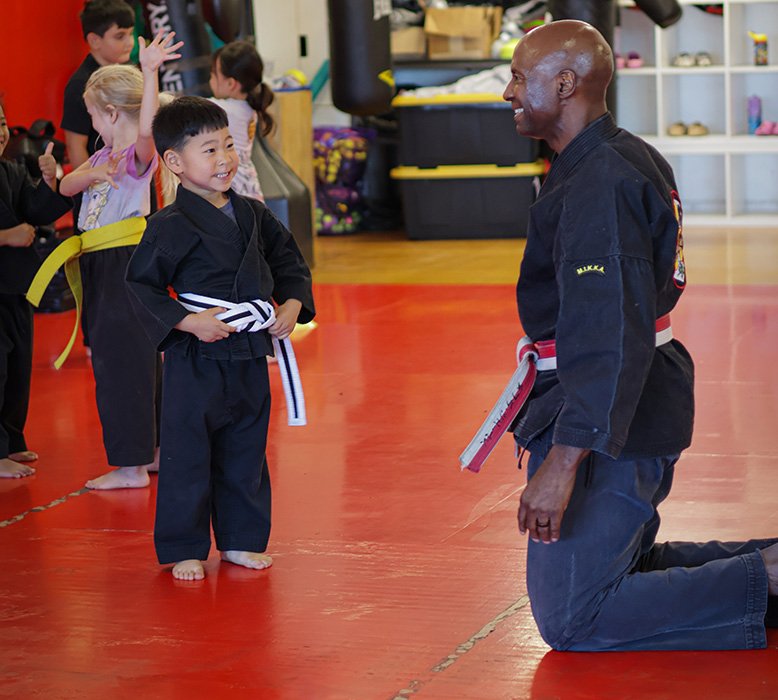
When selecting a karate school for your child, you’ll want to verify that instructors hold certifications from reputable martial arts organizations and have specific experience teaching children. Examine how the school structures its classes, maintains safety protocols, and manages instructor-to-student ratios, particularly for beginners who benefit from more personalized attention. Before enrolling, take advantage of trial classes and observe interactions between instructors and students to ensure the environment aligns with your child’s needs and learning style.
Instructor Qualifications and Experience
Because you’re entrusting your child’s safety and development to a karate instructor, you’ll want to understand what qualifications truly matter. Look for instructors holding at least a black belt—the industry standard—along with formal instructor certification demonstrating teaching methodology expertise. Verify they’ve completed 1-2 years of documented teaching experience and hold current CPR and first aid certifications, particularly important for children’s classes.
Beyond rank, assess their communication skills, patience, and ability to adapt instruction for different learning styles. Ask about background checks and liability insurance. An effective instructor combines technical proficiency with genuine teaching ability, safety knowledge, and commitment to character development. These credentials ensure your child receives quality instruction in a secure environment.
Class Structure and Safety
A quality karate school builds its foundation on clear safety protocols and thoughtfully organized classes that keep children engaged while minimizing injury risk. You should verify that instructors emphasize correct technique and self-control during all drills and sparring sessions. Look for schools that incorporate warm-ups and cool-downs as standard practice, protecting your child’s muscles from strain. Classes should feature varied activities—technical instruction, games, and reflection pehttps://blog.jamesmartialartsacademy.com/wp-content/uploads/2024/06/woman-traveling-in-france-2023-11-27-05-16-47-utc_Easy-Resize.com_.jpgds—that accommodate short attention spans while reinforcing learning. Inspect facilities for clean, well-maintained spaces with appropriate flooring and safety equipment. Confirm that the school enforces strict supervision policies, including bathroom protocols and rules against disruptive behavior. Ask about first-aid procedures and age-appropriate class divisions. Transparent communication about safety measures indicates a school genuinely committed to your child’s well-being.
Trial Classes and Observation
One of the most practical steps you can take when selecting a karate school is attending a trial class, which offers a low-pressure way to assess the instructor’s teaching style, facility quality, and overall environment before committing to enrollment. During your visit, observe how instructors handle diverse skill levels and provide individual attention. Note whether they use positive reinforcement and adapt their teaching pace to each child’s needs. Watch your child’s engagement level and emotional responses—enthusiasm signals a good fit, while reluctance may indicate misalignment. Pay attention to class dynamics, peer interactions, and how the school manages discipline. Ask about structured feedback and goal-setting approaches that support both skill development and character building throughout their karate journey.
Long-Term Mental and Emotional Health Benefits of Youth Karate
Beyond the physical techniques and belt progressions, karate cultivates profound mental and emotional resilience that extends far into your child’s future. Regular training reduces anxiety and depression while elevating mood through endorphin release and cortisol management. Your child develops supehttps://blog.jamesmartialartsacademy.com/wp-content/uploads/2024/06/woman-traveling-in-france-2023-11-27-05-16-47-utc_Easy-Resize.com_.jpgr emotional regulation skills, improving attention and self-control that transfer to academic performance and personal relationships.
Karate instills genuine self-esteem through achievable goal-setting and mastery of self-defense, fostering a growth mindset. Long-term practitioners demonstrate increased self-reliance, optimism, and reduced aggressiveness. The dojo community counters social isolation by building supportive peer networks and promoting prosocial behaviors.
Extended training strengthens executive function—inhibition control, cognitive flexibility, and processing speed—while developing ego-resilience. Your child learns to recover from adversity, equipped with psychological tools that sustain mental wellness throughout life.
Conclusion
You’ll find that children’s karate offers transformative benefits extending far beyond physical conditioning. By enrolling your child in a reputable local program, you’re investing in their confidence, academic performance, and emotional resilience. You’ll observe improved focus, enhanced social connections, and better anxiety management. You’re choosing a structured environment that accommodates vahttps://blog.jamesmartialartsacademy.com/wp-content/uploads/2024/06/woman-traveling-in-france-2023-11-27-05-16-47-utc_Easy-Resize.com_.jpgus developmental needs and learning styles. You’re setting your child up for lifelong success through disciplined, supportive martial arts training.