Preschool Self Defense for Kids
You can start teaching your preschooler self-defense skills as early as ages 3-4, focusing on awareness rather than combat. Age-appropriate programs emphasize recognizing unsafe situations, using a loud voice to say “Stop!”, and identifying trustworthy adults. Non-contact martial arts like Karate, Aikido, or Taekwondo build confidence, coordination, and emotional resilience through games and simple movements. These skills reduce assault likelihood by 60-80% while developing motor skills and problem-solving abilities. Discover which programs best suit your child’s developmental stage and how to measure their progress.
Why Self-Defense Skills Matter for Young Children
When parents think about preschool activities, self-defense training might not top the list—but it should. Your young child faces real risks: bullying affects one in five students, and assault or kidnapping threats are genuine concerns. Self-defense training decreases physical assault likelihood by 60-80% compared to no training, giving your preschooler critical protection skills early.
Beyond safety, self-defense builds your child’s confidence, self-esteem, and emotional resilience through skill mastery. They’ll develop situational awareness—learning to recognize threats, trust their instincts, and avoid dangerous situations before problems escalate. The training also enhances physical fitness, coordination, and motor skills while providing an active alternative to screen time. Studies show that martial arts training improves better reaction times and hand-eye coordination, essential skills that help young children respond quickly in unexpected situations. You’re empowering your child with tools they’ll carry throughout life, starting when they’re most receptive to learning foundational safety habits.
Understanding Age-Appropriate Self-Defense Training
When you’re considering self-defense for your preschooler, it’s essential to match activities to their developmental stage rather than using watered-down adult techniques. Your 3-5 year old isn’t ready for complex moves, but they can learn powerful skills like recognizing unsafe situations, saying “No!” with confidence, and escaping from light grabs. The key is choosing methods that build body awareness and assertiveness while keeping lessons playful, short, and focused on safety rather than aggression. During this early childhood phase, training should emphasize motor skills development and basic body awareness concepts that create a foundation for future self-defense learning.
Developmental Readiness for Preschoolers
Understanding your preschooler’s developmental stage is essential before enrolling them in any self-defense program. At ages 3-5, your child’s brain processes simple, clear instructions best, making complex physical techniques inappropriate. Instead, focus on programs teaching awareness skills like identifying trustworthy adults and recognizing unsafe situations.
Your preschooler’s developing motor skills align perfectly with basic movements—simple stances, balance exercises, and controlled actions that build body awareness. They’re also refining emotional regulation, so quality programs incorporate stress management alongside physical skills. These early physical activities enhance coordination and agility during formative years while establishing foundational movement patterns.
Effective training emphasizes verbal responses over physical engagement. Your child learns to say “No” assertively, seek help immediately, and understand personal boundaries. Through repetition and play-based learning, these safety concepts become second nature, building confidence without overwhelming their cognitive abilities. This foundation prepares them for more advanced skills as they mature.
Safe Techniques and Methods
Your preschooler needs self-defense techniques that match their physical capabilities and cognitive development. Focus on simple, non-threatening moves like breaking free from wrist grabs or dropping their chin to protect their head. These fundamentals build essential motor skills without overwhelming young learners.
Teach your child to use a firm, loud voice with clear phrases like “Stop!” or “Leave me alone!” Role-playing these scenahttps://blog.jamesmartialartsacademy.com/wp-content/uploads/2024/06/woman-traveling-in-france-2023-11-27-05-16-47-utc_Easy-Resize.com_.jpgs helps them respond confidently when needed. Encourage yelling “Help!” or “Fire!” to attract adult attention quickly.
Incorporate basic awareness skills through age-appropriate games that teach scanning surroundings and identifying safe adults. Emphasize non-violent conflict resolution first—seeking compromise and asking for help. Even at this young age, instructors can introduce proper fist formation to help children avoid injuring their own hands if they ever need to defend themselves. Keep sessions brief, engaging, and positive to maintain your child’s interest while building confidence and safety awareness effectively.
Balancing Physical and Cognitive Skills
Effective preschool self-defense programs seamlessly weave together physical movements and mental awareness, creating a foundation that respects your child’s developmental stage.
Your preschooler develops balance, coordination, and motor skills through punching, kicking, and blocking exercises while simultaneously learning situational awareness. They’ll recognize unsafe environments and identify concerning behaviors, building critical thinking alongside physical agility.
These programs teach verbal de-escalation first, emphasizing words as the primary defense tool. Your child learns when and how to use physical techniques responsibly, making quick decisions under pressure.
Training strengthens focus, emotional regulation, and problem-solving abilities while improving cardiovascular endurance and flexibility. The structured environment encourages your child to follow instructions, remain calm during stress, and develop self-confidence—all within age-appropriate activities that engage rather than overwhelm their growing minds and bodies. Through group classes, children enhance their social skills while learning to work cooperatively with peers.
Martial Arts Programs Best Suited for Preschoolers
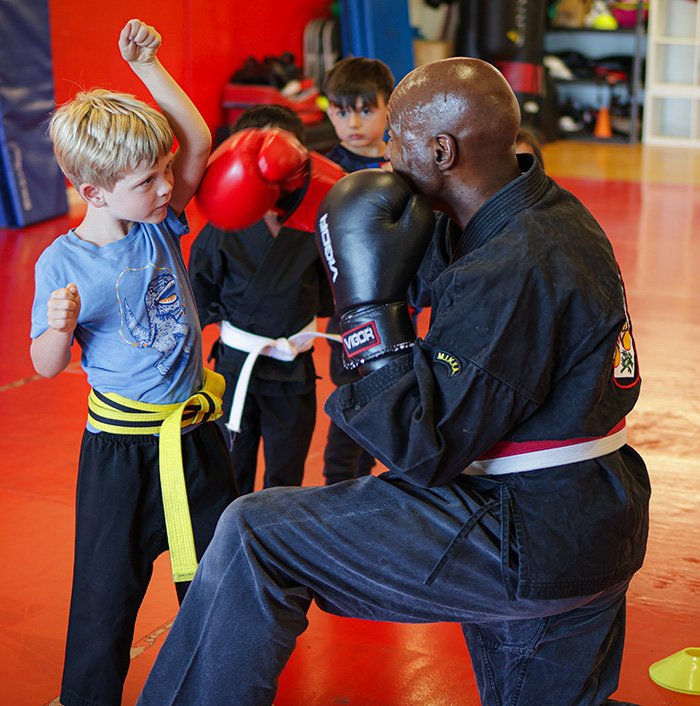
When you’re choosing a martial arts program for your preschooler, certain styles stand out as safer and more developmentally appropriate than others. Non-contact disciplines like Karate and Kajukenbo emphasize controlled movements, respect, and discipline—perfect for young learners. Kosho-Ryu Kenpo Jiu-Jitsu programs adapted for toddlers focus on gentle grappling and positional control, building confidence through safe techniques. Taekwondo offers age-appropriate curricula that develop coordination, balance, and basic skills your child can master.
Programs incorporating imaginative play work exceptionally well, especially those using Tai Chi or Kung Fu variants that emphasize flow and balance. Look for classes that integrate games and musical rhythms—these elements boost engagement and physical literacy. Research shows that martial arts practice helps reduce stress and improve focus, making these programs beneficial for your child’s mental development. The best preschool martial arts programs phttps://blog.jamesmartialartsacademy.com/wp-content/uploads/2024/06/woman-traveling-in-france-2023-11-27-05-16-47-utc_Easy-Resize.com_.jpgritize safety through soft mats, protective gear, and certified instructors trained in early childhood development.
Building Confidence and Emotional Resilience Through Defense Training
Your preschooler gains authentic confidence when they learn to say “no” firmly and set clear personal boundaries—skills that carry far beyond the training mat into everyday interactions. Defense training teaches your child mental coping strategies like staying calm under pressure and thinking before reacting, which builds emotional resilience they’ll use throughout life. These foundational skills help your little one stand tall, trust their instincts, and navigate social situations with genuine self-assurance. As your child progresses through their training, they develop discipline and responsibility by learning to respect their instructors, practice consistently, and understand when it’s appropriate to use their new skills.
Self-Esteem Through Boundary Setting
As children master self-defense techniques, they don’t just learn physical skills—they develop an unshakable sense of personal worth that radiates through every aspect of their lives. Your preschooler learns to set clear personal boundaries and communicate assertively, building the foundation for healthy self-esteem. When they practice saying “no” confidently during training, they’re equipped to discourage unwanted interactions and resist peer pressure in real situations.
This boundary-setting ability strengthens their self-worth by reinforcing that their feelings and comfort matter. Through situational awareness exercises, your child identifies potential threats early and maintains control in social settings. The clear, confident communication they develop transfers directly to playgrounds and classrooms, where they’ll navigate conflicts with composure. As they master these techniques, their sense of success increases, reinforcing the capabilities they’re developing both on and off the training mat. This empowerment reduces vulnerability to intimidation while fostering lasting emotional resilience and social confidence.
Developing Mental Coping Strategies
Because preschoolers naturally develop psychological defenses to manage stress and overwhelming emotions, self-defense training channels these protective mechanisms into healthy, adaptive coping strategies. You’ll find that experiential learning activities—where your child practices, reflects, and shares—help them internalize problem-solving skills they can apply during real stressful situations.
Through structured self-protection programs, children develop approach-oriented coping methods like active problem-solving, positive reframing, and seeking social support. These strategies strengthen emotional resilience far more effectively than avoidant behaviors such as denial or disengagement. When you encourage your preschooler to practice these skills in comfortable, engaging scenahttps://blog.jamesmartialartsacademy.com/wp-content/uploads/2024/06/woman-traveling-in-france-2023-11-27-05-16-47-utc_Easy-Resize.com_.jpgs, they’re building mental preparedness for adversity.
This resilience-focused approach acts as a buffer against future anxiety and emotional exhaustion, equipping your child with self-compassion and adaptive defenses that support long-term mental well-being. Research shows that emotional balance is essential not only for teachers but also for creating environments where children can thrive psychologically.
Effective Teaching Methods for 5- to 6-Year-Olds
Teaching self-defense to 5- and 6-year-olds requires methods that match their developmental stage and natural learning style. You’ll need to use simple, clear language while avoiding complex terminology. Break techniques into small, manageable steps that work with short attention spans.
Rely on demonstration and repetition rather than lengthy verbal explanations. Visual aids and hands-on practice engage young learners far more effectively than talking. Show them how to form proper fists, defensive stances, and simple strikes through repeated modeling.
Keep your approach positive and playful to reduce fear and boost enthusiasm. Role-playing scenahttps://blog.jamesmartialartsacademy.com/wp-content/uploads/2024/06/woman-traveling-in-france-2023-11-27-05-16-47-utc_Easy-Resize.com_.jpgs help children rehearse responses to bullying situations, reinforcing both verbal commands and physical techniques. Incorporate activities like games and partner exercises that build muscle memory through fun, structured practice sessions. Training also develops discipline and focus as children learn to follow instructions and maintain concentration during practice.
Safety Benefits and Violence Prevention Statistics
When you combine proper teaching methods with consistent practice, self-defense training delivers measurable safety benefits that extend far beyond the physical techniques themselves. Your child develops crucial situational awareness skills that help them recognize and avoid potential threats early. Research shows individuals with formal self-defense training experience a 60-80% reduction in physical assault likelihood.
Your preschooler gains confidence and self-esteem through practical protection skills, reducing fear and anxiety. They’ll develop better self-regulation abilities, which studies link to fewer behavioral problems and reduced violence risk. Since one in five students experience bullying, teaching your child to set boundaries and assert themselves non-violently provides essential protection. These programs also enhance emotional regulation, problem-solving skills, and stress management—all protective factors against both victimization and aggressive behavior.
Addressing Bullying Through Early Self-Defense Education
Bullying affects one in five students, making early intervention through self-defense education a critical protective measure for your preschooler. Self-defense programs build confidence that deters bullies who typically target vulnerable children. Your child will develop assertive body language—eye contact, upright posture, and clear communication—that signals strength.
These classes teach respect, discipline, and emotional control through structured practice. Your preschooler learns to manage conflicts peacefully rather than react impulsively. They’ll gain situational awareness skills to recognize potential threats early and practice safe avoidance strategies.
When physical encounters occur, age-appropriate techniques provide escape options as a last resort. Most importantly, training reduces anxiety while fostering resilience. Your child becomes empowered—not aggressive—equipped with both mental and physical tools to navigate social challenges confidently.
What Parents Should Know Before Enrolling Their Child
Choosing the right self-defense program for your preschooler requires careful evaluation of several critical factors that directly impact your child’s safety and development. You’ll need to verify instructor credentials and ensure they’re experienced in age-appropriate training methods. Look for programs that start with non-contact techniques before advancing to physical skills, allowing your child to build readiness gradually.
Confirm the school maintains strict supervision and enforces safety rules consistently. Beyond physical techniques, the curriculum should emphasize discipline, respect, and emotional control. You should assess whether your child is physically and emotionally prepared for participation—forcing readiness can create unnecessary stress.
Choose programs that phttps://blog.jamesmartialartsacademy.com/wp-content/uploads/2024/06/woman-traveling-in-france-2023-11-27-05-16-47-utc_Easy-Resize.com_.jpgritize communication, providing regular updates about your child’s progress. Remember, quality instruction focuses on building confidence and awareness, not creating competitive pressure inappropriate for preschoolers.
Measuring Progress and Success in Preschool Self-Defense Programs
How can you tell if your preschooler’s self-defense program is actually working? Look for measurable changes in your child’s behavior and confidence. Quality programs use pre- and post-assessments to track improvements in self-control, safety knowledge, and emotional awareness. You’ll notice your child becoming more assertive in communication and better at conflict resolution.
Effective programs evaluate skill retention through practical drills across different settings—classroom, playground, and hallways. Instructors should document your child’s ability to apply techniques during real situations. Watch for decreased fear or stress and increased self-confidence at home.
Reputable programs also gather feedback from parents, children, and instructors through satisfaction surveys. They’ll track whether participating children experience fewer bullying incidents, providing concrete evidence of the program’s real-world impact on your child’s safety.
Conclusion
You’re giving your child tools that’ll last a lifetime when you choose self-defense training. Your preschooler won’t just learn physical skills—they’ll develop confidence, awareness, and respect for themselves and others. Remember, you’re their biggest advocate in this journey. Stay involved, communicate with instructors, and celebrate every milestone. By starting early, you’re empowering your child to stand strong, stay safe, and face the world with courage they’ll carry forever.