Martial Arts History
You’ll discover how martial arts evolved from ancient Egyptian Tahtib (2500 BCE) and Indian Kalaripayattu through medieval warrior cultures like Japan’s samurai, whose Bushido code emerged during the 1180-1185 Genpei War. Colonial encounters dramatically reshaped fighting traditions—Spain suppressed Filipino Kali while Britain destroyed Sri Lankan Angampora, yet these exchanges created hybrid systems. The journey continues through 19th-century formalization, Brazilian Jiu-Jitsu’s birth, post-war global expansion, and modern MMA’s integration, revealing how geographic isolation and cross-cultural exchange forged today’s combat disciplines.
Ancient Combat Systems and Their Geographic Origins
Millennia before modern combat sports entered gymnasiums and dojos, ancient civilizations across three continents developed sophisticated fighting systems that would shape martial traditions for generations. You’ll find Egypt’s Tahtib emerging around 2500 BCE, with practitioners mastering wooden-staff techniques emphasizing speed over brute force. Egyptian tomb carvings from 3000 BCE reveal organized wrestling competitions, while Mesopotamian reliefs document Assyrian and Babylonian fist-fighting—humanity’s earliest evidence of boxing. By the 3rd millennium BCE, Hittite artworks confirmed that combat sports had spread throughout Asia Minor. India’s Kalaripayattu emerged circa 300 BCE, synthesizing strikes, grappling, and weaponry into a comprehensive system. The Sanskrit Mahabharata detailed advanced techniques, including knee strikes and submission holds. Meanwhile, China’s Xia and Shang dynasties (21st-11th centuries BCE) cultivated Wushu from the necessities of warfare, establishing foundational principles that transcended mere physical combat. Greece’s formidable Pankration combined boxing and wrestling techniques, producing savage Olympic contests that continued until a fighter submitted, lost consciousness, or perished.
Medieval Warrior Cultures and Feudal Fighting Traditions
You’ll find that medieval warrior cultures across three continents developed distinct martial philosophies between the 12th and 17th centuries, each shaped by their feudal systems. In Japan, the samurai class formalized bushido and documented combat techniques like kenjutsu in densely illustrated scrolls called densho. Meanwhile, European knights codified longsword methods through Fechtbücher such as Johannes Liechtenauer’s 14th-century verses, while Sikh warriors in Punjab established gatka and shastar vidiya during the 15th century under Guru Hargobind’s militarization of the faith. European martial arts manuals, such as those by Fiore dei Liberi, provided detailed instructions on swordsmanship, wrestling, and mounted combat techniques essential to medieval warfare.
Samurai Rise and Bushido
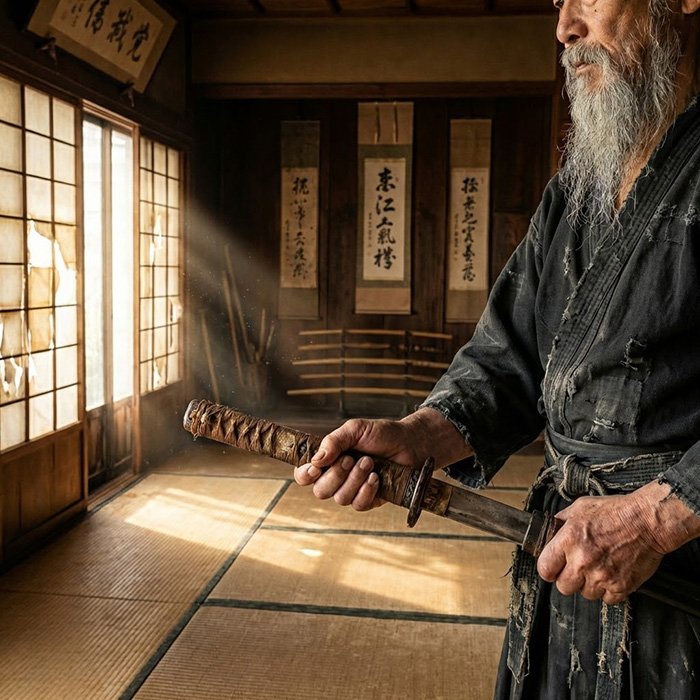
As imperial authority crumbled in Japan’s countryside during the 10th and 11th centuries, wealthy landowners turned to provincial warrior bands for protection, giving rise to a new military class that would eventually dominate the nation for seven hundred years. You’ll find these warriors—called samurai, meaning “those who serve”—fought devastating clan wars during the late Heian period. The Genpei War (1180–1185) between the Minamoto and Taira clans culminated in Minamoto no Yoritomo establishing the Kamakura shogunate in 1192, marking the transition of samurai from provincial retainers to ruling elites. They developed Bushido, “the Way of the Warrior,” an ethical code emphasizing loyalty, honor, discipline, and martial excellence, shaped by Zen Buddhism and Confucianism. Violation of Bushido could lead to disgrace and ritual suicide called seppuku. This hereditary warrior class controlled Japan’s feudal power structure until the Meiji Restoration abolished their privileges in 1868.
European Medieval Combat Systems
Following William of Normandy’s invasion of England in 1066, mounted armored knights became the dominant force in European warfare, fundamentally reshaping medieval combat for the next three centuries. You’d find these warriors wielding lances from horseback before transitioning to swords, protected by chainmail or plate armor. However, their supremacy wouldn’t last. By the 13th century, infantry innovations challenged cavalry dominance. At Falkirk in 1298, longbowmen decimated armored knights, a pattern repeated at Crécy and Agincourt. Swiss pike squares and tight infantry formations effectively blocked cavalry charges. The Mongol invasions of 1241 exposed mounted knights’ vulnerabilities—horse-archers could neutralize them by targeting their mounts. Crossbows and early gunpowder weapons further eroded knightly advantage by piercing armor. Castle sieges demanded specialized troops and artillery, transforming warfare into combined-arms operations integrating cavalry, infantry, archers, and siege engineers. Norman lords rapidly constructed earthwork motte-and-bailey fortifications across the conquered territories, with over 500 castles raised in the twenty years following the Conquest to maintain control over hostile populations.
Sikh Martial Traditions Emerge
While European knights dominated medieval battlefields through mounted combat, a distinct warrior culture emerged half a world away in the fertile plains of Punjab during the 17th century. You’ll find Sikh martial traditions originating with Guru Nanak’s early teachings, then formalized by Guru Hargobind, who created the Akal Fauj and established the Saint-Soldier concept blending spirituality with warfare. Guru Gobind Singh later founded the Khalsa, systematizing martial training through dedicated raṇjīt akhāṛā centers. These warriors developed Shastar Vidya, mastering weaponry and cavalry tactics like Dhaī Phaṭ hit-and-run maneuvers. From this emerged Gatka, focused on sword-and-stick combat. The Gurus’ martial code emphasized fighting only as a last resort, as articulated by Guru Gobind Singh: “When all other means have failed, it’s just to resort to the sword.” Despite being banned during British colonial rule, Gatka survived as a folk sport and evolved into the martial art practiced today.
Colonial Encounters and Cross-Cultural Martial Exchange
You’ll find that Spanish colonization of the Philippines, beginning in 1565, forced indigenous fighting systems like Kali and Eskrima underground while simultaneously creating hybrid combat forms through military encounters between Spanish soldiers and Filipino warriors. Mughal court records from the 16th-17th centuries document how Persian wrestling techniques (koshti) merged with indigenous Indian styles (malla-yuddha) to create new forms patronized by emperors like Akbar and Jahangir. European colonizers’ ethnographic documentation—from Portuguese accounts of Angolan combat dances to British military manuals describing Indian lathi fighting—preserved fragmented evidence of martial traditions even as colonial authorities often suppressed these same practices. In Sri Lanka, the British prohibited Angampora practice and destroyed training huts, with practitioners facing severe punishment, including knee-shooting, driving this ancient martial art nearly to extinction until its post-independence revival.
Spanish-Philippine Martial Contact
When Spanish galleons arrived in the Philippines in 1565, they initiated a colonial period that would fundamentally reshape Filipino martial arts through both suppression and inadvertent exchange. You’ll find that Spanish authorities banned native martial practices to prevent armed resistance, forcing practitioners underground. They disguised training as ritual dances, such as Sakuting, and transmitted techniques covertly within families. Ironically, Spanish military systems enriched Filipino arts—you’d observe Espada y Daga (sword and dagger) concepts merging with indigenous blade work. Filipino masters adapted Spanish cut-and-thrust swords and fencing strategies, countering colonial soldiers’ tactics. This synthesis built upon pre-existing Malay, Chinese, and Arab influences dating to 200 A.D. The terminology itself reveals this fusion: “Eskrima” derives from Spanish “esgrima” (fencing), while “Arnis” comes from “arnes” (armor), documenting centuries of martial cross-pollination. Despite colonial restrictions, martial arts maintained their role in preserving cultural heritage and fostering unity among Filipino communities.
Mughal Influence on Wrestling
Parallel to Spanish colonial impositions in maritime Southeast Asia, the Mughal Empire transformed wrestling across the Indian subcontinent through systematic royal patronage rather than suppression. You’ll find that 16th-century Mughal conquests merged Persian Koshti with indigenous malla-yuddha, creating Pehlwani—a hybrid martial art reflecting Turko-Mongol training regimens and subcontinental techniques. Emperors like Jahangir documented massive public gatherings at akharas, where champions performed before courts that venerated wrestling as essential to chivalric identity. The pahlavan figure embodied valor ideals drawn from both Persian hero Rustam and local legends, with wrestling skills serving as a symbolic representation of the ruler’s fitness and the kingdom’s overall health. Akharas functioned as cultural hubs where nobles and practitioners maintained rigorous discipline, diet codes, and celibacy despite evolving techniques. Post-Mughal decline saw British suppression, yet local princes preserved Kushti through discreet tournaments, establishing foundations for later nationalist martial revivals.
European Colonial Documentation
Across three centuries of imperial expansion, European colonial administrators systematically documented indigenous martial arts through military reports, ethnographic surveys, and travelers’ accounts that reveal as much about colonial anxieties as the practices themselves. You’ll find British officials catalogued Kalaripayattu techniques in Kerala while simultaneously legislating their suppression. Spanish chroniclers recorded Mesoamerican combat systems during conquest campaigns, framing them as barbaric justifications for subjugation. French ethnographers documented West African wrestling traditions in their colonies, yet these archives served intelligence purposes—identifying potential resistance capabilities. Portuguese traders observed Southeast Asian silat styles, their manuscripts mixing genuine observation with exoticized distortion. European documentation of martial systems extended to Greek wrestling instructions, which represented some of the oldest Western martial knowledge preserved alongside Roman military treatises. These colonial texts, though compromised by imperial agendas, now constitute irreplaceable primary sources. They’ve enabled modern practitioners to reconstruct suppressed traditions, transforming instruments of control into tools for cultural reclamation.
Formalization of Combat Sports in the 19th Century
The 19th century marked a decisive turning point as lethal combat traditions gave way to regulated sporting competitions across Europe, Asia, and America. You’ll find boxing leading this transformation when Jack Broughton’s 1743 rules evolved into the London Prize Ring standards by 1838, introducing timed rounds and glove requirements. European fencing shifted from dueling to sport, with French and Italian schools standardizing techniques and scoring systems. In Japan, Jigoro Kano formalized Judo by systematizing Jujutsu into competitive formats, emphasizing mutual welfare. Gichin Funakoshi began structuring Karate curricula with standardized kata forms. Edward William Barton-Wright created Bartitsu in 1898, combining boxing, cane fighting, and jujutsu as one of history’s first mixed martial arts. National organizations emerged to regulate these evolving combat sports. Savate shifted from street-fighting roots to a modern sport between 1825 and 1900, reflecting the broader European trend toward formalized martial disciplines.
Birth of Brazilian Jiu-Jitsu and Vale Tudo
While European and Asian martial arts formalized into sporting competitions through standardized rules and national organizations, Brazil’s combat landscape developed along a radically different trajectory. When Mitsuyo Maeda arrived in 1914, he introduced traditional Judo to Carlos Gracie, who adapted these techniques into what became Brazilian Jiu-Jitsu. Carlos’s brother, Helio, refined the system further, emphasizing leverage-based submissions that enabled smaller practitioners to overcome larger opponents. By 1925, the Gracies opened their first academy and began issuing public challenges—”Vale Tudo” (anything goes) matches with minimal rules and no time limits. These brutal competitions tested BJJ against Capoeira, Luta Livre, and other disciplines. Throughout the 1940s-1970s, Gracie’s dominance in Vale Tudo established BJJ’s effectiveness while creating the philosophical and technical foundation for modern mixed martial arts.
Post-War Global Spread of Eastern Martial Arts
When General Douglas MacArthur’s occupation forces arrived in Japan in September 1945, they inadvertently triggered the most significant cross-cultural martial arts exchange in modern history. You’ll find judo was re-legalized by 1948, spreading through Japanese instructors who established dojos across America and Europe. Allied soldiers stationed in Asia returned home with newfound interest in karate and kendo, establishing training centers throughout Western nations.
Japanese immigrants in Brazil adapted judo into what became Brazilian Jiu-Jitsu, while Korean practitioners unified their arts under Taekwondo in 1957, spreading through diaspora communities. Japan’s post-war demilitarization transformed martial arts from combat systems into character-building sports. Bruce Lee’s 1960s films catalyzed unprecedented Western interest, spawning commercial schools that blended traditional practice with modern fitness culture.
Evolution and Integration of Mixed Martial Arts
Ancient Greece’s pankration competitions, introduced at the 33rd Olympiad in 648 BCE, established the foundational template for modern mixed martial arts by permitting both striking and grappling techniques within a single contest. You’ll find similar hybrid systems emerged globally: Brazil’s Vale Tudo, Hawaii’s kajukenbo (1940s), and Bruce Lee’s Jeet Kune Do (1960s). Japan formalized regulated competition through Shooto (1985) and Pancrase (1992). The Gracie family’s Brazilian Jiu-Jitsu demonstrations culminated in the launch of the UFC in 1993, where Royce Gracie’s victories proved the effectiveness of ground fighting. Zuffa’s 2001 acquisition of UFC accelerated professionalization through the Unified Rules of MMA, establishing weight classes, timed rounds, and safety protocols. Modern fighters now integrate Muay Thai, wrestling, boxing, judo, and sambo into comprehensive training systems.
Modern Training Methods and Competitive Frameworks
Contemporary mixed martial arts training synthesizes periodized strength programs, sport-specific conditioning protocols, and technical skill development into integrated systems that emerged from empirical competition data accumulated since the UFC’s 1993 inception. You’ll find modern camps emphasize high-intensity interval training while integrating striking, grappling, and submissions through functional fitness methodologies. Wearable technology now tracks real-time performance metrics, while AI-driven platforms customize training plans based on individual biomechanics. Competition statistics reveal distinct patterns: knockout victories account for 40% of elite finishes, decisions 37%, and submissions 23%, with weight divisions significantly influencing these outcomes. Sports psychology integration addresses mental conditioning through visualization techniques. Digital coaching tools and virtual reality platforms enable remote skill refinement, supporting 30% female and 40% youth participation rates and driving global expansion since 2010.
Conclusion
You’ve traced the history of martial arts from ancient battlefields to medieval dojos, colonial exchanges, and modern octagons. You’ve examined primary sources documenting how warriors refined techniques across millennia, how cultures collided and borrowed, and how sport evolved from survival. You’ll recognize that today’s mixed martial arts aren’t revolutionary—they’re evolutionary, synthesizing centuries of documented combat knowledge. You’re now equipped to understand that every technique you’ll learn carries historical weight, tested through generations of practitioners who’ve left their mark in texts, artifacts, and lineages.