5 Reasons to Choose Karate for Empowering Women’s Self-Defense
If you want self-defense that actually works, karate gives you clear techniques, practical mindset training, and measurable fitness gains that don’t rely on size or brute strength. It builds confidence and quick decision-making, fits busy schedules with short, focused sessions, and connects you to a supportive network that helps skills stick. Keep going to see five concrete reasons karate is one of the smartest choices for women’s empowerment.
Key Takeaways
- Teaches simple, high-impact strikes and escapes focused on practical targets for quick, decisive defense.
- Builds full-body strength, balance, and prophttps://blog.jamesmartialartsacademy.com/wp-content/uploads/2024/06/woman-traveling-in-france-2023-11-27-05-16-47-utc_Easy-Resize.com_.jpgception to improve stability and reduce injury risk.
- Develops assertiveness, situational awareness, and mental resilience for confident boundary-setting.
- Achieves effective basic proficiency in 29–38 focused hours with flexible training schedules.
- Fosters a supportive community and mentorship that sustains long-term empowerment and progress.
Practical Self-Defense Skills That Work in Real Situations
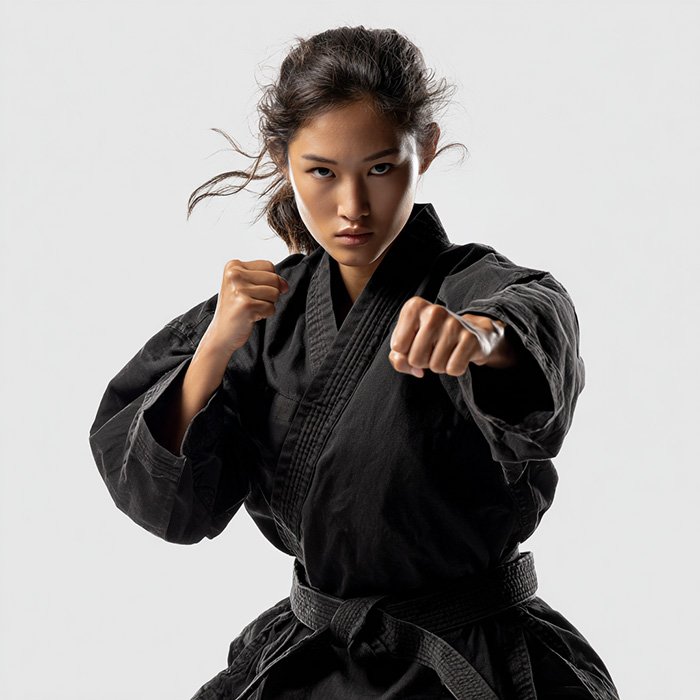
Learning practical self-defense means focusing on techniques that work under stress, not fancy kata — you’ll build simple, high-impact strikes (palm, front knuckle, elbow, knee, groin) and escape maneuvers that use leverage, balance, and momentum, so strength matters less than timing and body mechanics. You’ll practice palm and front-knuckle strikes to the nose, chin, and solar plexus for immediate disruption, and back-fist flicks to the eyes to create escape windows. Close-quarters work emphasizes elbow and knee drives to break grips, while groin kicks act as instant neutralizers. Drills teach low stances, center-of-gravity drops, pivots, and arm-pinning into elbow creases to destabilize attackers. Repetition builds muscle memory so you act decisively, using whole-body mechanics rather than raw force. Training also emphasizes that size and strength do not determine the effectiveness of a defensive response. Developing situational awareness and habits like scanning, keeping your head up, and identifying exits increases safety and lets you avoid or de-escalate many threats before a physical encounter.
Increased Confidence, Assertiveness, and Mental Resilience
After you’ve drilled strikes, escapes, and balance under stress, karate starts changing how you see yourself and respond to threats. You’ll notice confidence rise—81% of women report feeling more capable after self-defense training—and your fear and anxiety about attacks will drop. Karate gives you repeated experiences of physical success, which rewires your sense of personal strength and control. You’ll learn assertive behaviors and verbal resistance skills that let you set boundaries without becoming hostile. That assertiveness transfers to handling psychological violence and seeking help when needed. Regular practice builds mental resilience: you’ll manage stress better, regulate emotions under pressure, and face challenges with greater coping strategies. Overall, karate boosts self-efficacy and lasting empowerment in threatening situations. Studies show that the perception of skills often matters more than expertise in promoting confidence. Women are at increased risk from people they know, so karate prepares you to respond to threats from acquaintances.
Full-Body Fitness, Balance, and Injury Prevention
Building strength, balance, and flexibility through karate gives you a practical full-body workout that boosts endurance, tones muscles, and sharpens coordination. You’ll engage core, upper and lower body, and back with punches, kicks, blocks, and stances that build lean muscle, power, and muscular endurance. The cardio intensity raises heart rate and lung capacity, helping weight management and energy levels while releasing endorphins that ease stress. Repeating stances, transitions, katas, and drills improves prophttps://blog.jamesmartialartsacademy.com/wp-content/uploads/2024/06/woman-traveling-in-france-2023-11-27-05-16-47-utc_Easy-Resize.com_.jpgception and coordination, so you move more stably and fluidly in daily life. Stretching and dynamic movement increase joint mobility and flexibility, reducing stiffness and strain. Stronger stabilizing muscles and learned falling techniques protect joints and lower the risk of falls and overuse injuries. Karate’s emphasis on discipline and mental focus also develops resilience and confidence. Regular practice also promotes increased cardiovascular fitness.
Fast, Accessible Training That Fits Real Lives
All that strength, balance, and confidence you gain from karate can fit into a realistic schedule — you don’t need to live at the dojo to get good. You can reach core self-defense proficiency with roughly 29–38 focused hours, often spread across 27–38 sessions. Training two to three one-hour classes weekly fits most work and family lives and yields noticeable gains in about 90 days. Shorter 30–60 minute practice slots let you reinforce techniques between classes, while cardio or strength cross-training boosts performance without extra dojo time. Instructors commonly offer evening and weekend options, and programs adjust for older adults’ recovery needs. Because adult brains still learn fast, consistent, focused practice sharpens timing and control efficiently. Beginners often benefit from more rest between sessions to recover and build skills safely. Studies suggest a typical learning curve shows about 29 hours of focused training is needed to reach proficiency across basic techniques.
Supportive Community and Long-Term Empowerment
When you join a women’s karate class, you’re not just learning strikes and blocks — you become part of a tight-knit community that boosts your confidence, resilience, and long-term growth. You’ll train alongside peers who cheer your progress, share challenges, and celebrate milestones, reducing isolation and strengthening mental well-being. Regular group practice reinforces techniques, sharpens adaptability, and builds lasting confidence so skills stick when you need them. You’ll find mentors and role models who offer guidance, real-world insights, and leadership opportunities that deepen your empowerment. In a safe, inclusive dojo, you’ll get emotional support, stress relief, and accountability that sustain consistent training and personal growth. That community connection transforms short-term gains into lifelong strength and purpose. Martial arts training also provides improved strength and endurance that support both physical and mental resilience. Many women report increased self-esteem as they progress through ranks and overcome challenges.
Conclusion
Choose karate and you’ll gain practical, high-impact self-defense skills that favor leverage over strength, letting you protect yourself confidently in real situations. You’ll build assertiveness, stress resilience, and full-body fitness—improving balance and lowering injury risk—through short, focused practice that fits your life. You’ll also join a supportive community with mentorship and peer encouragement, so your skills, confidence, and lifelong safety habits keep growing long after those first 90 days.